What I Wish I Knew BEFORE Visiting Argentine Patagonia
Thinking about visiting Argentine Patagonia? Read this BEFORE you go! In this post, I’m sharing the biggest mistakes to avoid and the critical things I wish I’d known before travelling to El Calafate and El Chaltén.
In October, I travelled to Argentine Patagonia with my boyfriend. We spent a total of five days there and quickly realised it wasn’t enough time to see everything.
To get there, we took a three-and-a-half-hour flight from Buenos Aires to El Calafate and rented a car for the duration of our stay.
PERITO MORENO GLACIER
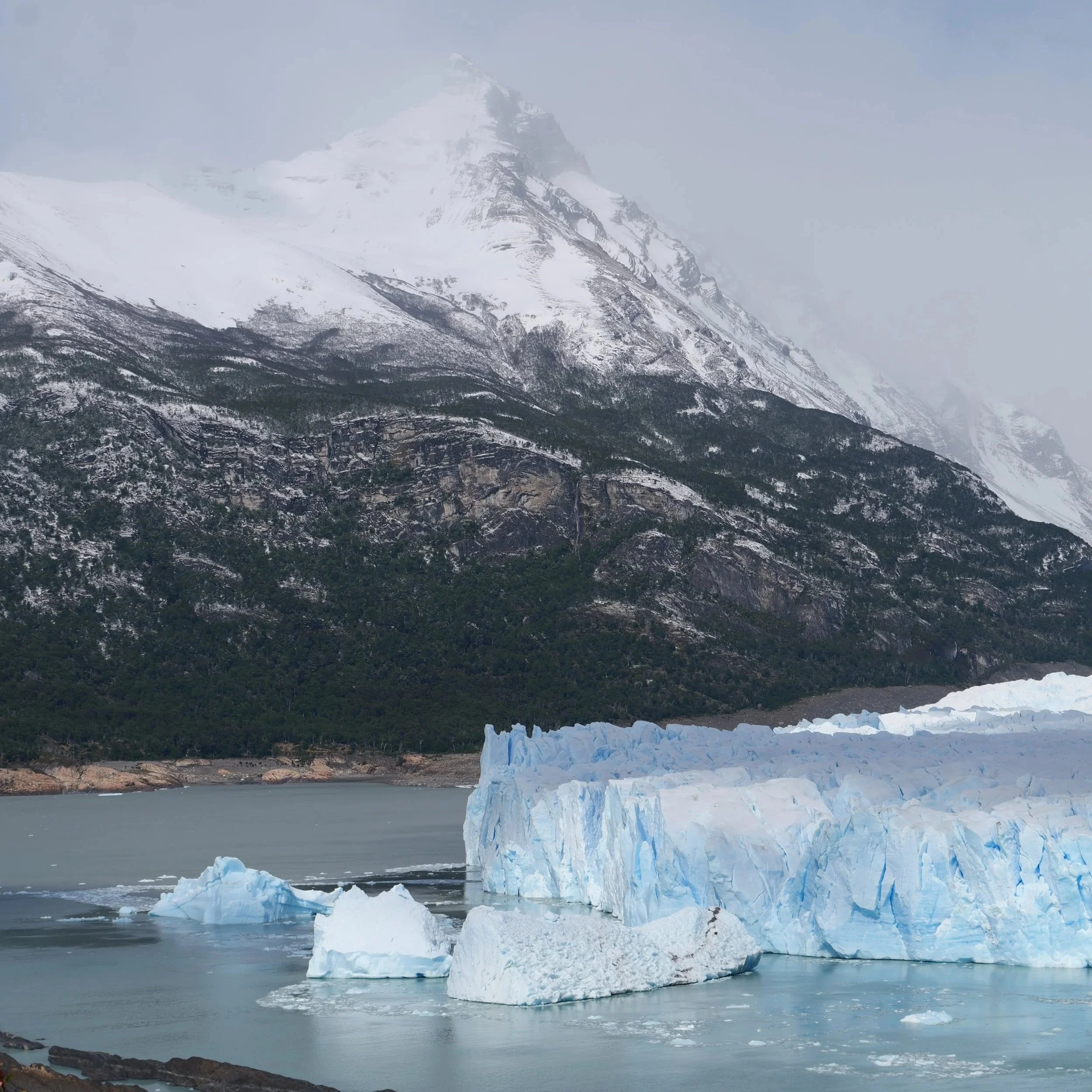
Our first destination was the Perito Moreno Glacier, an iconic Patagonian landmark and UNESCO World Heritage Site.
Before arriving, we had to pay a US$62 entrance fee for Los Glaciares National Park. This also gave us a 50% discount on tickets to visit other national parks in the region.
As we arrived, we did a short 4 km walk on the walkway facing the glacier, and we got the first glimpse of the raw and unpredictable Patagonian weather.
We visited in October, when it’s still spring, and the weather can be quite cold and windy. After a while, the sky finally cleared, and we were rewarded with a stunning view of the glacier. From the viewpoints, we could admire the different shades of blue in the ice and listen to the deep, echoing cracks of the glacier as it slowly melted.
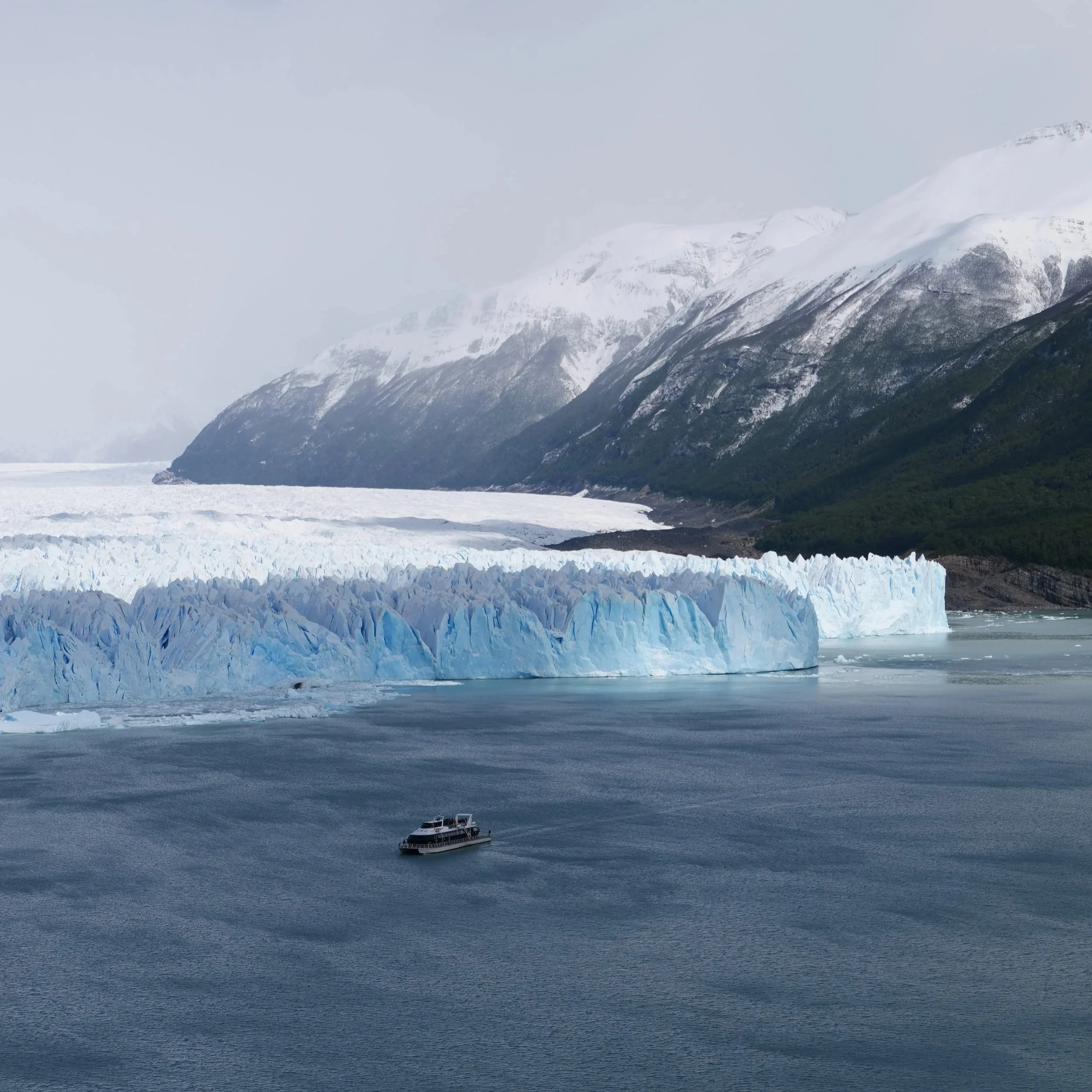
Another way to experience Perito Moreno is by taking a boat tour, with tickets available right from the parking lot.
Since most visitors stay at the main viewpoint, the walk back was wonderfully peaceful and almost entirely ours.
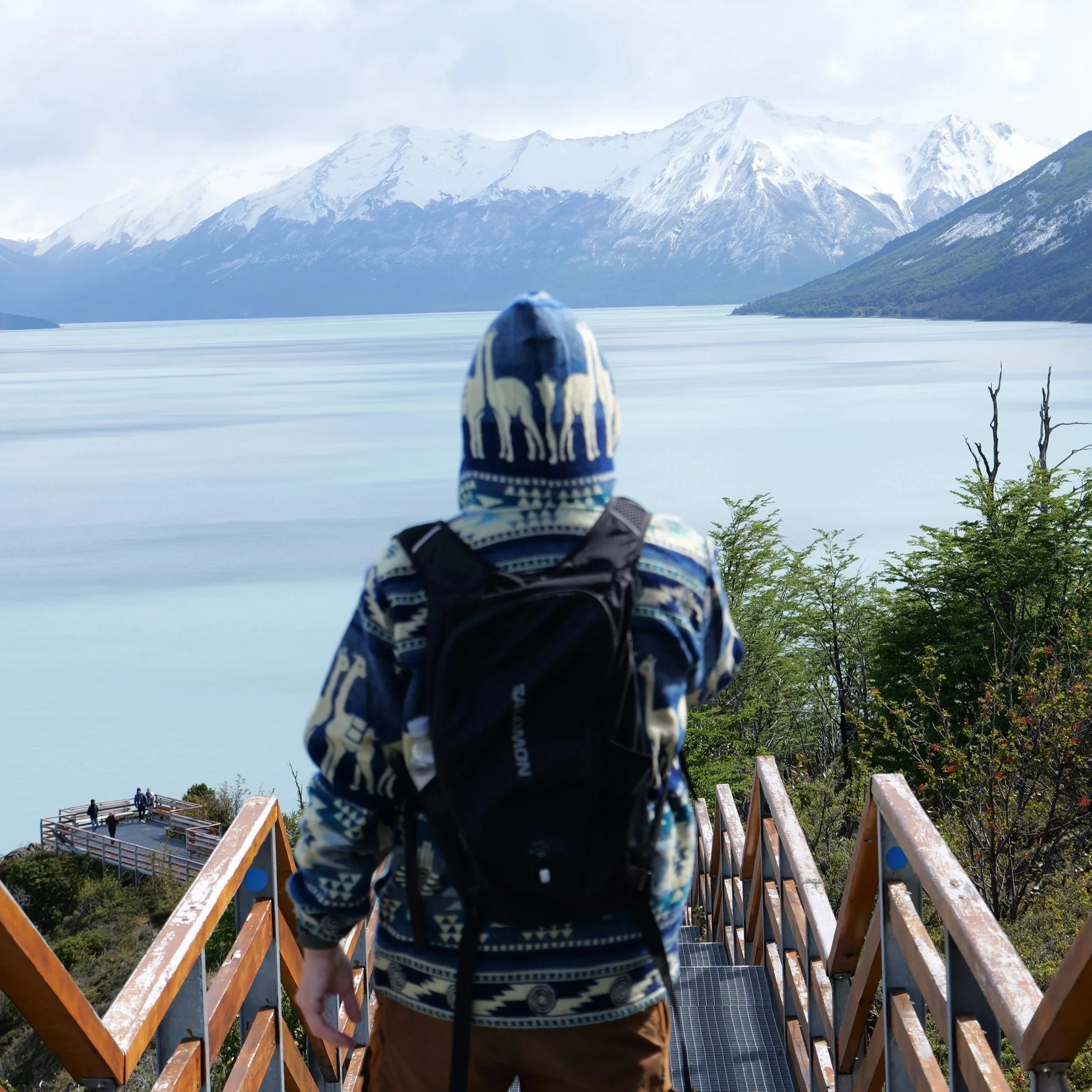
Perito Moreno Glacier is absolutely worth a visit if you’re travelling to El Calafate or El Chaltén.
EL CHALTEN
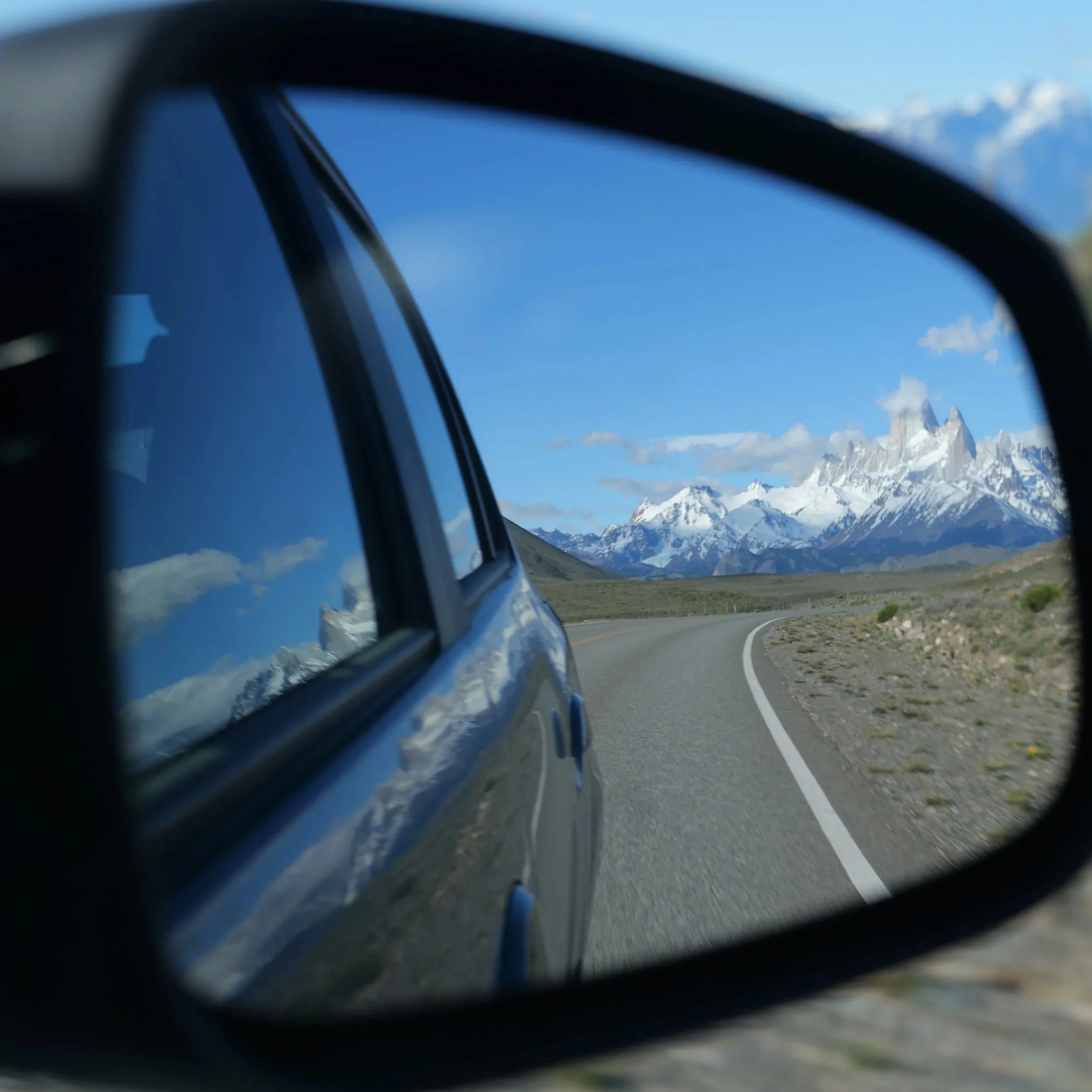
Our next destination is the hiking Mecca known as el Chalten. To get there, we had to go back through El Calfate and drive for 4 long hours. The drive was more boring than expected; the landscape was barren, like a desert. Only 20 minutes before reaching El Chalten, you start to see the first glimpse of the mountains and of the impressive Mount Fitz Roy.
El Chalten is a small mountain village with around 1800 inhabitants. It is widely known as the climbing capital of Argentina. We stayed 4 days in a cute boutique hotel located in the centre.
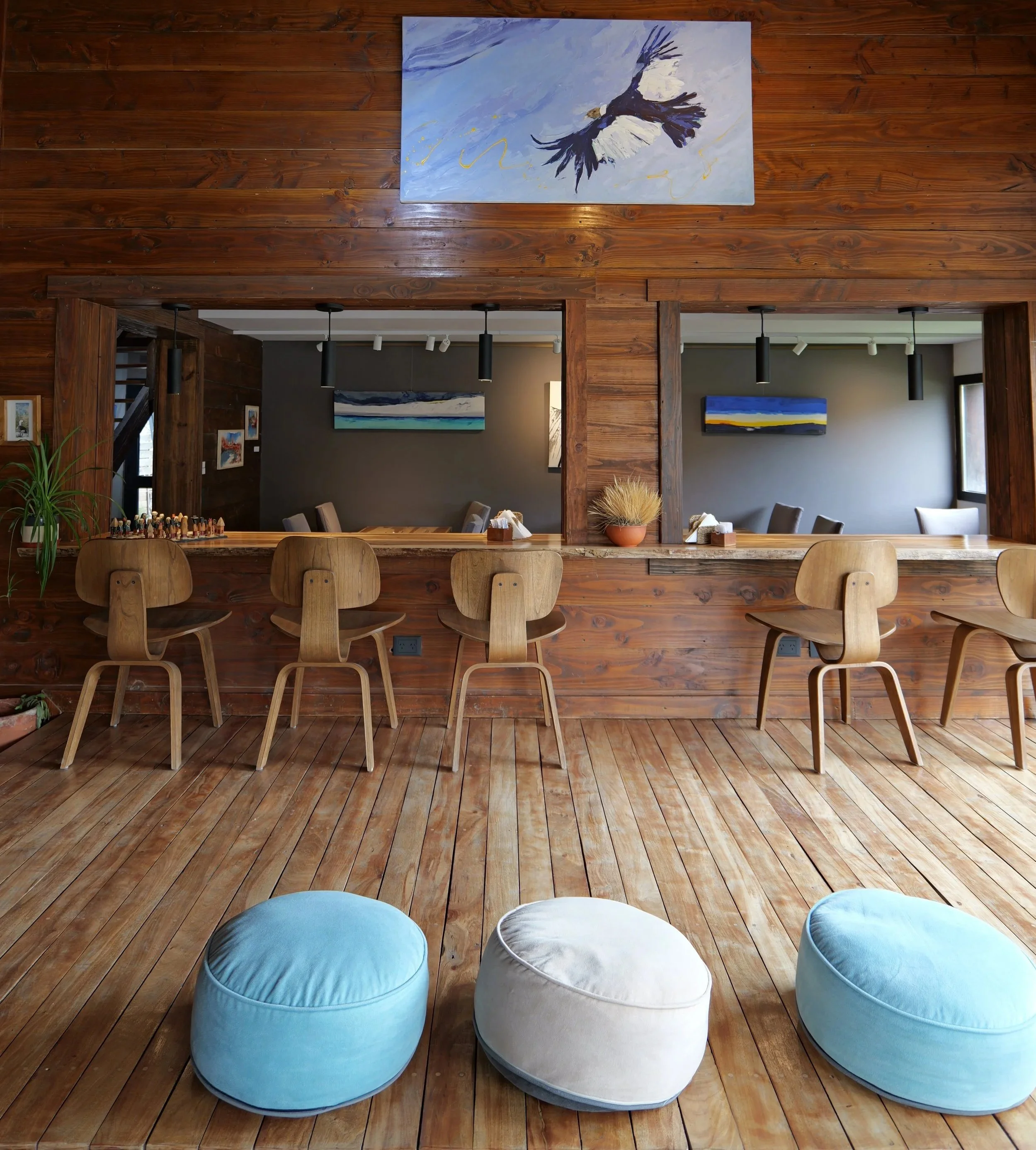
‘Kaulem Beautique Hotel’
Besides hiking, there are also many restaurants and coffee places in El Chalten. I recommend the guacamole bruschetta in ‘Paisa Mountain coffee’, and the chocolate cookie in ‘La Esquina’. The best meal we had in Argentina was in ‘La Tepera’. Here, I recommend trying the local trout, the salmon from El Calafate, and the pear salad.
If you come to El Chalten, there are two main hikes that people do. The one to Laguna de los tres, facing the Fitz Roy mountain, and the neighbouring Cerro Torre hike.
Both hikes are very long; I recommend doing them only in good weather, leaving early in the morning.
LAGUNA DE LOS TRES HIKE
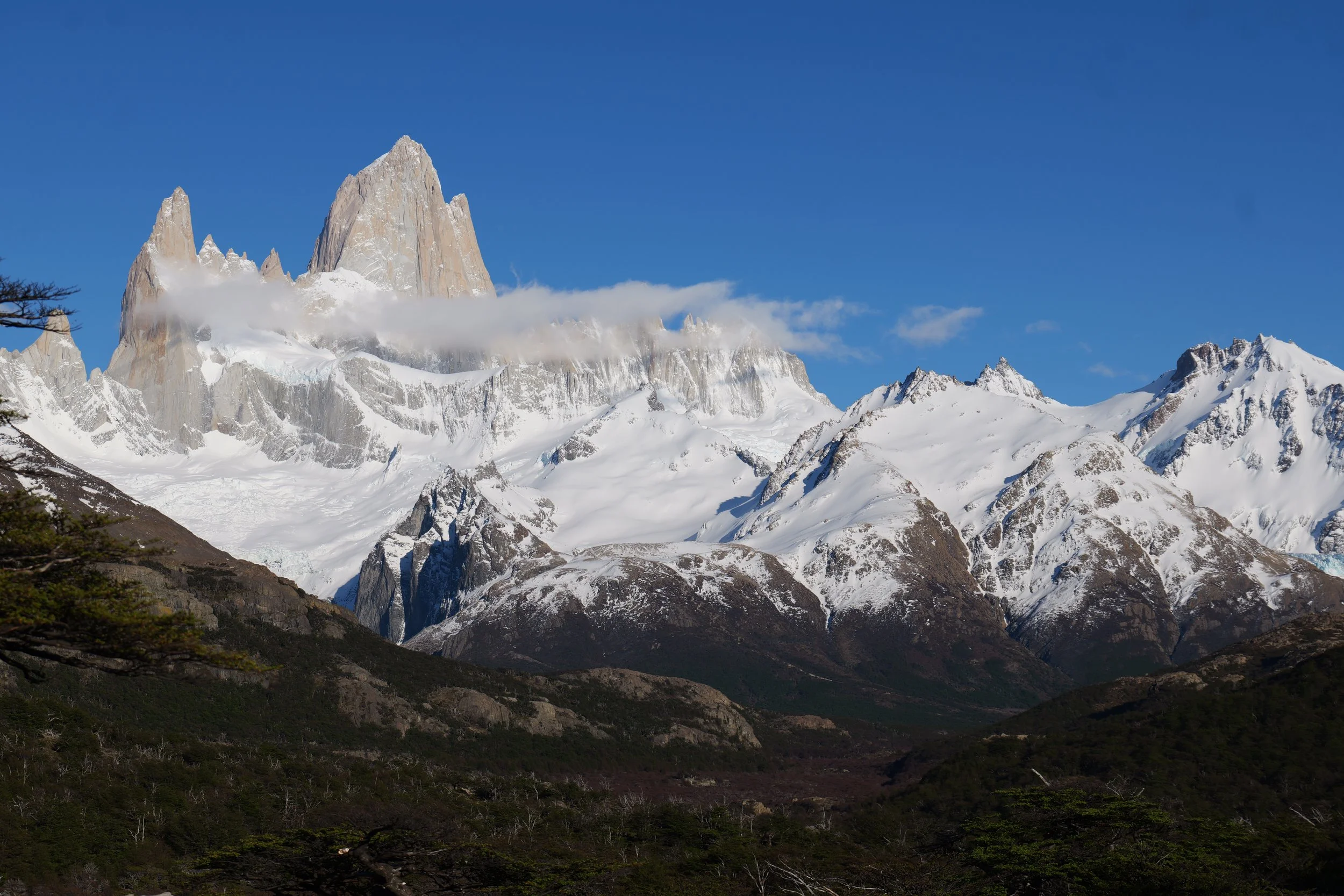
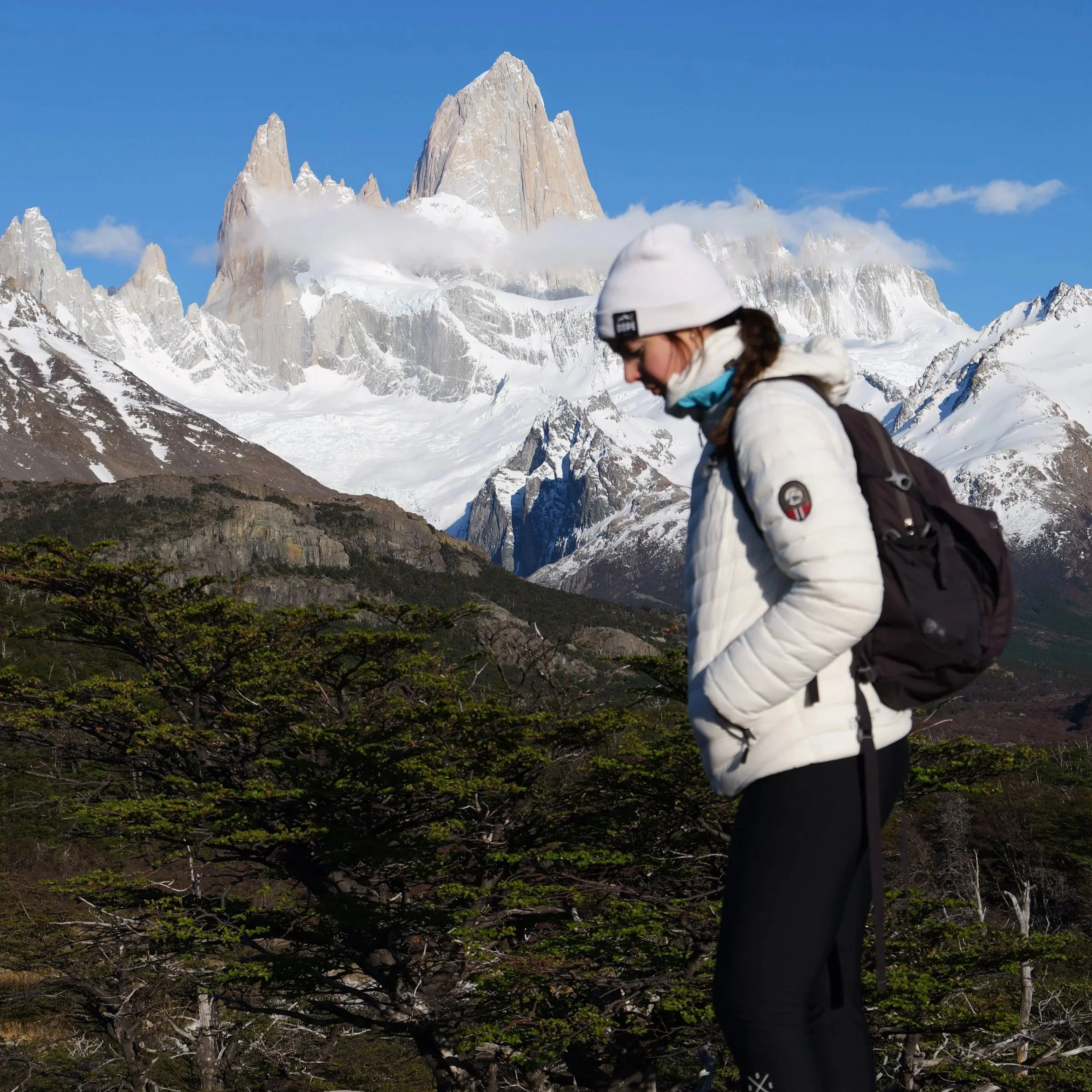
This is the image that comes to mind when you think of Patagonia: the iconic Mount Fitz Roy, the dramatic peak that inspired the Patagonia clothing brand logo.
For the Laguna de los Tres hike, we left at 6:30 AM. The trail is 26 km long, with over 1,000 m of elevation gain, and it took us 7.5 hours to complete.
As we started hiking, the sky was clear, but that also meant a very cold day ahead, with temperatures ranging from -3 to -8 °C. We weren’t sure if crampons were necessary, so the day before, we went to the local ranger station to ask about the snow conditions.
He recommended renting crampons, because there might be ice about 300 meters before the lake.
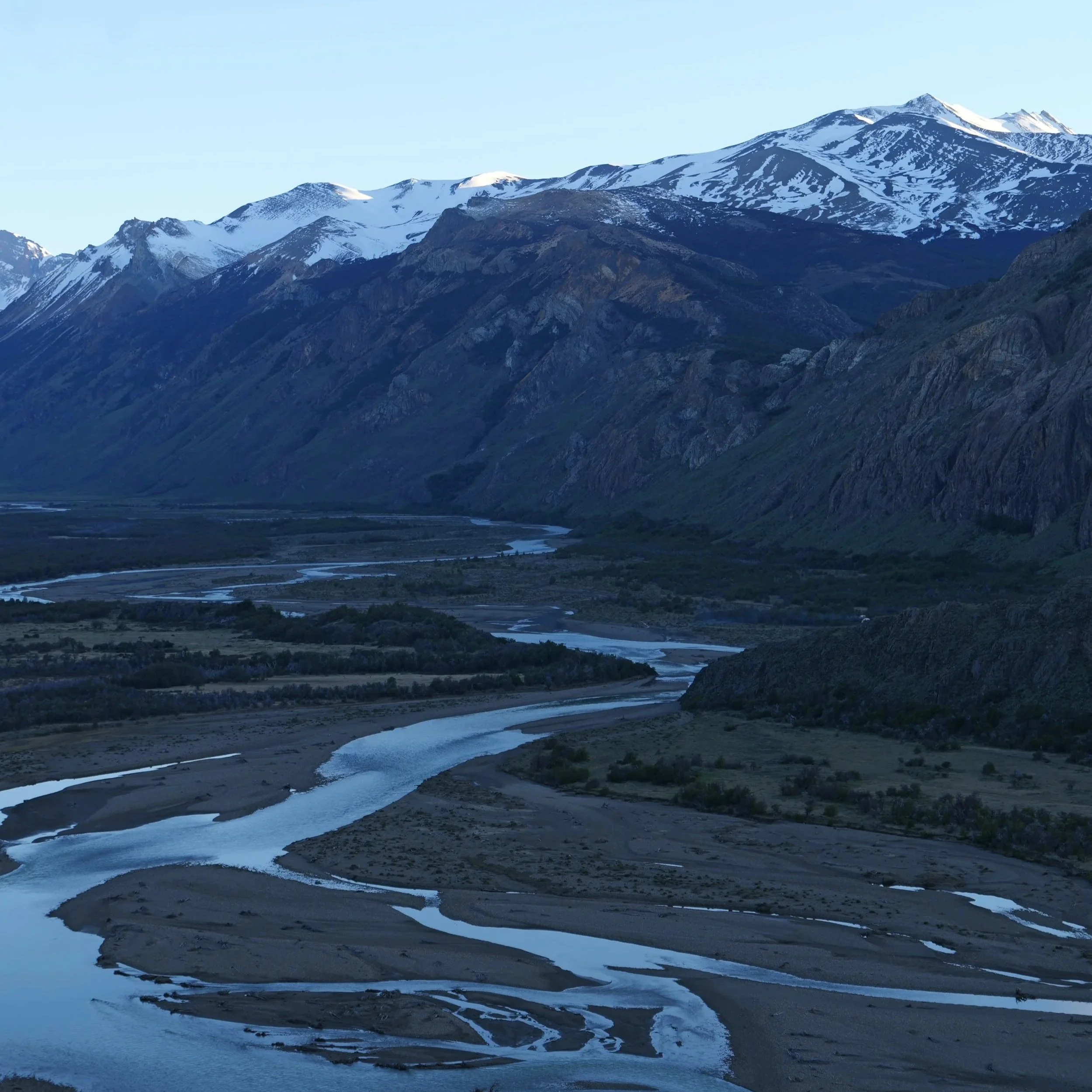
The first couple of kilometres were a gradual ascent facing the stunning Río de las Vueltas Valley, where you’ll see a turquoise river surrounded by snow‑capped mountains.
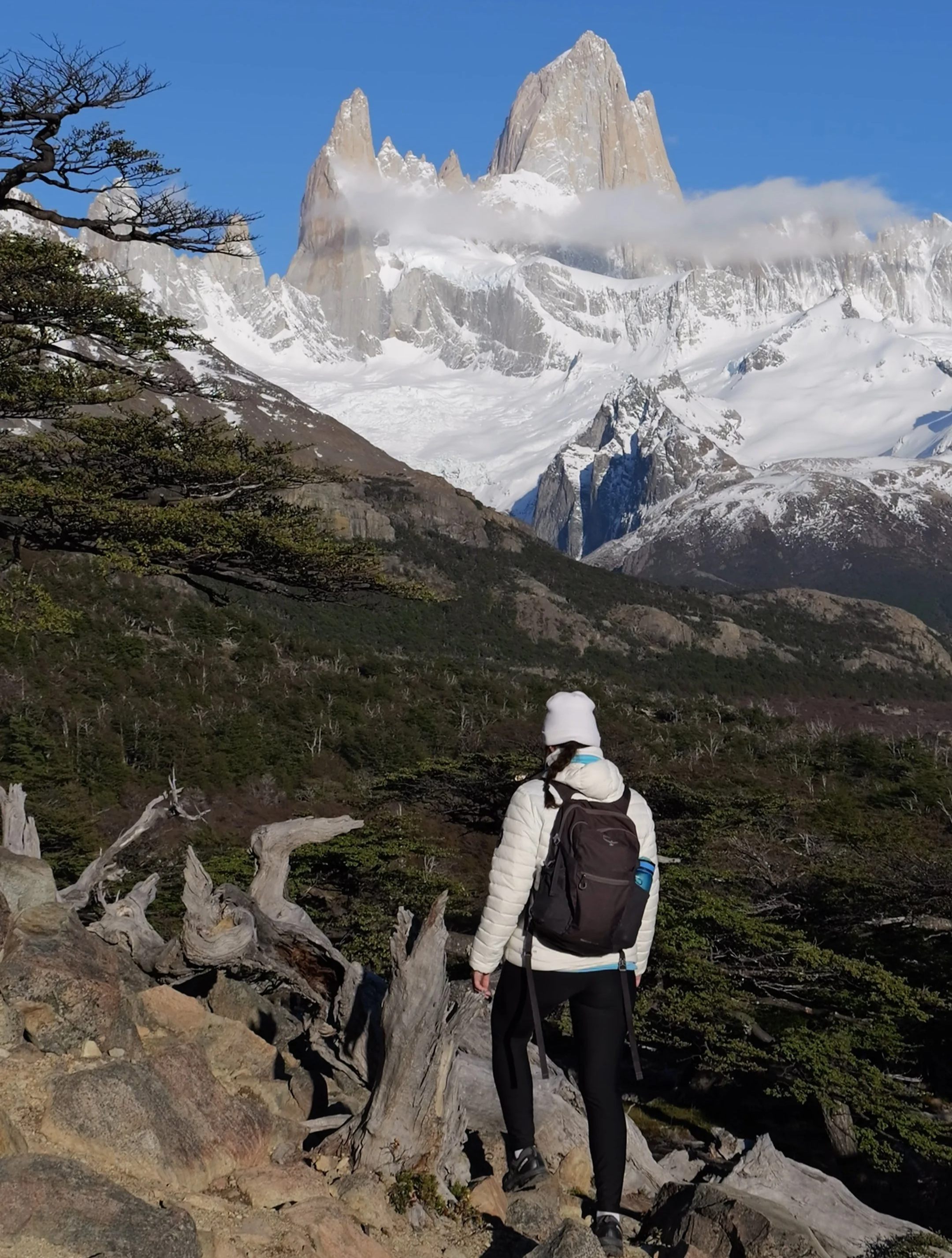
The trail continues through a thick green forest before flattening out on a plateau, where you’ll get your first glimpse of the impressive Mount Fitz Roy.
After the Fitz Roy viewpoint, the hike continues for another 10 kilometres to reach the final lookout at Laguna de los Tres. We didn’t know it back then, but that was the best view of Fitz Roy we would get that day!
In some parts, the trail was a bit unclear, so we used the AllTrails app to find our way back onto the right path. Because it had been raining a lot in the previous weeks, we had to cross several muddy and wet sections.
As we continued, the clouds started to cover the peaks, but that didn’t discourage us.
An interesting fact about Mount Fitz Roy is that its local Indigenous name actually means “smoking mountain,” because clouds constantly cover the top, making it look like a volcano.
On the trail segment between the Laguna Capri turnoff and the campsite, we crossed a wooden boardwalk to navigate the swampy ground.
Twenty minutes later, we entered a beautiful lenga forest and reached Poincenot Base Camp, a popular campsite that’s perfect if you want to see Fitz Roy at sunset or do longer hikes.
After the forest, we reached the start of the final ascent—the most demanding part of the hike: a 400‑meter vertical climb over the last 2 kilometres, up an ancient moraine ridge. The higher we climbed, the lower we felt our chances of seeing a clear view of Fitz Roy’s face; nonetheless, the views of the neighbouring peaks were equally impressive.
After the long hike and that last exhausting section, we were looking forward to having a break and enjoying the scenery. We were only 300 meters from a lookout over Laguna Sucia, but we decided to skip it due to worsening weather and icy conditions that required crampons.
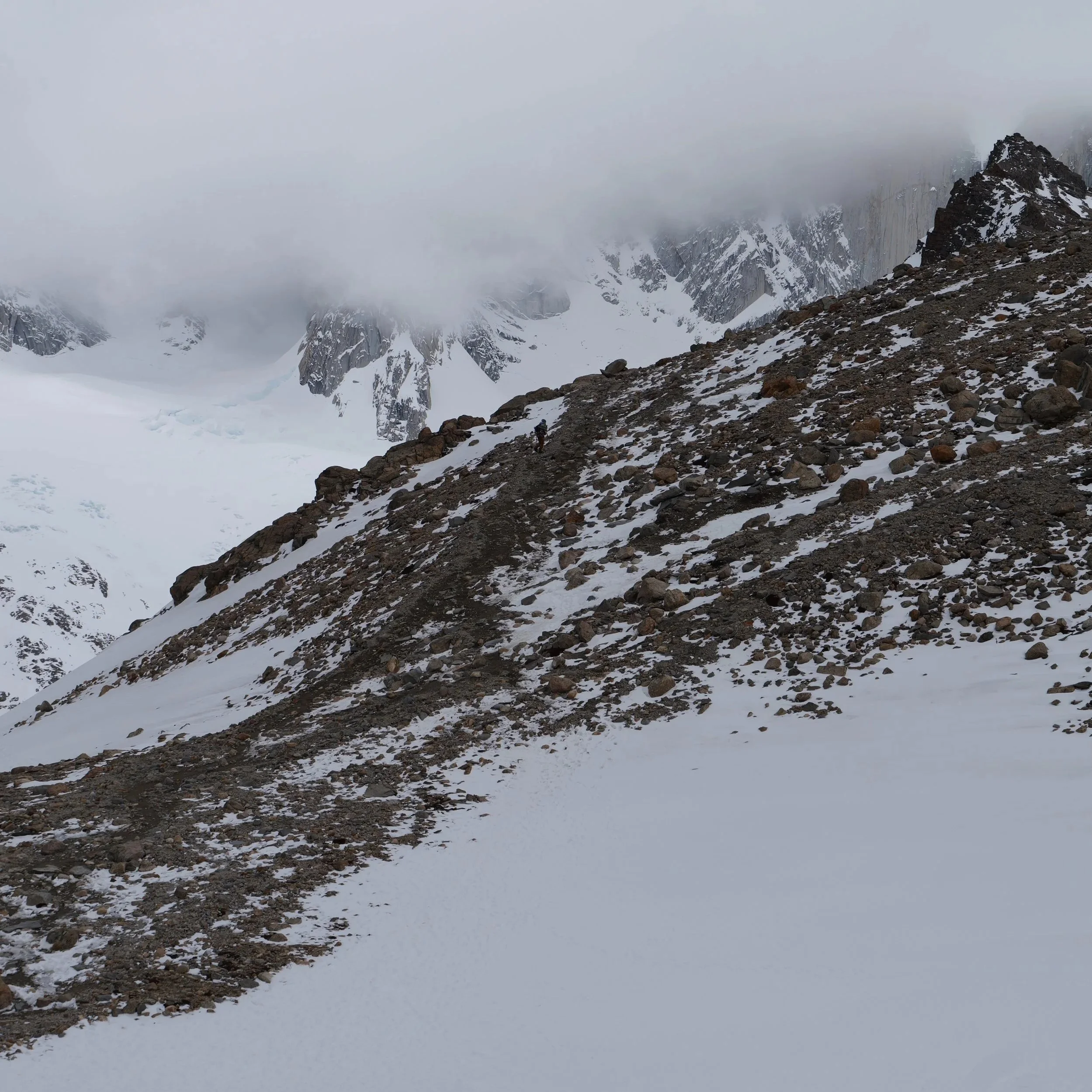
Despite the cold, we finally had our picnic and took in the breathtaking views of the surrounding peaks.
We took the same trail back. Even though the hike was very long, seeing Fitz Roy up close made every step worth it!
CERRO TORRE HIKE
After a sleepless night in which I felt sick, I didn’t want to push myself too hard physically, but I still wanted to do a short hike, since it was our last day in Patagonia. Instead of walking 20 km to Cerro Torre, we decided to hike only to its viewpoint, which is 6 km away.
The first section was a steady climb through a rocky valley. After the initial ascent, the trail enters a lenga forest with southern beeches, then continues along a flatter path following the valley of the Fitz Roy River.
After about an hour and a half, we arrived at Mirador Cerro Torre, a panoramic viewpoint that opens up to a spectacular vista of the Cerro Torre massif, the Adela range, and the vast Glaciar Grande.
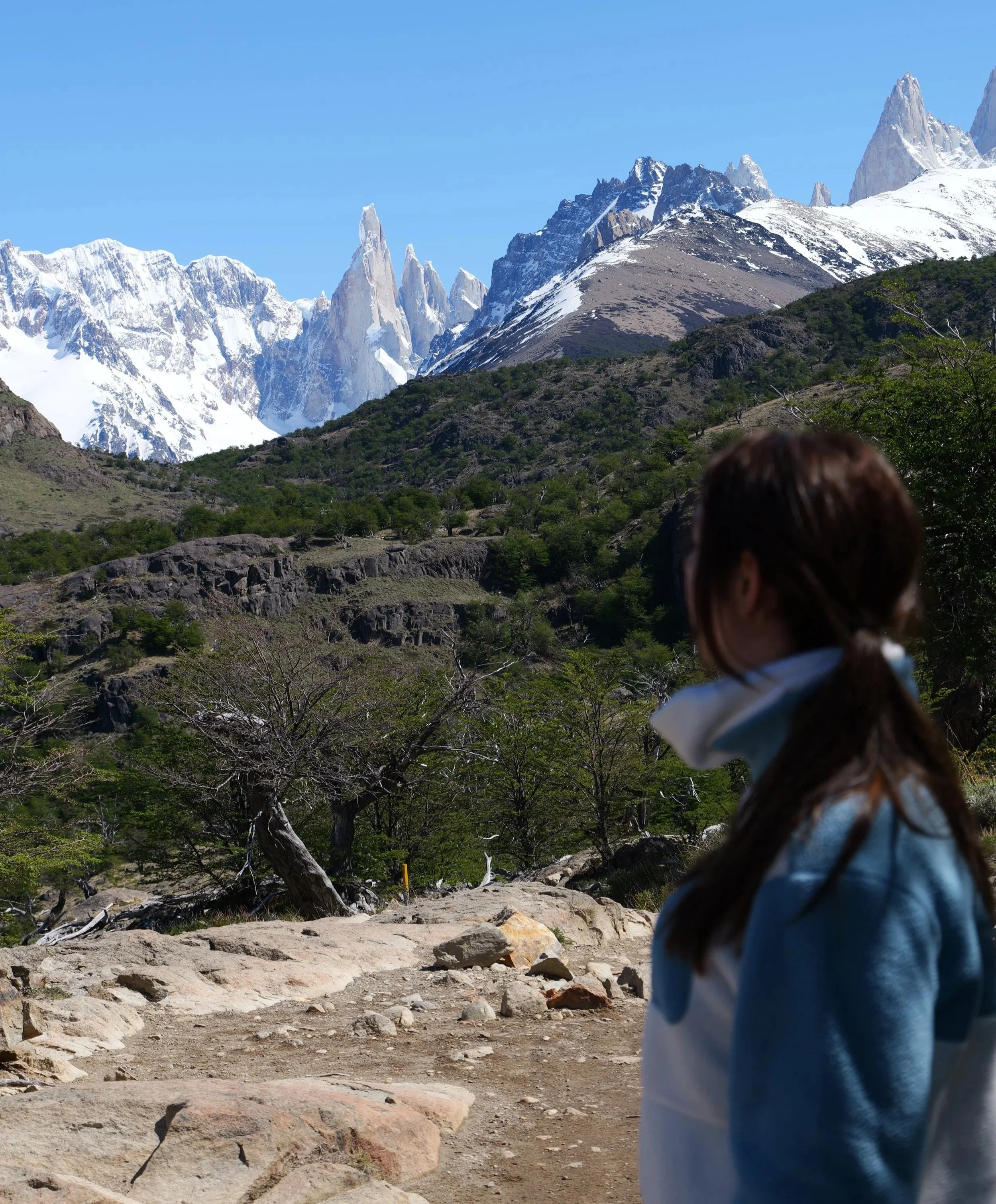
For those who wish to continue, the trail extends for another 7 kilometres to Laguna Torre, where the De Agostini Base Camp is also located. This extension makes the total hike about 20 kilometres, which can be completed in 5–6 hours.
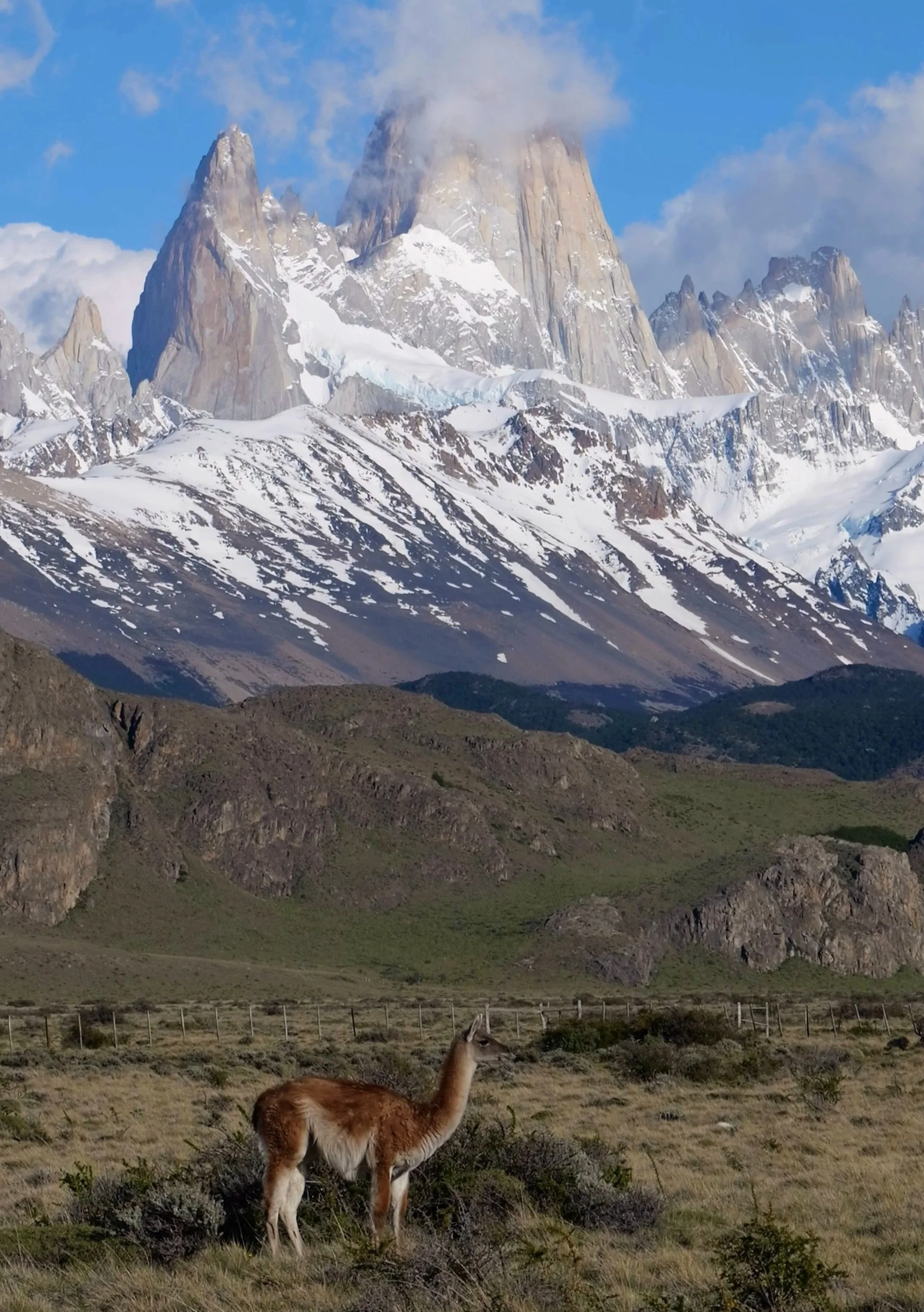
The next day, as we were heading to the airport, Patagonia gave us a special goodbye: a group of guanacos strolling through the national park. It was the perfect ending to our short trip to this unforgettable region.
Overall, we had a good experience in El Calafate and El Chaltén; however, it wasn’t our favourite place in South America. Argentina feels very European, so we didn’t experience the same intense cultural shock we felt in Peru, Colombia, or Bolivia.
A big mistake of us was not spending enough time there. Since this area is so remote and expensive, I’d recommend staying much longer than we did—at least two weeks. To get a broader perspective of Patagonia, consider extending your itinerary to include Chilean Patagonia as well. You can rent a car in El Calafate and drive to Puerto Natales to explore the trails there.
We also wish we had visited Ushuaia, which I’d say is a must‑add to any Patagonia itinerary. You can easily take a flight from El Calafate to Ushuaia to round out your trip.
Thank you for reading this post! You can find more South American destinations in the 'TRAVEL GUIDES' section above.