

The ultimate 5-day Cusco region bucket list
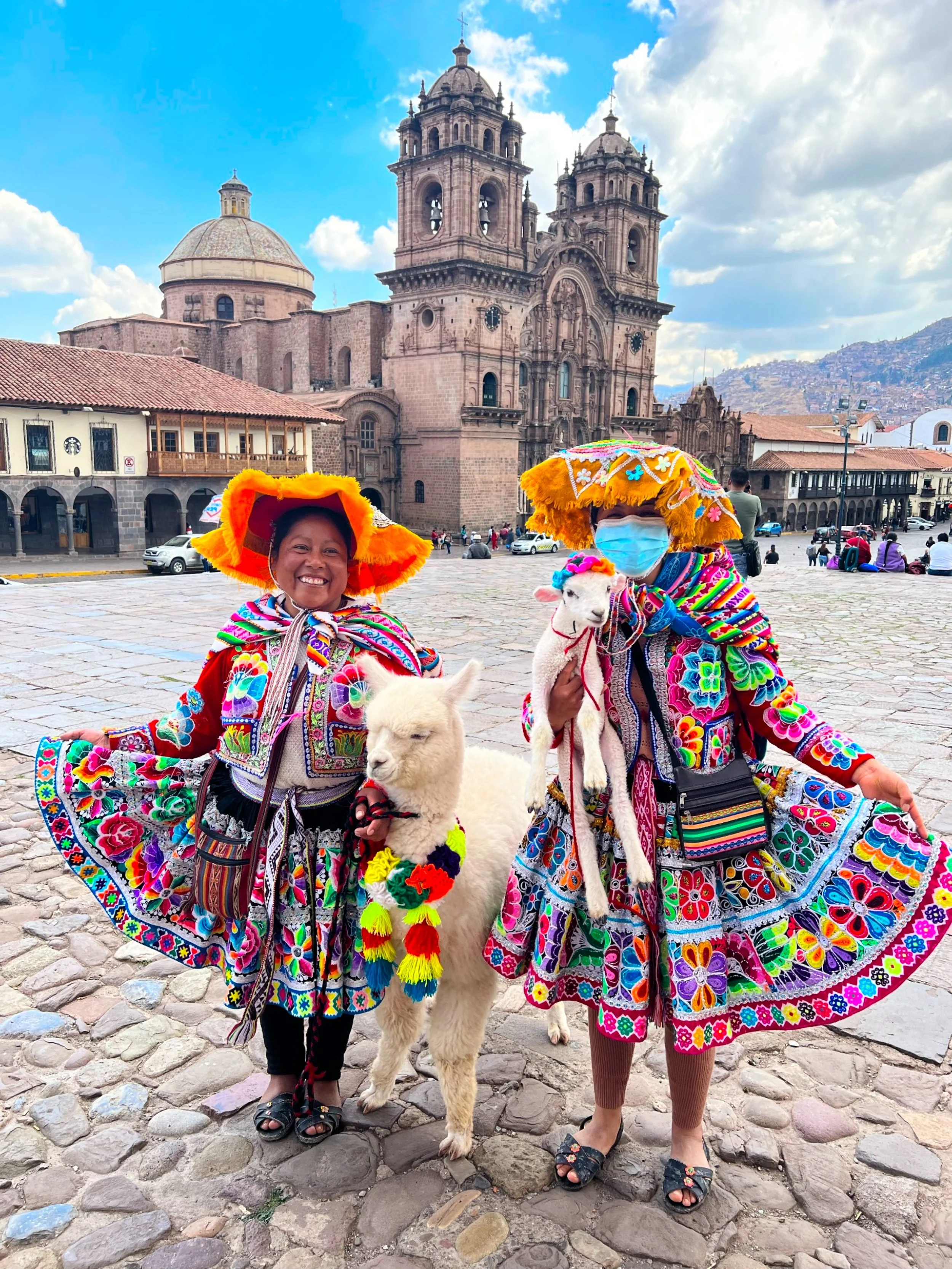
1) explore the imperial city of cusco
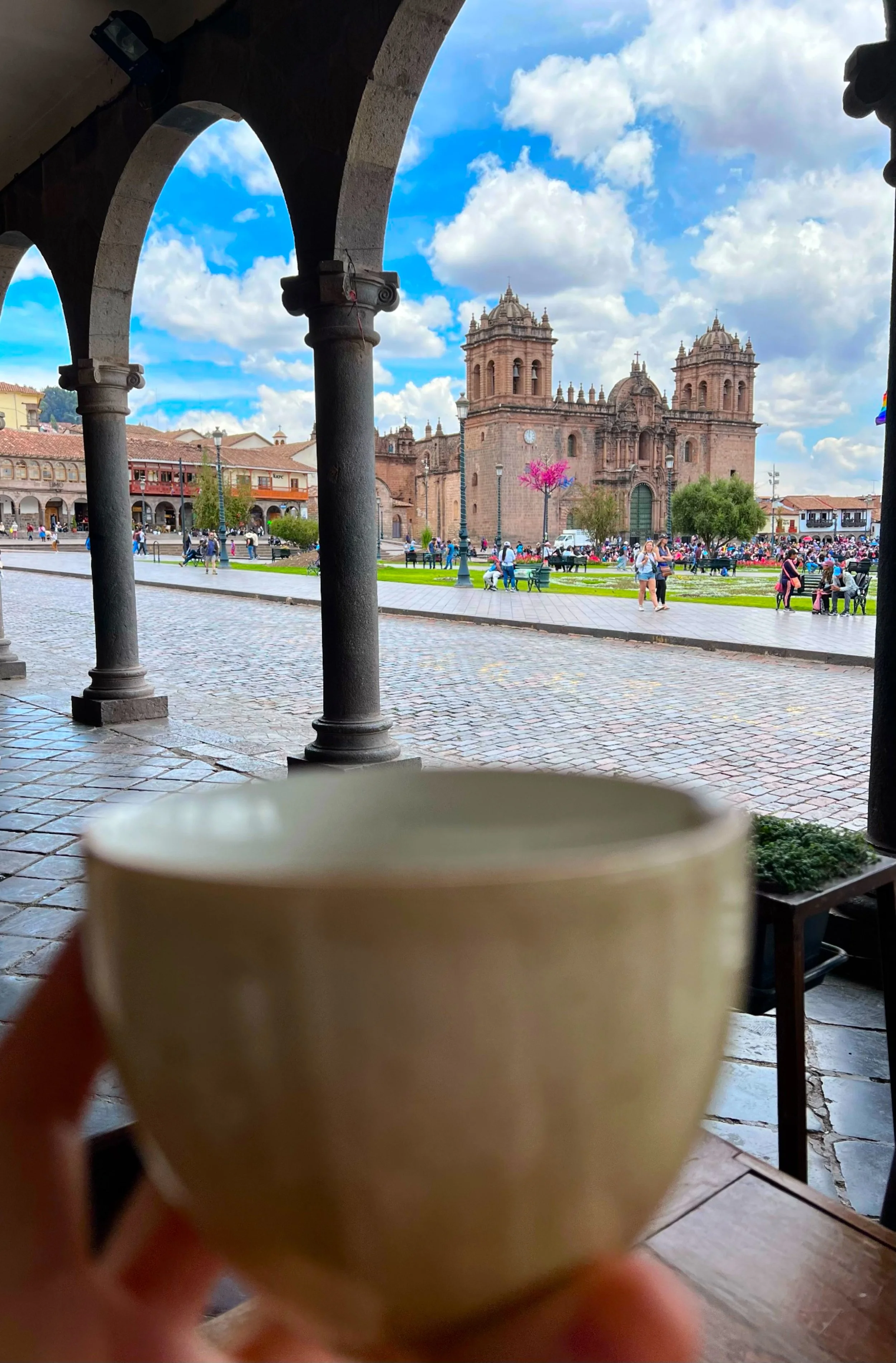
sip a coffee in Plaza de Armas
Cusco is located in the Peruvian Andes and is known as the capital of the Inca Empire (from the 13th to 16th centuries). The city itself is a UNESCO World Heritage Site and features charming alleyways and attractive historic buildings at every turn.
I can definitely say that so far, Cusco has been my favourite city in South America. You will understand it when visiting the beautiful historic centre with its impressive colonial architecture. As the ancient capital of the Inca Empire, Cusco is full of history everywhere you look.
Cusco is a very walkable city if you can adjust to the altitude and don’t mind walking up steep hills to reach certain areas. If you are staying near the city centre, you’re never more than a 15-20 minute walk from any of the major sites and delicious restaurants.
One of the best ways to feel the city's charm is to sip an aromatic Peruvian coffee in Plaza de Armas. There are many coffee places around the square, or you can drink it on the second-floor balconies.
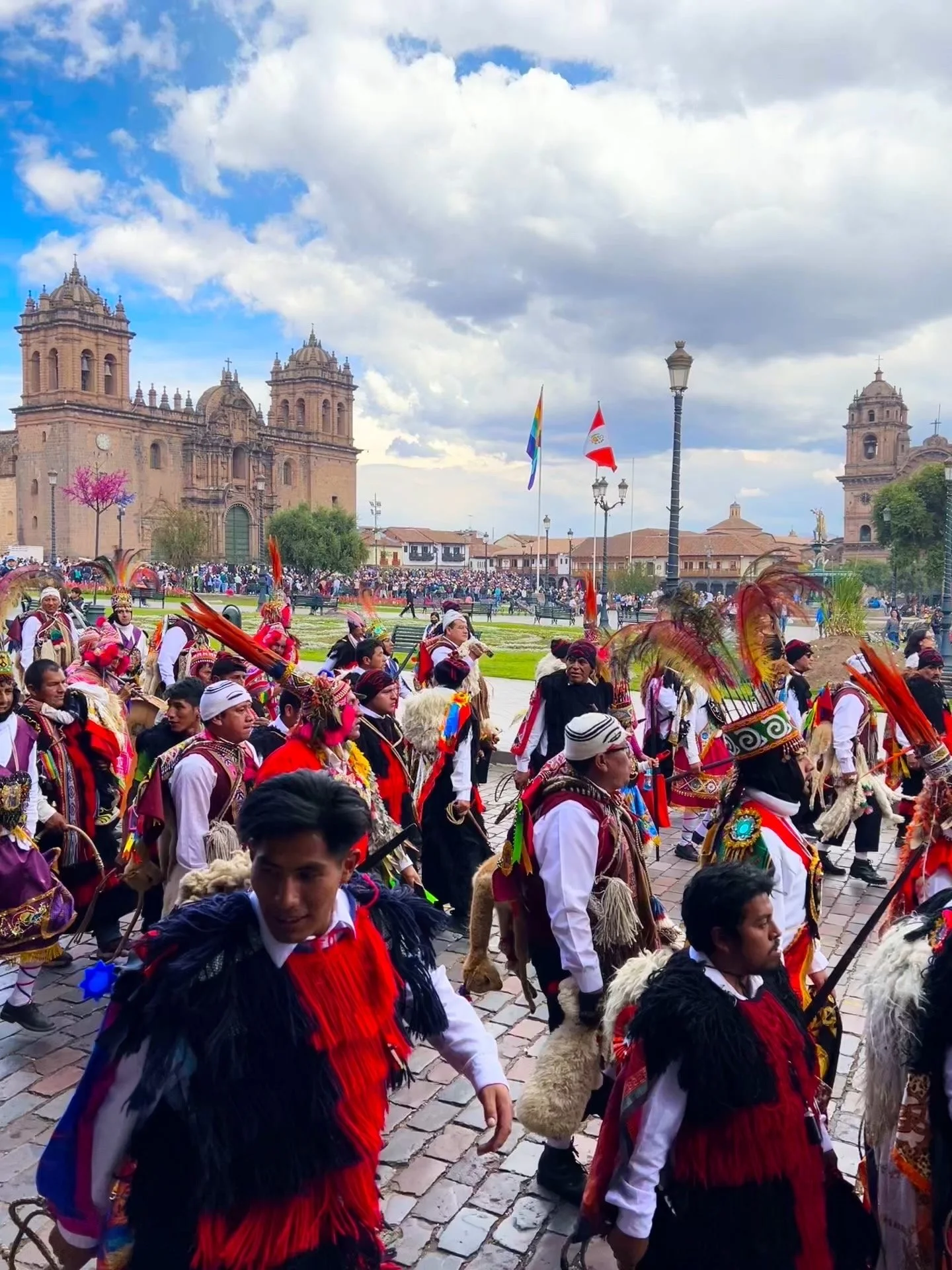
Don’t miss the cultural events!
Cusco is a very vibrant city, full of life, and I can assure you that it's impossible to get bored, even if you have no plans or you are there to relax. Every weekend, different cultural and religious events happen in the main square.
During my one week in Cusco, I witnessed a beautiful parade with traditional costumes for the Patron Saint of Cusco; a feminist demonstration for women's rights, and a student parade of different universities from around the country, getting together to perform dances and celebrate the end of their studies.
CHOCOLATE TASTING IS A MUST!
Chocolate is part of the Peruvian culture, and it has been a part of the local cuisine for centuries. In fact, Peru is known for producing some of the best chocolate in the world! It comes as no surprise that there are plenty of different ways to experience chocolate in Cusco.
Pay a visit to one of Cusco’s many chocolate factories for a tasting experience that will satisfy your sweet tooth. You can also try your hand at chocolate-making by taking a class.
I highly recommend going to the Bean to Bar workshop at ChocoMuseo, known for making one of the best chocolates in the city!
Try the delicious cafés in Cusco.
Peru is quickly growing as one of the best gastronomies in the world. From typical Andean food to hip-organic restaurants, there’s a lot to choose from, and Cusco is no exception! When walking around the city, you can find many quirky and hipster-filled coffee shops.
Here are some of my favourite restaurants & cafes worth visiting!
Qura: With a menu of poke and acai bowls, this hipster hangout makes a great place to hunker down with your laptop.
L’atelier Café Concept: A cute French cafe and boutique located in the trendy San Blas area. Sip your cappuccino with this romantic street view!
Nuna raymi: Enjoy homegrown Peruvian dishes. An absolute must-try is the local Ceviche and the guinea pig, a typical Peruvian speciality!
Avocado, toast & more: No better place to have avocados than Peru. This restaurant is perfect if you are an avocado lover like me! My favourite dishes were the avocado fries, trout ceviche, and the coconut-avocado smoothie.
Green Point Restaurants: Located in a very relaxing atmosphere, this restaurant offers an infusion of Peruvian and vegetarian-friendly dishes! Try the rocoto cusqueño, and for drinks, I would recommend pisco sour and coconut lemonade!
Take in the views around the city
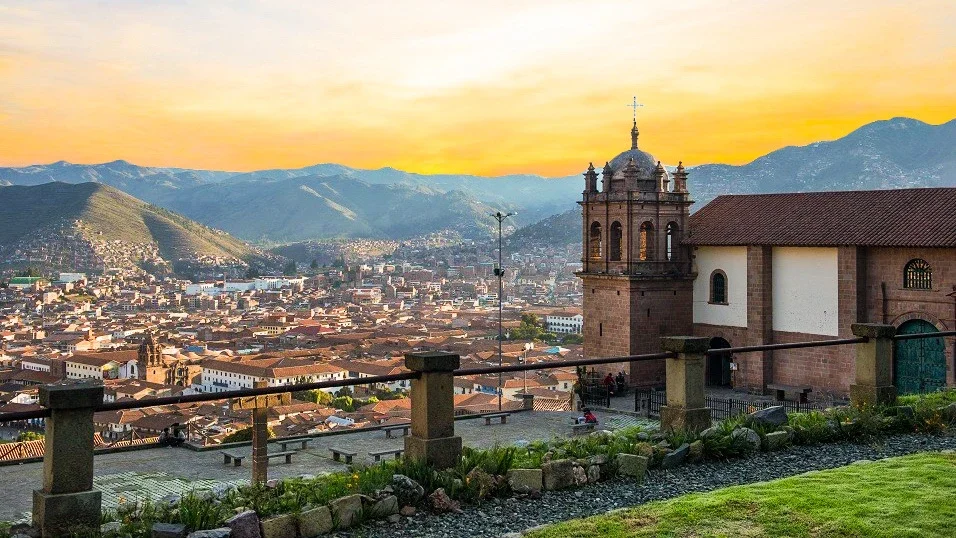
The best way to explore Cusco is to get lost in the city without an itinerary.
Wherever you go, you will find yourself on a romantic street or admiring a beautiful viewpoint. Set in a valley and surrounded by mountains, there is no shortage of epic views around the city of Cusco. Some of my favourite lookouts are Mirador de San Blas, Mirador de Plaza San Cristobal, and Mirador El Camino del Inca.
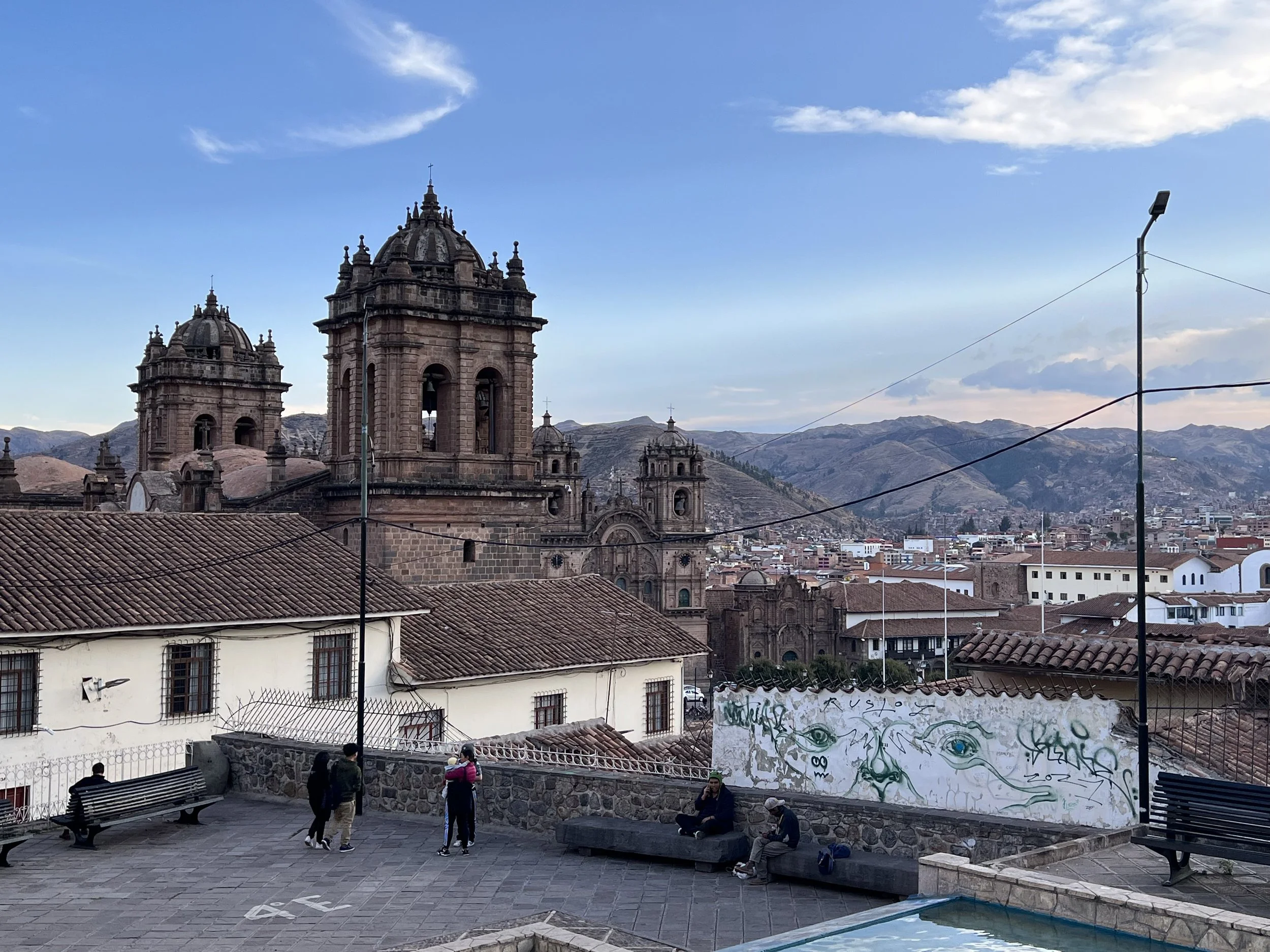
CUSCO BY NIGHT
The colonial architecture of Cusco takes on fresh beauty at night. Whether you want to walk in the romantic Plaza de Armas or explore Cusco's nightlife, there is always something to do after the sun sets.
If you want to experience Cusco's folklore, the Centro Qosqo de Arte Nativo is one of the best places in town to witness a spectacular show of Andean performers and dancers.
Cusco is known throughout the country as having some of the best nightlife in Peru. No matter what night of the week, there is always a party going on.
Is Cusco safe?
Cusco is probably the safest city in South America, whether you are exploring during the day or at night. With backpackers from around the world, the city is very alive (on Saturdays especially), and you see people coming back to their accommodation at 5-6 am.
Local people are very friendly, so if you have any worries or questions, they will be the first ones to help you!
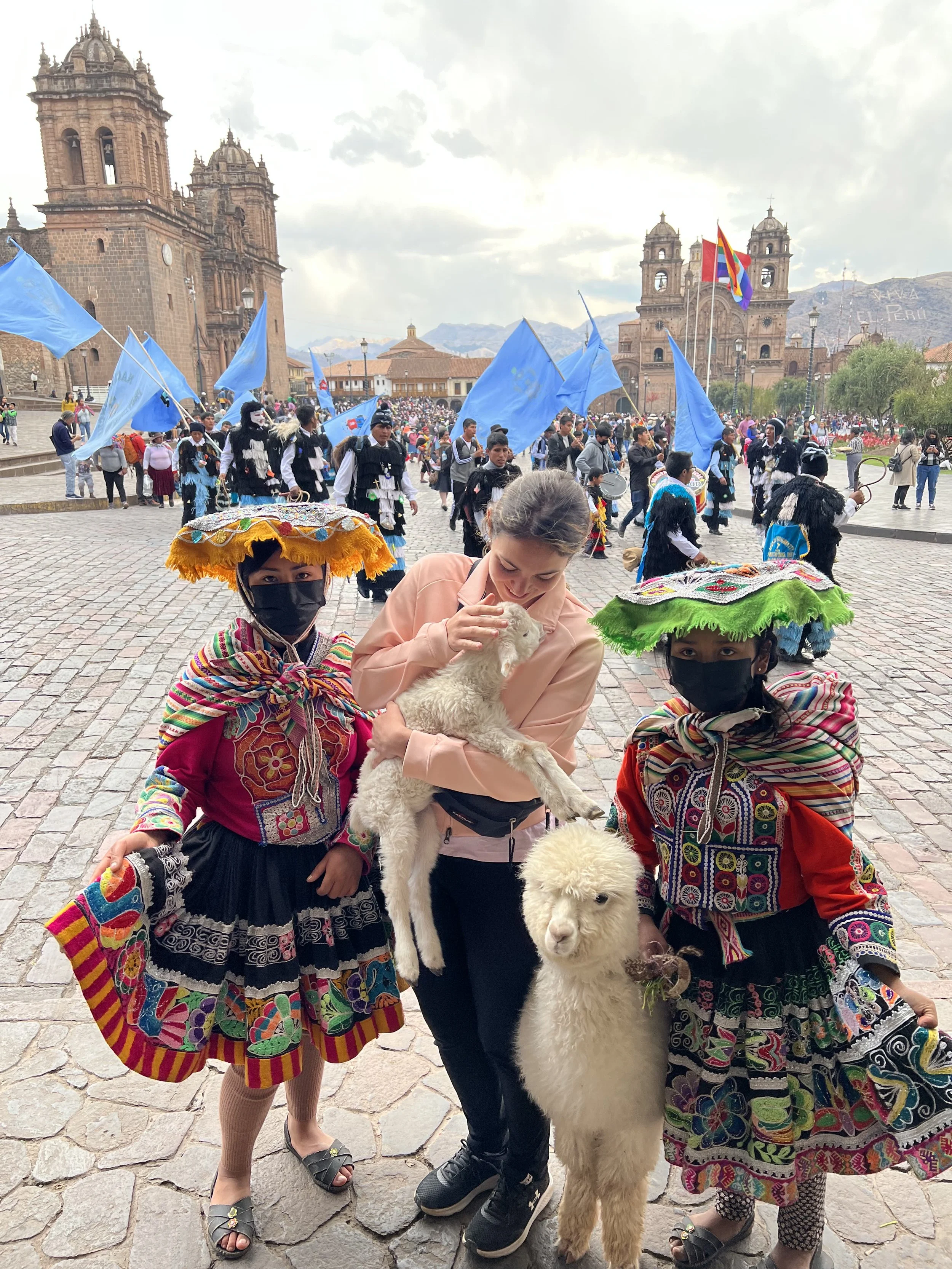
cuddle some alpacas
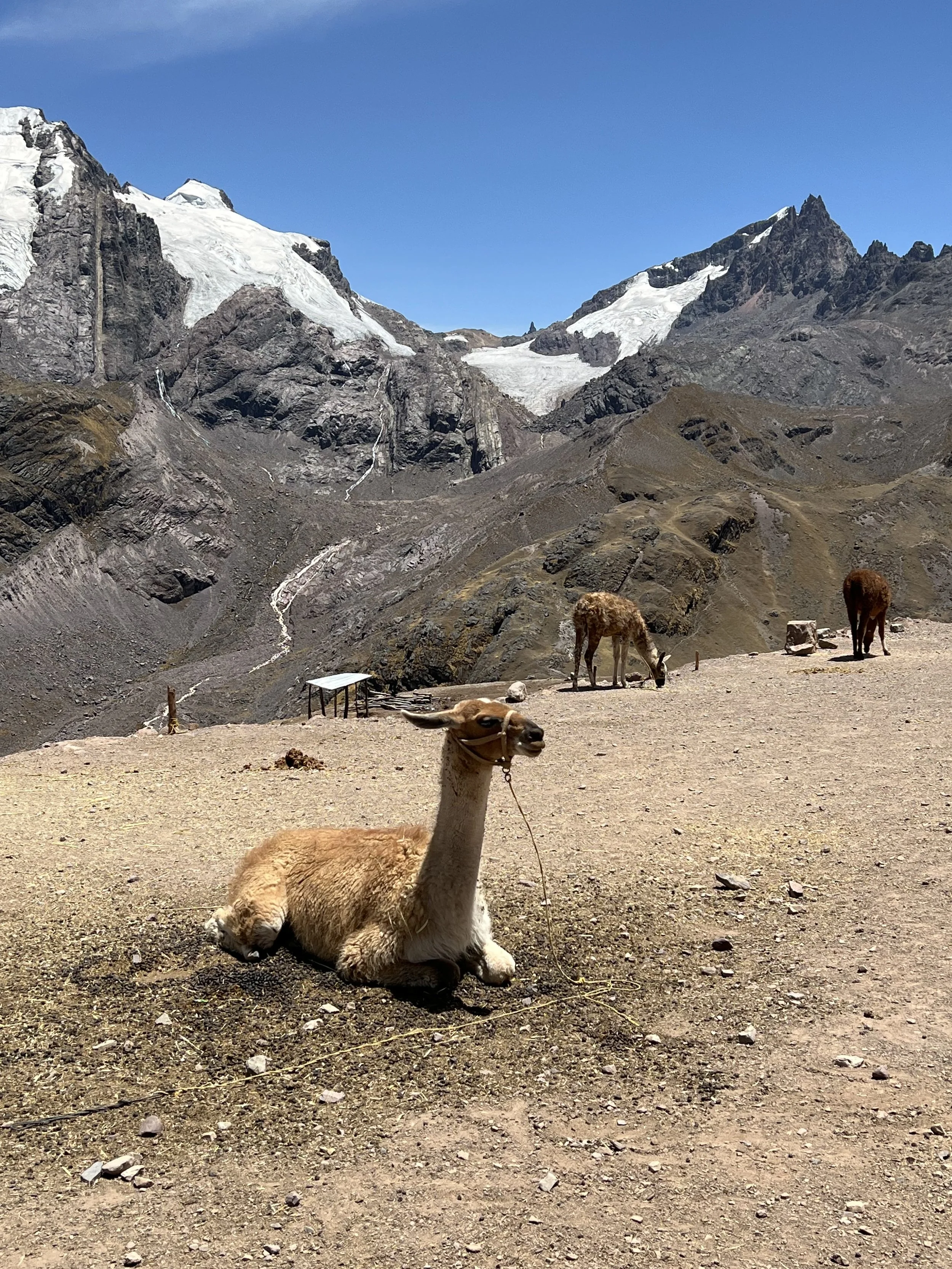
Wherever you wander in Cusco, you will always encounter some Alpacas, not to be confused with lamas. Alpacas are a lot fluffier and softer, in my opinion, a lot cuter than their cousin, lamas! You can take some pictures with the friendly ladies who wear traditional clothes and give them a voluntary donation. They even let you cuddle the baby alpacas as much as you want! (I can't deny that I fell in love with baby Daniel).
2) HIKE TO THE RED VALLEY
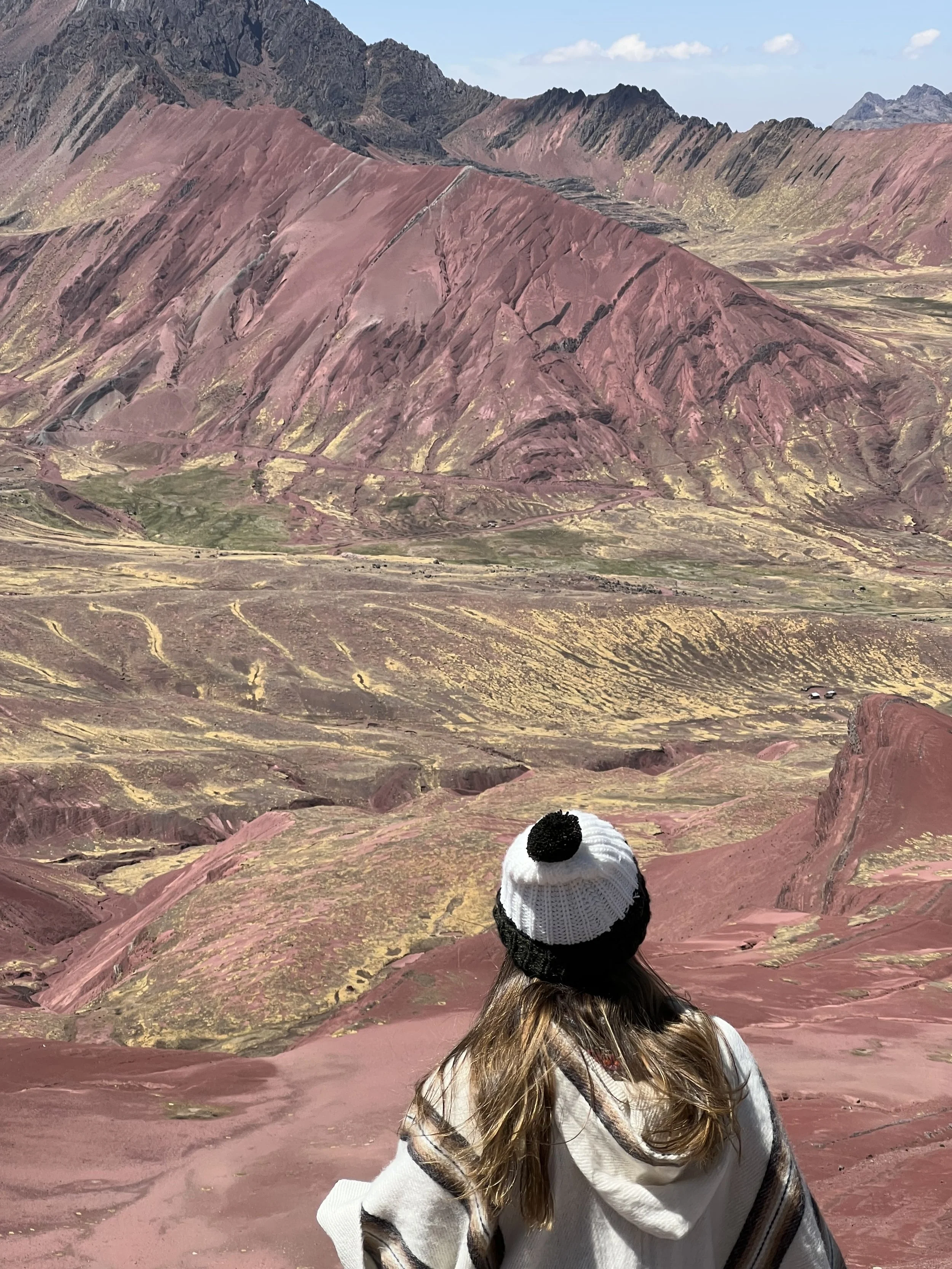
How to get to the Red Valley?
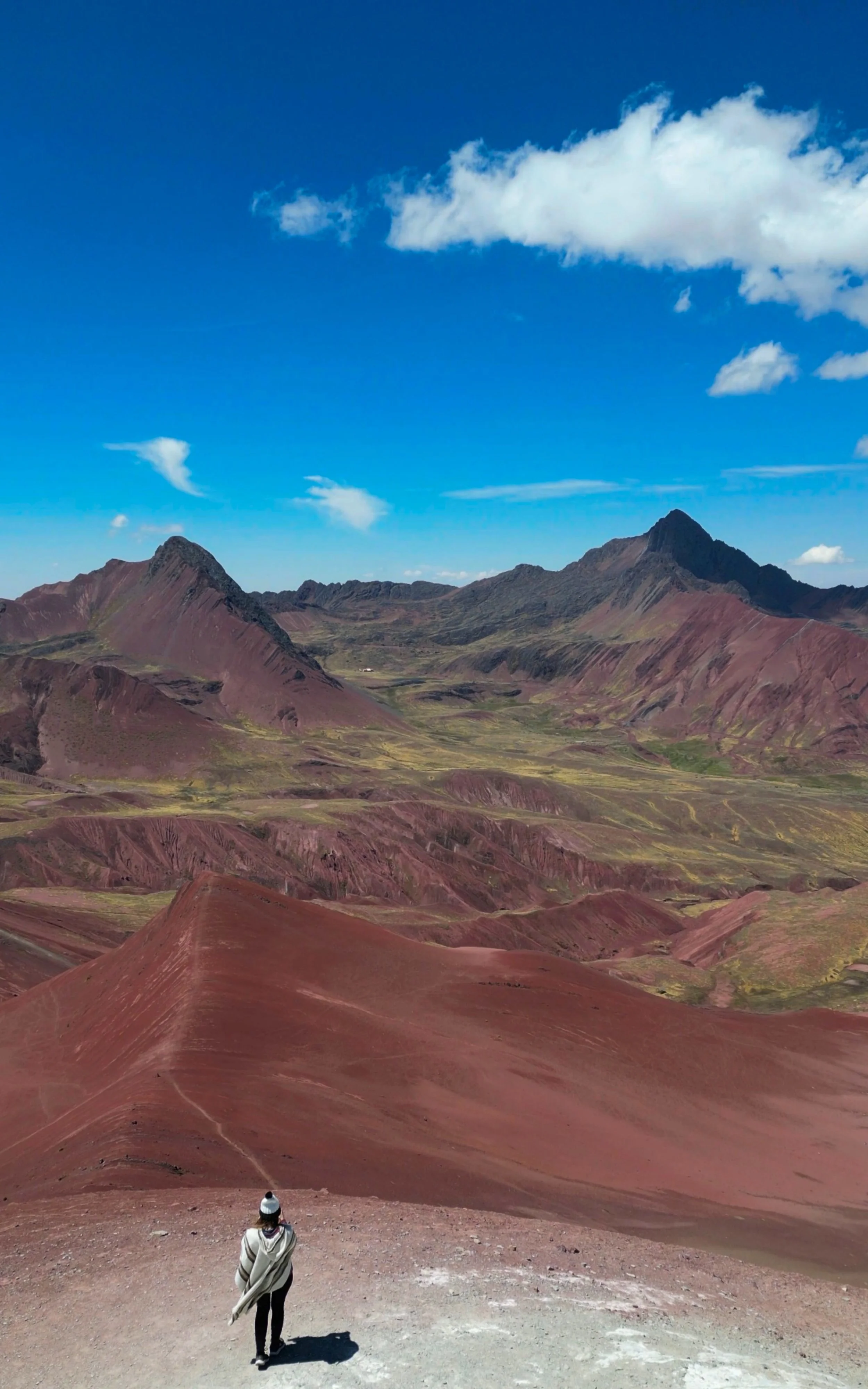
The Red Valley is located 3 hours away from Cusco, just behind the famous Rainbow Mountain, in the Pitumarca district.
The best way to explore this dream-like scenery is through a tour operator, who will guide you along this spectacular hike.
Before hiking the Red Valley, it is best to acclimatise for a couple of days in Cusco, due to its high elevation of 5,200 meters. I also recommend taking Sorochi medications (against altitude sickness) 12 hours before starting the trek.
Visiting the Rainbow Mountain and Red Valley is something that you can complete on a full-day tour from Cusco. Bear in mind that for entering the Red Valley, you will need to pay an entrance fee to the communities.
WHAT TO KNOW BEFORE VISITING..
PRICES
There is a 10-soles entrance fee for anyone entering the park, about 3 USD.
When you continue the hike to the Red Valley, the entrance fee is 20 Soles - 5 USD.
DRONING
Wherever possible, ask for permission. If you want to take some pics or make a short movie that includes people and their surroundings, ask if it’s okay with them. Generally speaking, it is not so easy to fly a drone in Peru, due to its strict rules and many archaeological sites.
If you want to fly the drone in the Rainbow mountains, you must get permission from the local communities, but they let you fly the drone for 5 soles and only for 5 minutes.
In the Red Valley, it is easier to drone since the people in the communities are more flexible. However, you also have to bribe them. For 10 soles, they let you fly for as long as you want, but only in that area, since other communities control the other valleys.
MUST HAVE
Very important to take with you sun cream with high protection at least 50-90 SPF, because the sun is extremely strong due to the high elevation.
Sunglasses, because it’s very windy and the terrain is sandy.
Water, at least 1 litre.
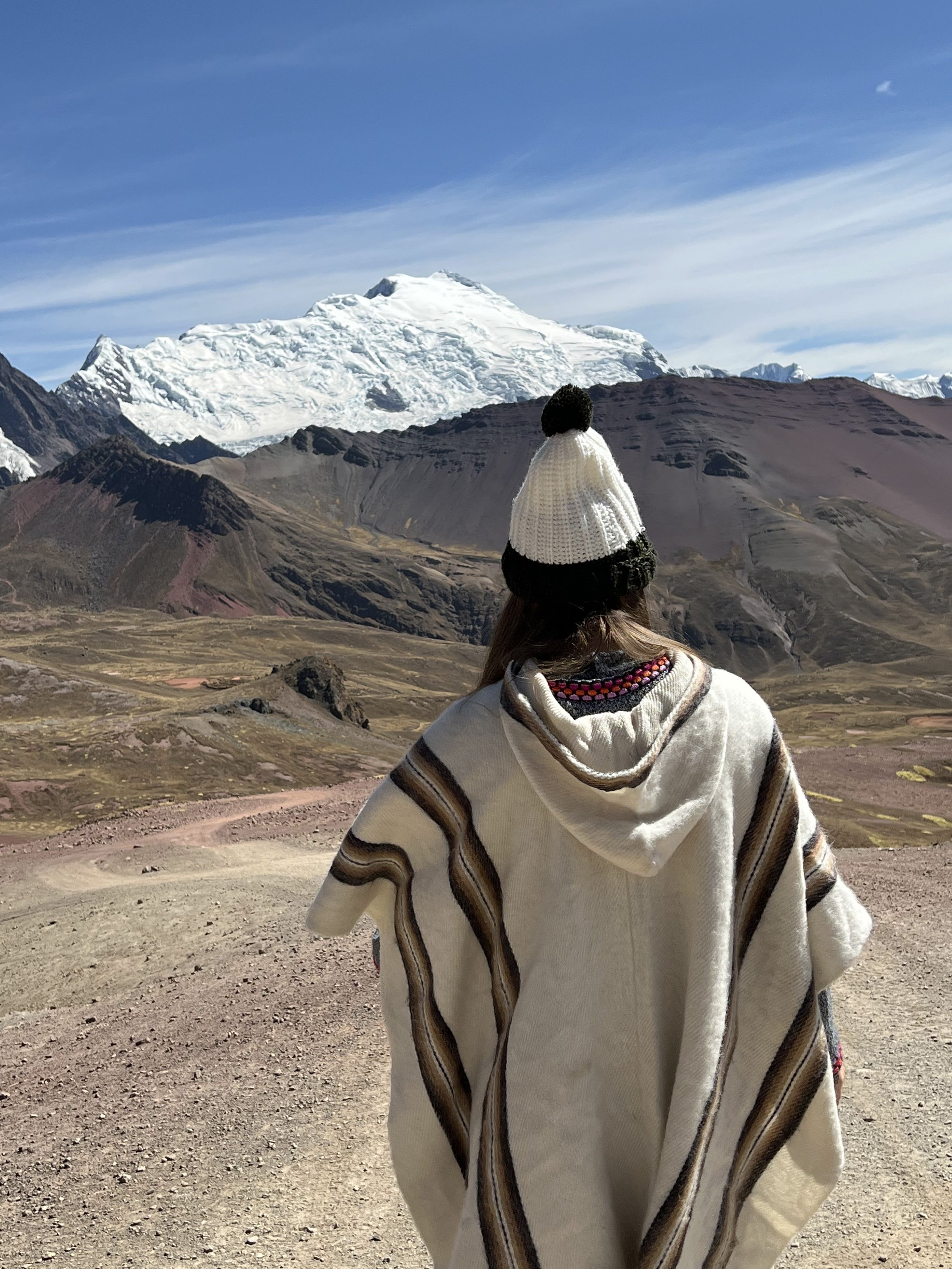
Warm clothes: I recommend a warm sweater with a Poncho and a hat to protect from the sun's rays.
Sorochi pills: a medicament against altitude sickness. (It is recommended to take it every 12 hours and at least 5 hours before reaching the trail’s starting point).
CLIMATE
The best time to visit Rainbow Mountain and Red Valley is between March and November. The weather changes drastically in this particular region. Between January and February, you can expect heavy rain and snowfall.
The Red Valley is expected to have low temperatures throughout the year. Even if it is sunny, you will need to prepare yourself for the cold, so dress appropriately, wear a poncho, and you can’t go wrong.
I visited the Valleys at the end of November, and it was the ideal time: not many tourists because it was low season and the climate was perfect!
my experience
I explored the Rainbow Mountains (also called Vinicunca) & the Red Valley with a private tour company from Cusco named QORIANKA TOURS.
This has been my favourite guided tour in South America, so I absolutely recommend it!
The tour price was 100 USD/pax, including transportation, breakfast, lunch, and a private guide, an incredible deal for what you get!
The day started at 4 am, when we left Cusco and drove for two hours to get to the breakfast place, where we ate all kinds of delicious Peruvian fruits.
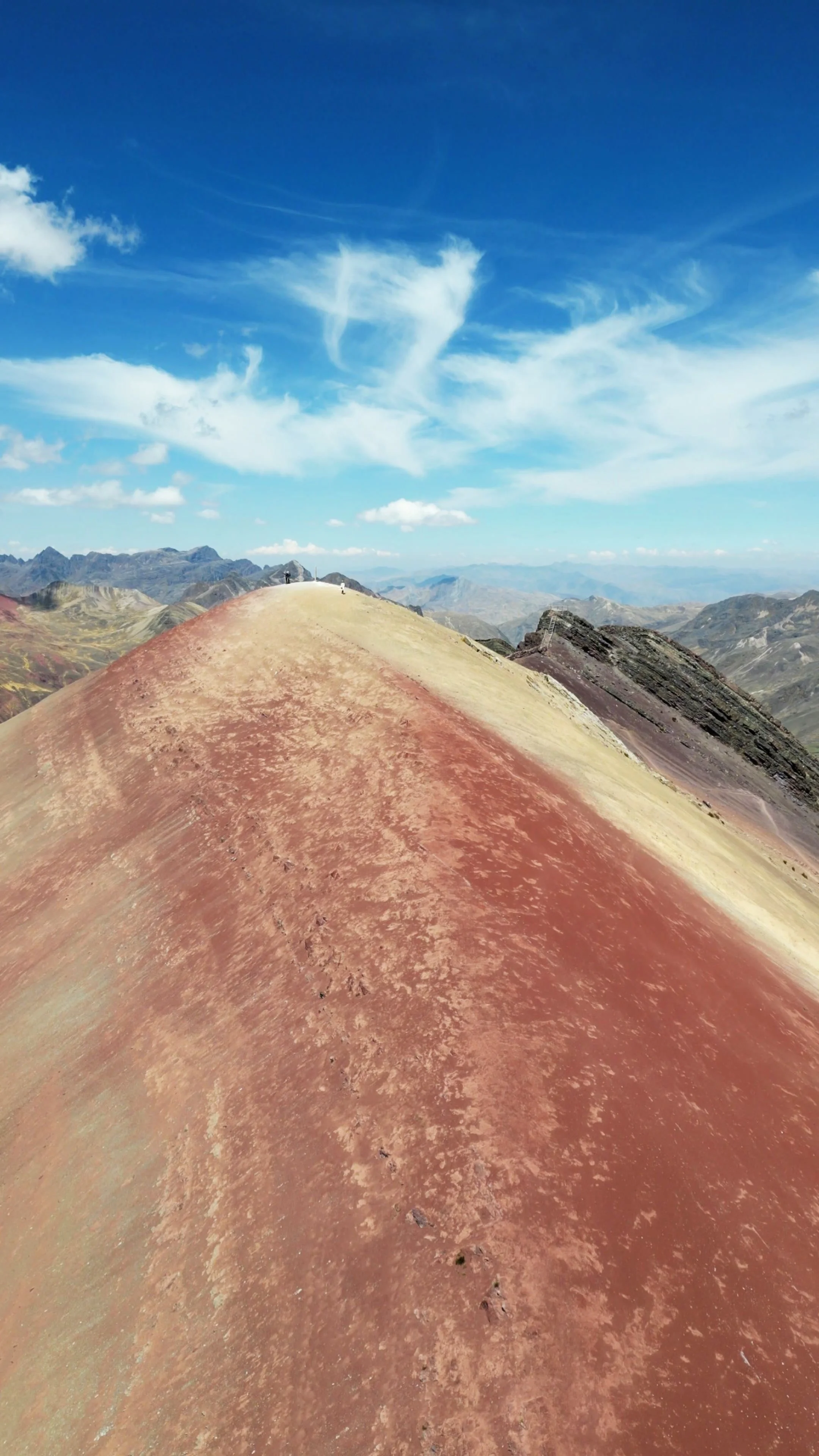
Hiking to the Rainbow Mountain takes two hours. It is not so hard, but that depends on your physical condition and how your body reacts to the altitude. The first part of the hike is flat, and only the last half an hour, the path gets steep, but you will get completely rewarded by the incredible views!
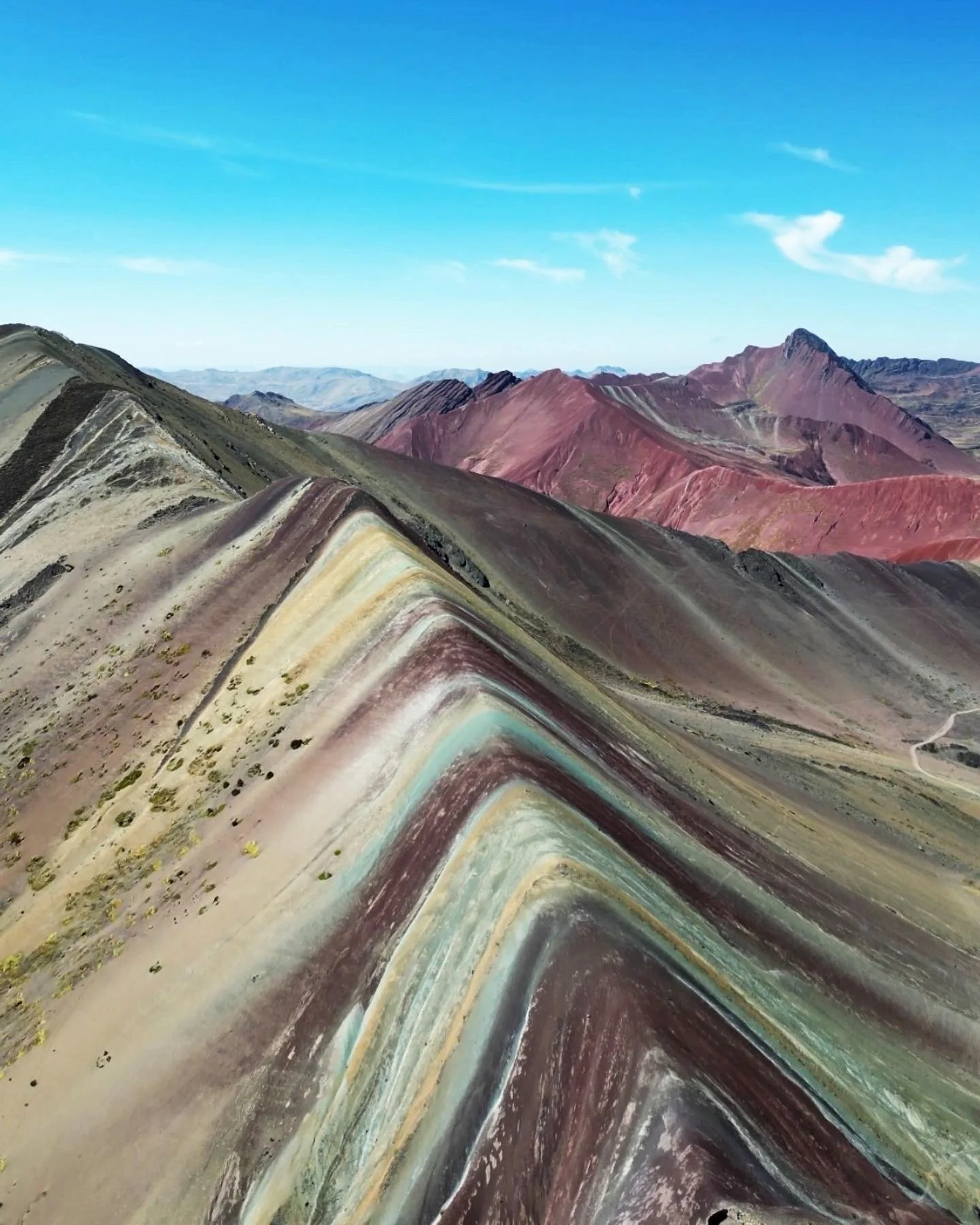
During the high season, the Rainbow Mountain receives more than 1,500 visitors per day, becoming one of the most popular destinations in Cusco. However, if you continue the hike for 30 minutes (on the left side of Vinicunca), you will get to a hidden gem called the Red Valley.
Why are these mountains so colourful?
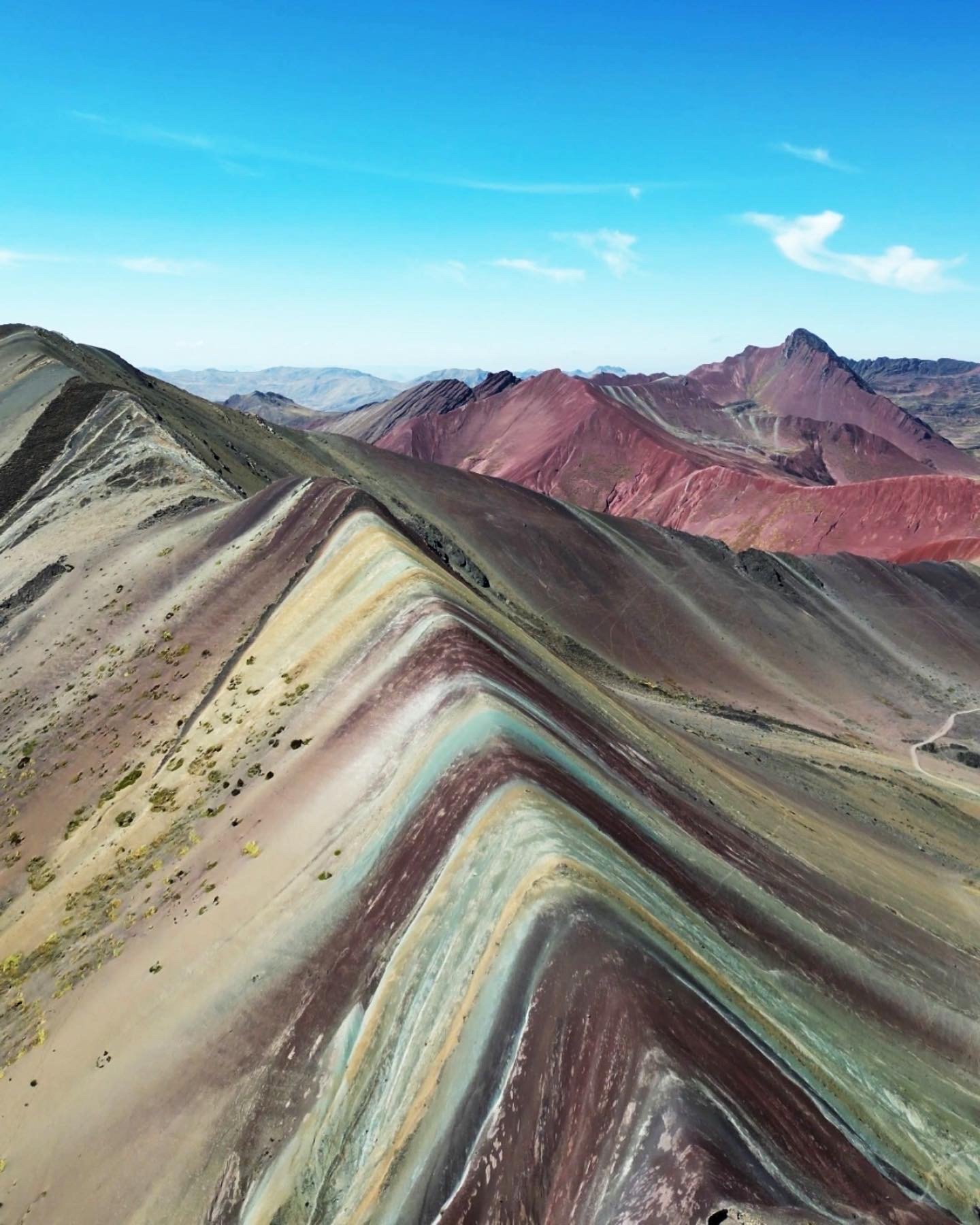
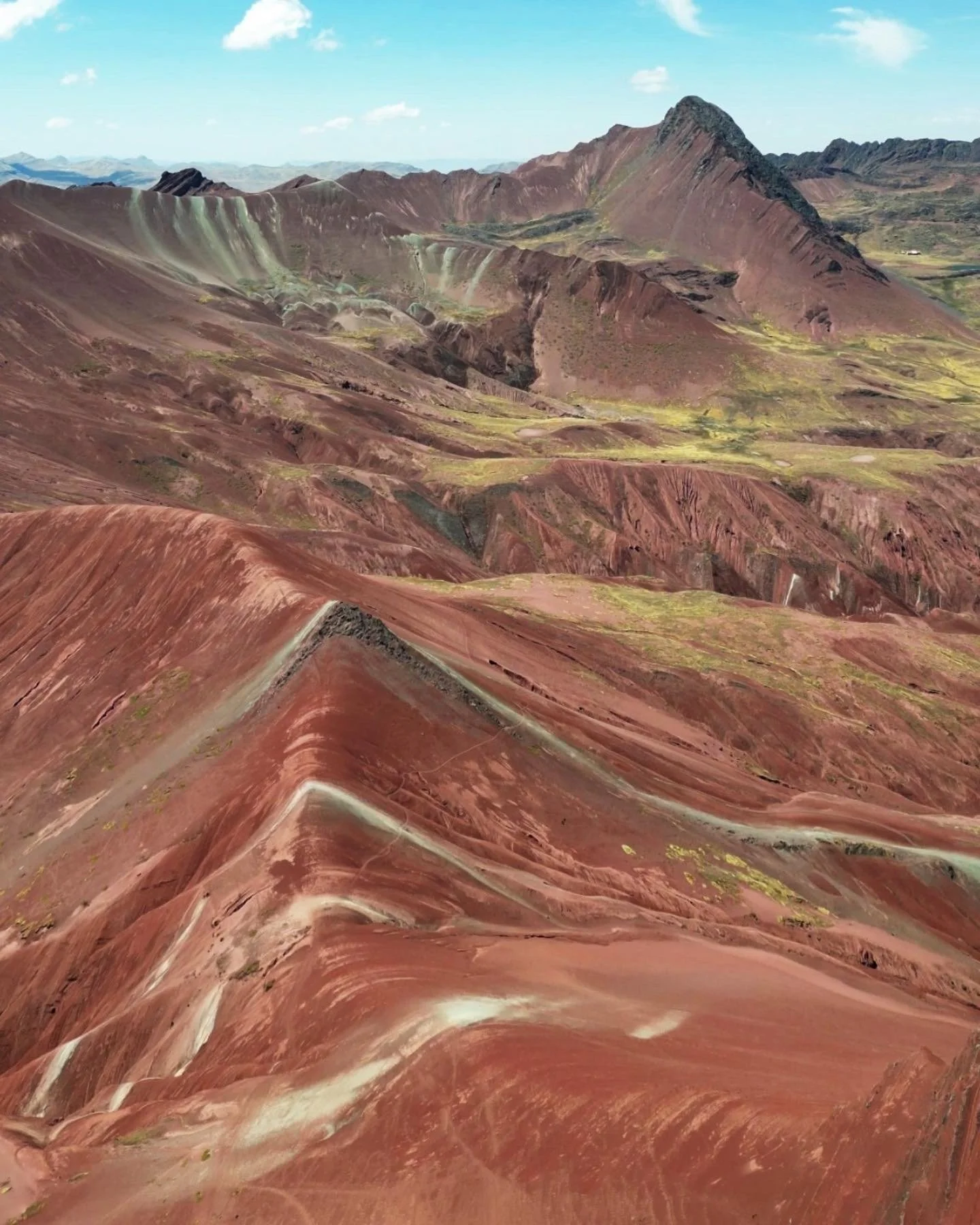
Also known as Valle Rojo, this vast Martian landscape feels like trekking on another planet. The reds and oranges that rise in every direction are truly breathtaking sights. My jaw dropped as I took my first few steps onto this alien terrain. To add to this hot colour palette is a beautifully cooling contrast of greens and greys, where vegetation grows in what is surely an impossible soil.
In my opinion, the landscape in Valle Rojo is a lot more impressive than the famous Vinicunca, also because you are at a higher elevation and you get a 360° view.
From the top, you can admire the painted mountains that are unlike anything you’ve seen before. The sediment of minerals creates the particular colouration found in the valley, and the red and green tones are caused by the presence of iron-rich soil.
meet the local communities
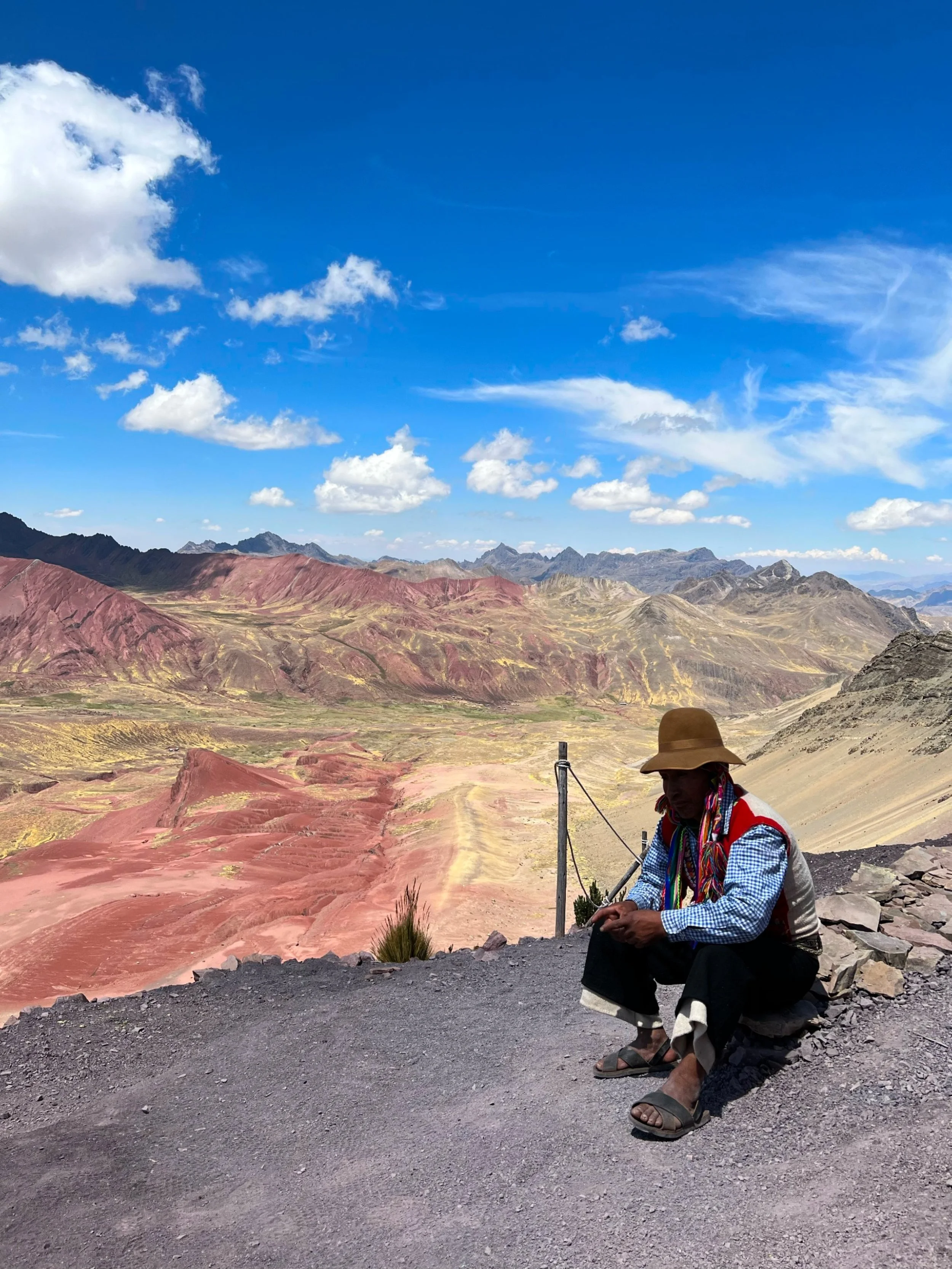
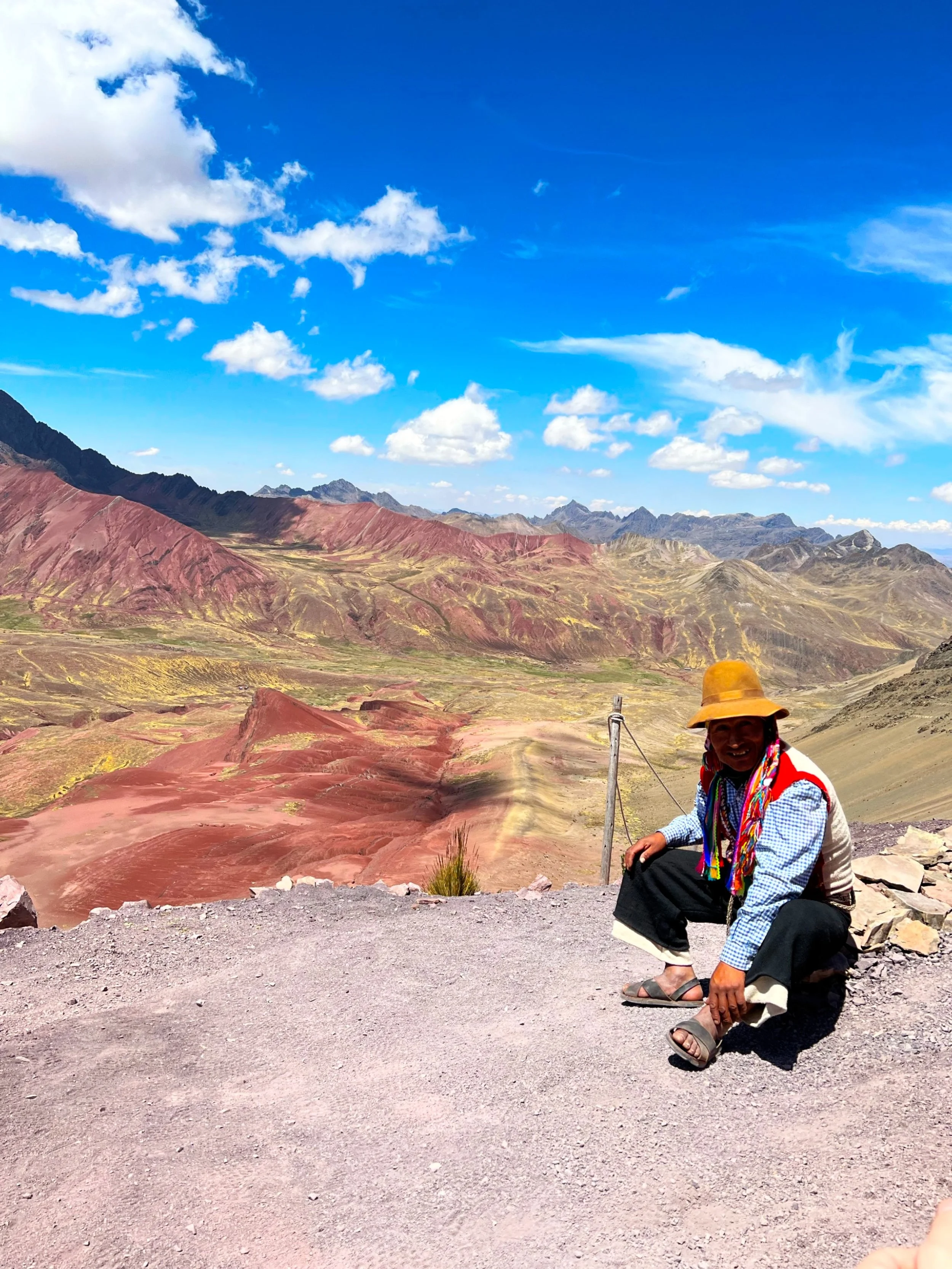
When tourists visit Peru’s most famous attractions, they have to pay a small entrance fee to the local communities. The amount usually varies between 2 and 6 USD.
In the picture, you see Pacho — a local who lives in the Red Valley, and every day he hikes for three hours (one way) just to get a 2 USD entrance fee, the only way to support his community.
In Vinicunca, a different community controls the area, and since it's more touristic than the Red Valley, they are struggling less economically than Pacho’s village. A reason more to visit this beautiful valley, with a small gesture, you can help the local community that depends on this lesser-known attraction.
3) hike to the salcantay mountain
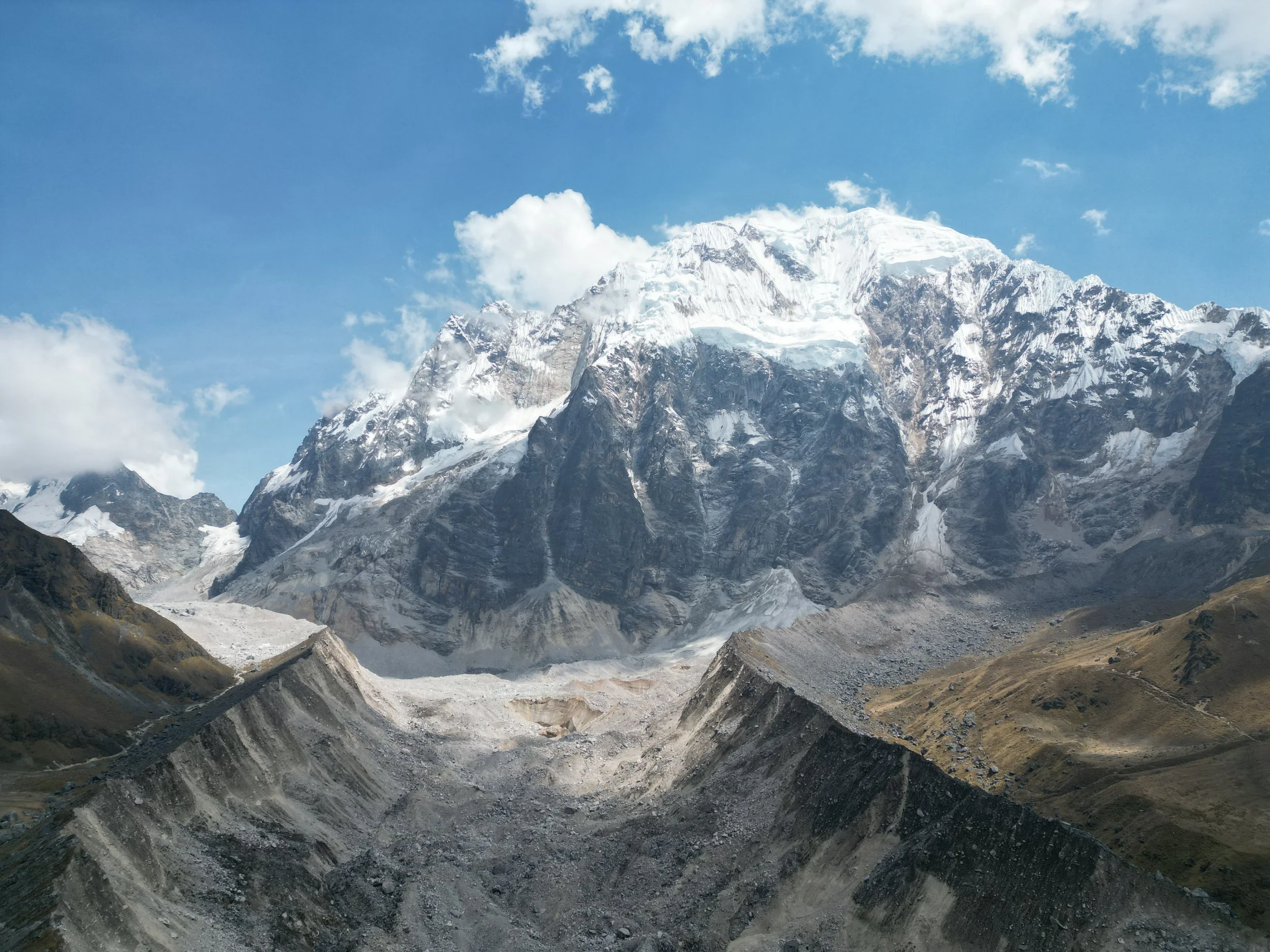
the savage mountain - 6,271 m
The Salcantay mountain is the highest peak in the Vilcabamba mountain range, part of the Peruvian Andes. It is located 60 km northwest (3 hours) of the city of Cusco. It is the twelfth-highest in Peru, and it is known to be one of the toughest mountains to climb in Peru due to many avalanches. In fact, Sallqantay comes from the Quechua language, and it means savage or wild mountain.
How to reach it?
For the easy hike (two hours one way), you don’t need a guide; you can take a private transfer from Cusco all the way to the village of Soray, and it will take approximately 3 hours by car.
If you want to do the long Salcantay trek to Machu Picchu, you have to book a guide through a tour operator in Cusco. The hike takes 5 days, and it is considered quite tough.
seasons
The dry season lasts from April to October, with the driest months being June, July, and August. This is also the busiest season.
The rainy season is from November to March, and the worst months to go trekking to Machu Picchu are December, January, and February. It is not impossible, but you should ask yourself if it’s worth it.
I was there at the end of November, and I had perfect weather all the time, with the advantage of having no crowds because it was still considered low season.
the easy hike - 3,5 hours
Once arrived in the little town of Soray, you can start hiking for twenty minutes all the way to the base camp. Here, you will see two trails dividing, one is going to the Laguna Humantay (where the crowds are going) and the other to Salcantay.
The hike is quite easy, but the last part gets quite steep. Take the trail to Salcantay, which is the path on the right side of the restaurant. Continue hiking for 2-3 hours (depending on your speed), and you will finally reach the foot of the mountain, where you will get a view of the majestic Salcantay.
To go back, take the same trail.
I loved this hike a lot because the scenery reminded me a lot of the Himalayas. Unlike the other trails, there is no one else hiking it, because everyone is visiting the Laguna Humantay (one of the most popular destinations in Peru). Moreover, you don’t need a guide to do it.
This hike is surely recommended if you love adventure, you are fascinated by mountains, and you like to go off the beaten path.
The 5-day Salkantay trek
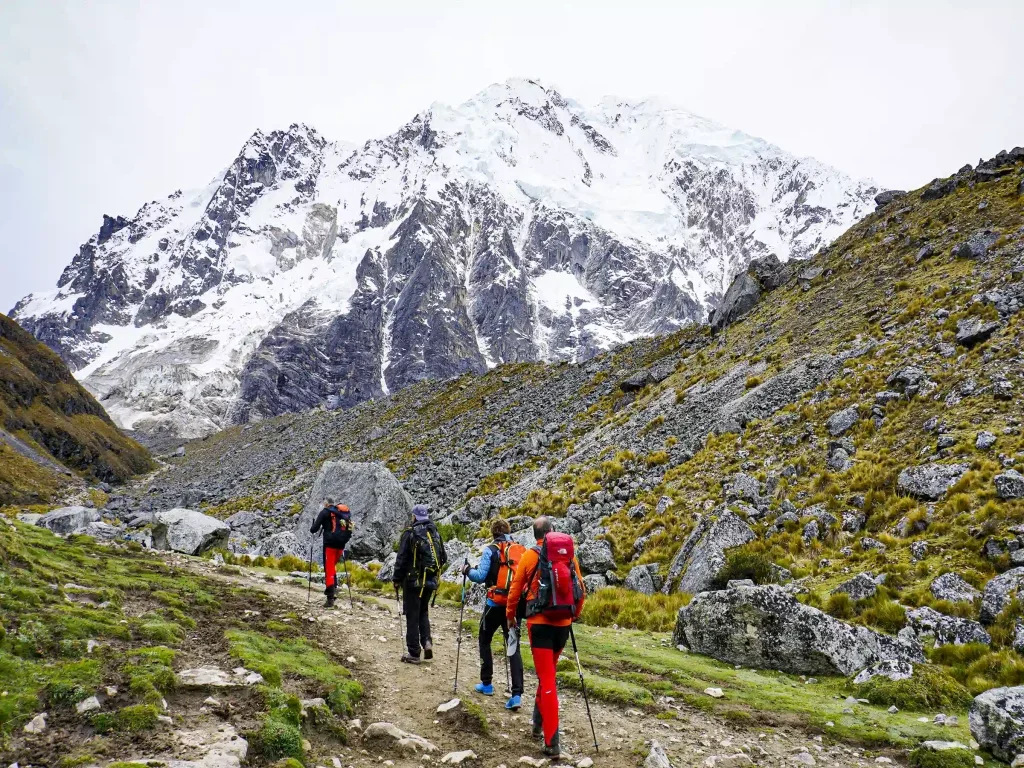
The cost for a guided Salkantay Trek usually starts from 350 USD, and it includes accommodation, transport, meals, and a guided tour. The prices are always higher if you book online, so it is best to find a good tour operator while you are in Cusco.
Before starting this trek, I recommend acclimatising first for a couple of days in Cusco, and if you want to be sure to avoid altitude sickness, you can take Sorochi pills every 12 hours.
Expect to pass through snowy mountaintops before heading down through the cloud forest on this once-in-a-lifetime adventure. You'll end up hiking through the lush Peruvian jungle as you get closer and closer to the Wonder of the World, Machu Picchu. The drastic change in climate and surroundings is what makes this exciting trek so unique.
THE TOUR
On day 1, you'll trek up to the stunning Humantay Lake, which sits like a blue gem amidst the snowy backdrop. The next day, you'll embark on the challenging trail up to the Salkantay Pass to see the majestic Salkantay Mountain. On day 4, you'll get to visit the fascinating Inca archaeological site of Llactapata and get your first glimpse of Machu Picchu.
As if that wasn't enough to get your heartbeat racing, what better way to end the ultimate trip than with a visit to the Lost City of the Incas, Machu Picchu? You'll enjoy a guided tour of approximately two hours before climbing Huayna Picchu or Machu Picchu mountain and contemplating a panoramic view of the fortress.
You'll feel like you're flying high like a condor and transported back in time hundreds of years to imagine what life was like back then.
4) pet the alpacas in the sacred valley
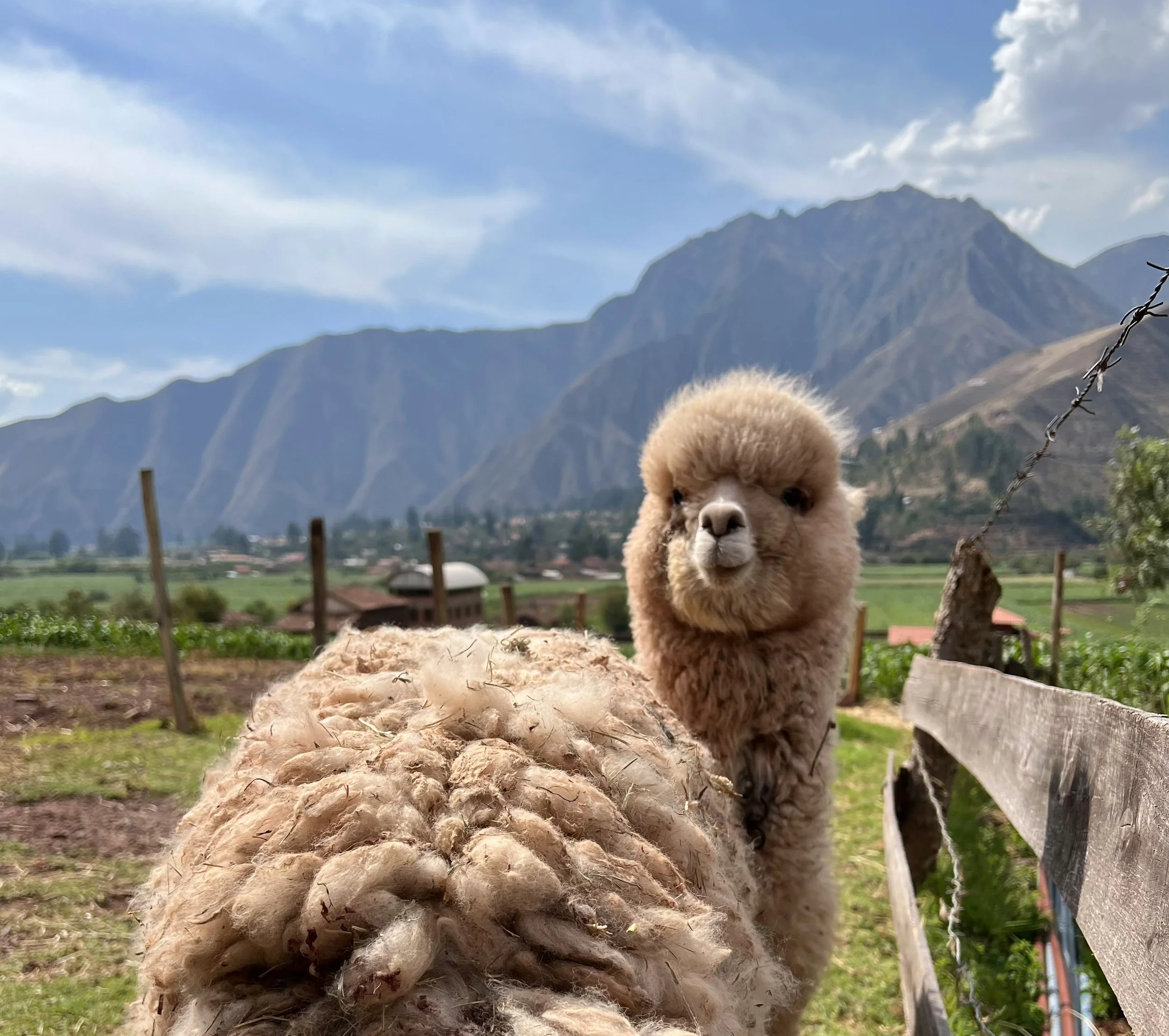
the sacred valley
Aside from the stunning landscapes, the valley is home to various fascinating archaeological sites as well.
In fact, the Sacred Valley was inhabited by small Andean communities until the conquest of the Incas, who built terraces, temples, and cities, which are still possible to visit today.
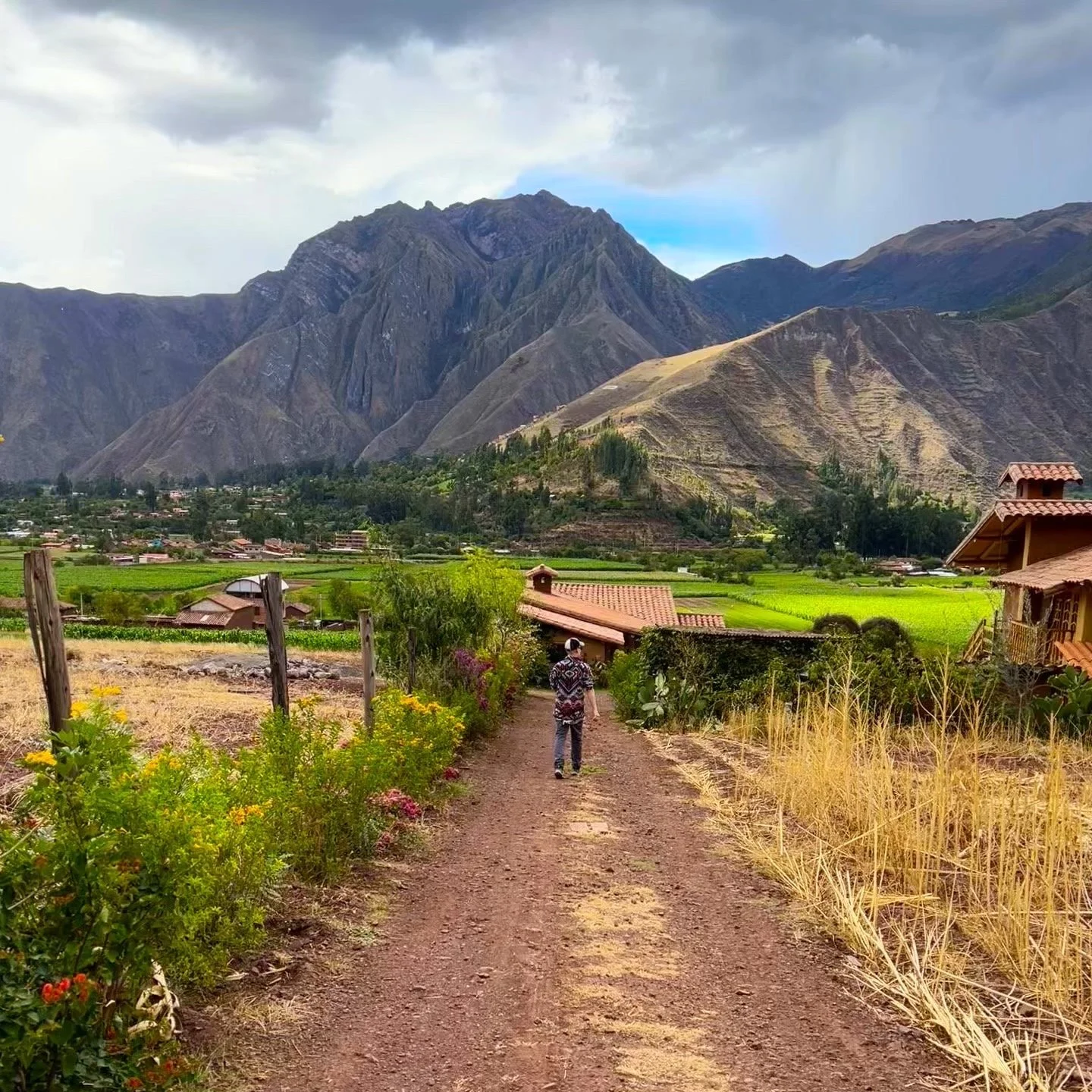
If you are looking for a peaceful getaway and to take a break from your hectic travels, the best place to relax in the valley is definitely Huycho. A peaceful village that seems to be stuck back in time, surrounded by majestic, lush mountains.
Where to stay?
In Huycho, you can find a peaceful B&B run by a friendly local family — Inkasaire Beautique Lodge. We had a very good experience during our stay; in fact, it was our favourite accommodation in Peru.
The view is exceptional, you can sit on the balcony while having breakfast and enjoying the mountains right in front. The garden is very well-maintained, and you can relax on the hammock while admiring the beautiful views.
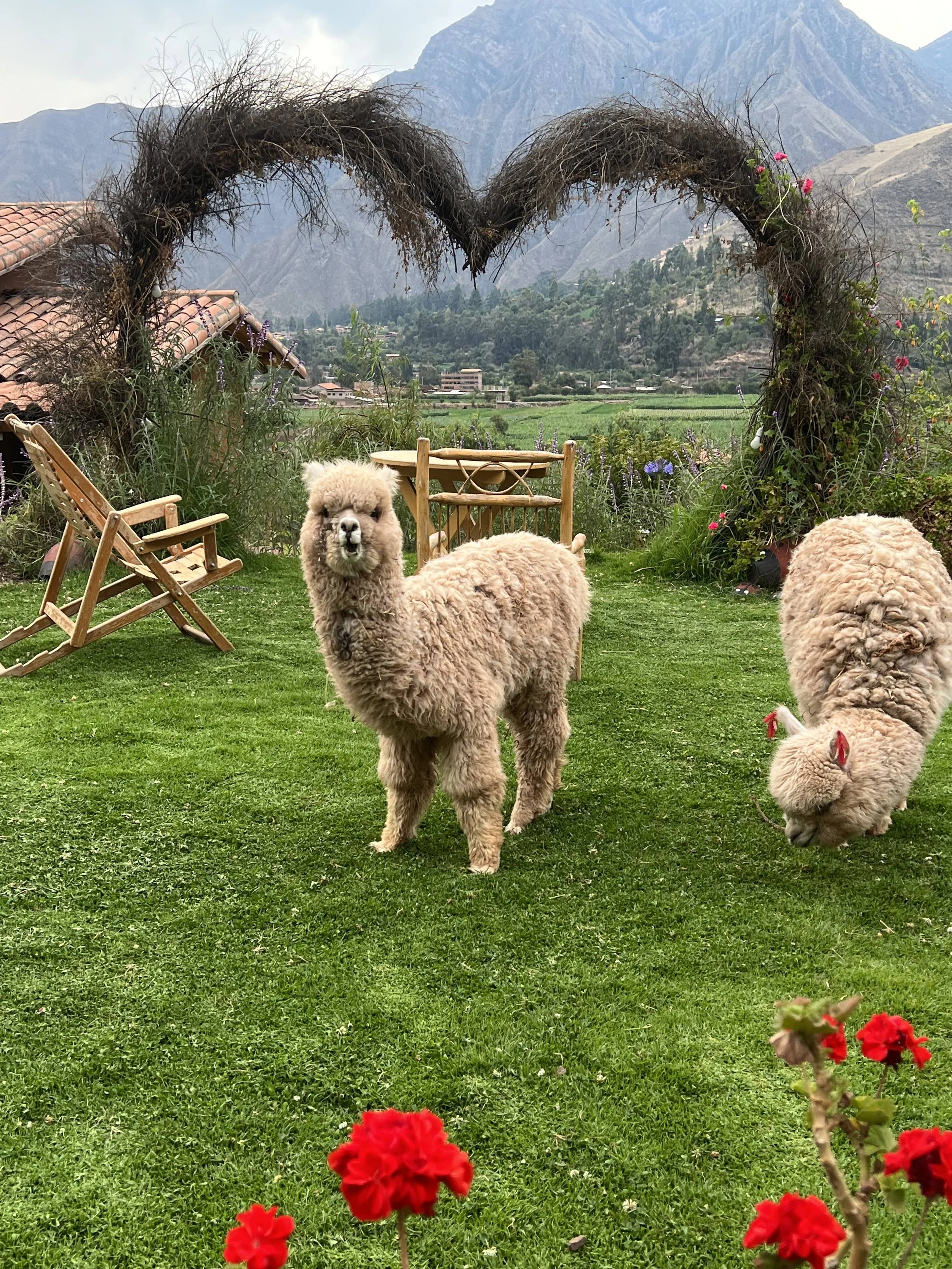
The best part was the alpacas in the garden that we could feed and cuddle whenever we felt like it!
Mike — one of the owners, was very friendly and always ready to help. Moreover, he also built the entire place by himself, which is extraordinary, and we really felt how much he cared to offer the best experience to every visitor!
Where to eat?
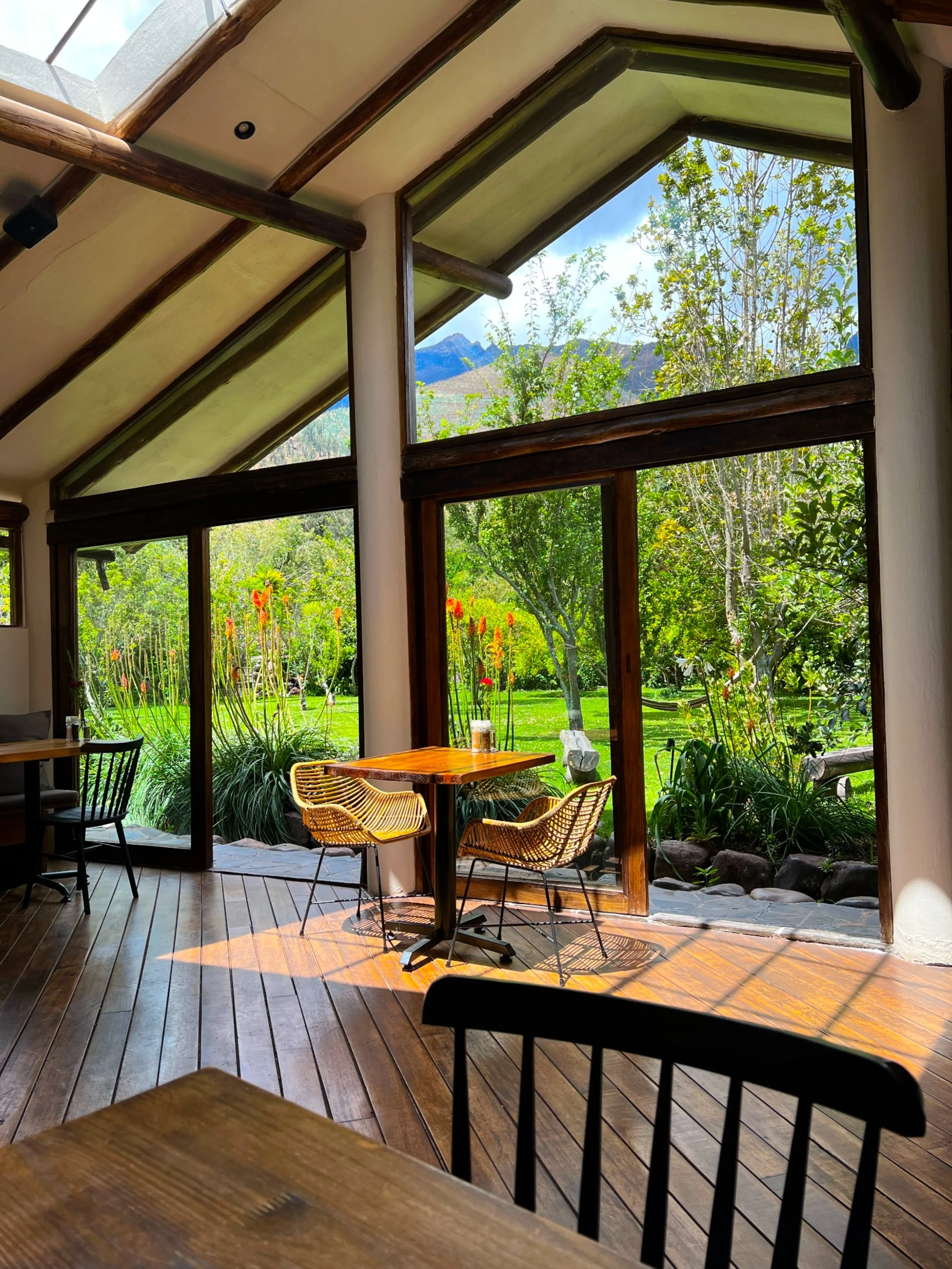
Unfortunately, during our stay, the restaurant in Inkasaire Beautique Lodge was not functional, so we had to walk to the centre, which was a bit far.
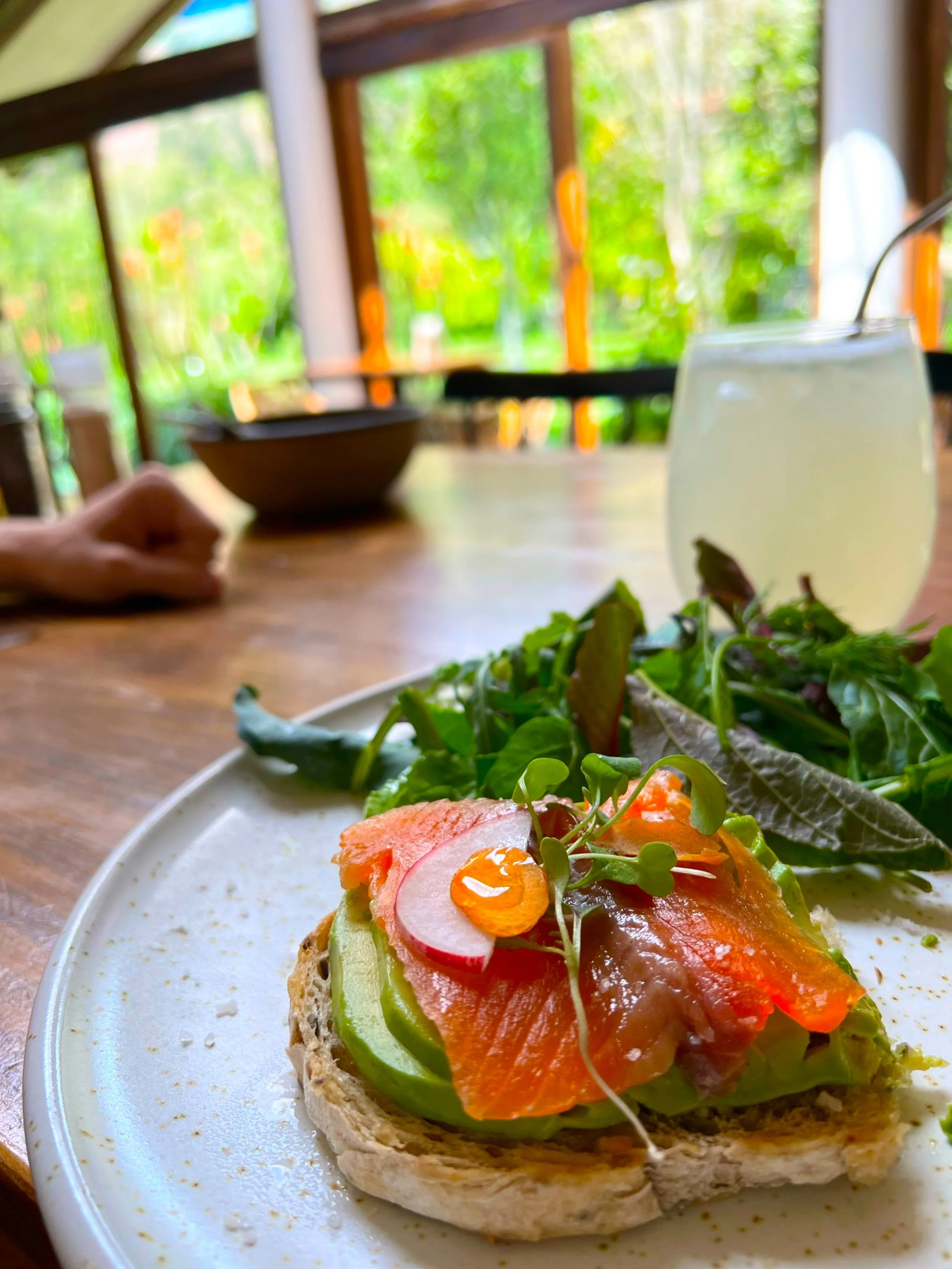
However, we found an amazing restaurant with one of the best foods (and cocktails) we had in Peru — Andenia Hotel.
This stunning Hotel-Restaurant has one of the best gardens I have ever seen, full of exotic plants and hummingbirds.
If you have the chance to eat here, I recommend trying the Ceviche and the Pisco Sour — a delicious cocktail from Peru, made with coconut, lime, and alcohol.
What about the alpacas?
When you are travelling to Peru, you will notice that there are alpacas and lamas everywhere you go. We also found them in our accommodation.
We were able to feed the curious alpacas in the garden, and once they got to know us better and got familiar with our faces, they wanted to be cuddled all the time.
What a heartwarming experience, also because their fur is one of the softest I’ve ever touched!
INTERESTING FACT ABOUT ALPACAS
1- Alpacas’ average life span is 20 years
Just like their llama cousins, the average lifespan of an alpaca is 20 years. The longest documented lifespan for an alpaca is 27 years old.
2- Alpacas don’t usually spit
Like llamas, alpacas do not usually purposefully spit at humans. From time to time, they do, but only when they feel threatened.
3- Alpacas are usually safe to be around.
Alpacas are very quiet and gentle animals. Occasionally, an alpaca may try to kick with its hind legs, but it’s usually just a reflex from being touched on its rear.
4- Alpacas cannot live alone.
Alpacas have really strong herding instincts. The best way to keep an alpaca with a companion is to have them all be the same gender. This is because even neutered alpacas can sometimes successfully bond with each other.
5) relax in aguas calientes, the gateway to Machu Picchu
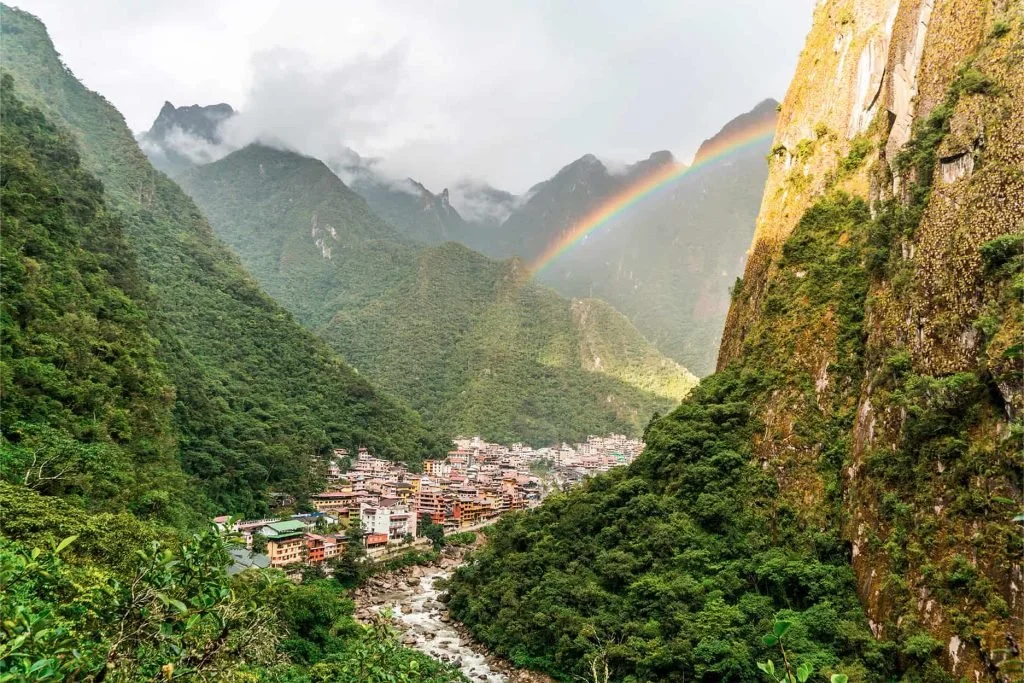
Pretty much everyone comes to Aguas Calientes for one reason only: to visit the incredible Inca citadel of Machu Picchu. And while this ancient world wonder certainly does take centre stage, there are several other nearby attractions that are more than worthy of consideration.
Aguas Calientes is a small cosmopolitan city located at 2,040 meters. You are so close to Machu Picchu that you can feel a special energy. This town is located at the foot of the mountain where the Incas built the Inca City.
How to reach Aguas Calientes?
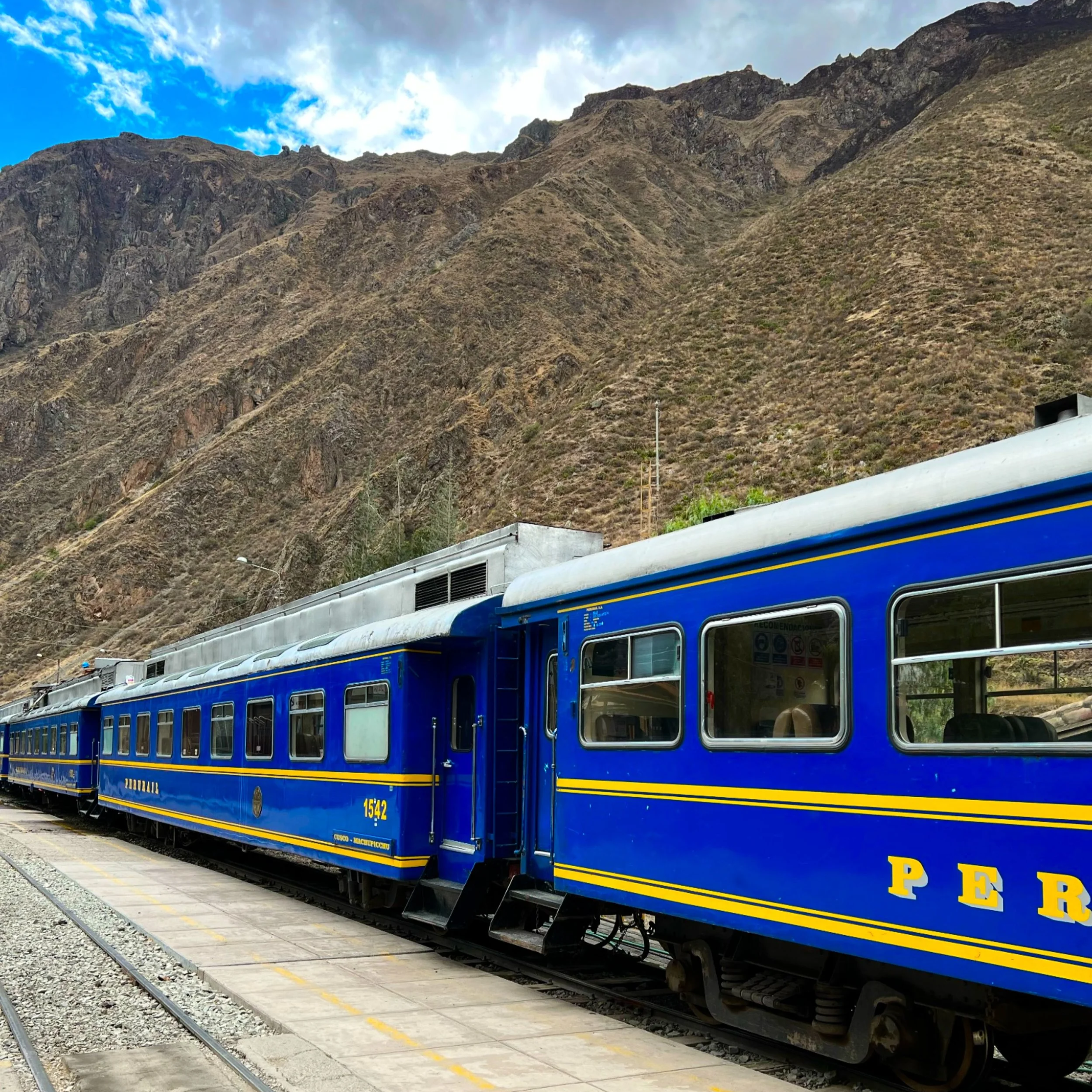
The best way to get to Aguas Calientes is with the panoramic train that goes through the Sacred Valley, from where you can enjoy snow-capped mountains and lush jungle views.
You can book the train ticket online; it’s recommended to book it at least a few days in advance, or you can buy it at the Inca Rail office in Cusco's main square.
The train and bus ticket price is 90 USD/pax two ways. First, you will take a bus from Cusco to Ollantaytambo (2 hours) and then the train from Ollantaytambo to Aguas Calientes (2 hours).
WHAT TO DO IN AGUAS CALIENTES?
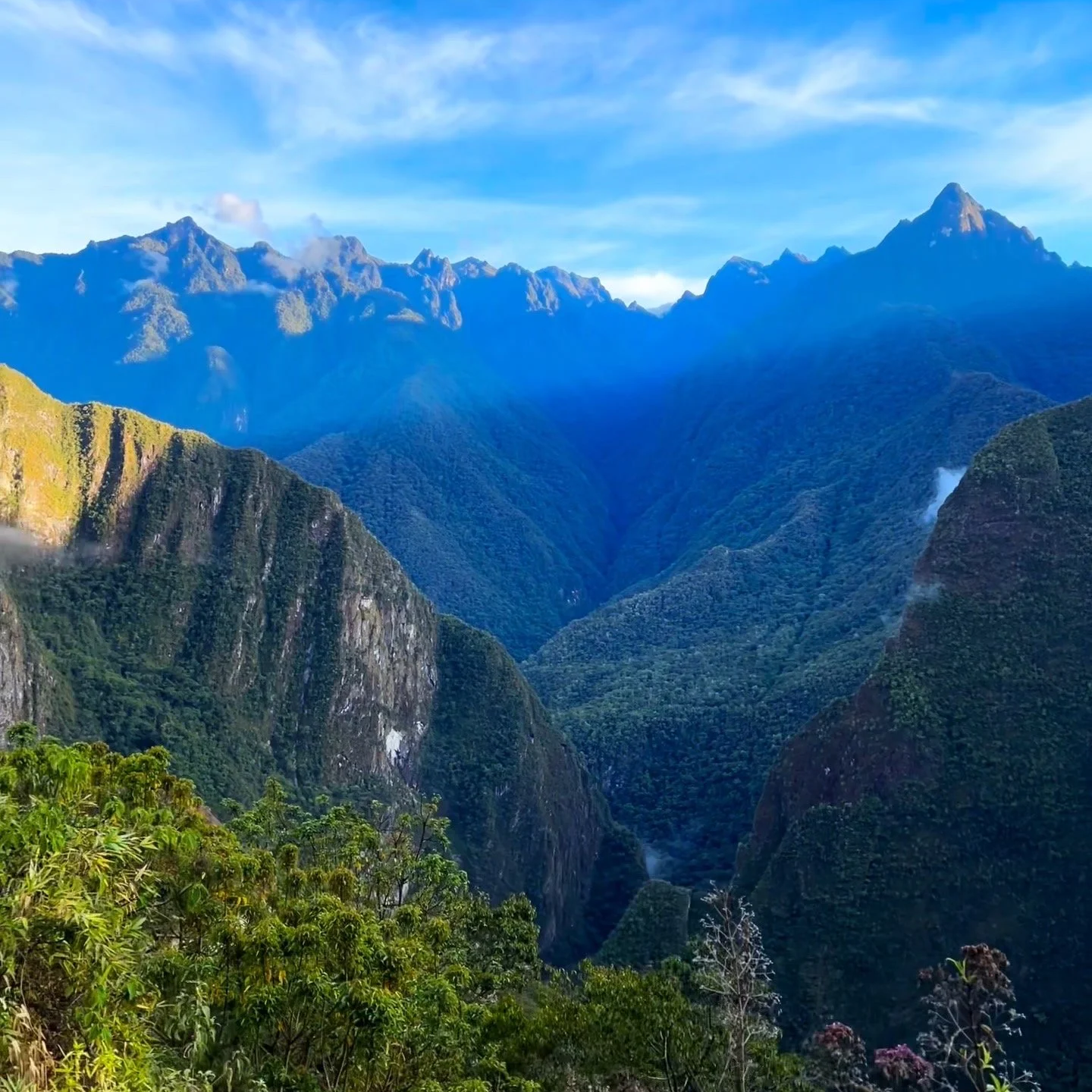
Hike the Putucusi Mountain
If you like outdoor walks, Putucusi Mountain is the favourite activity for adventurous people in Aguas Calientes. This mountain is 2,560 meters high, and this route is one of the most difficult short walks in Aguas Calientes. It crosses a poorly marked path as well as extreme vertical stairs. The journey takes approximately 2 hours. The top of this mountain will allow you to take amazing views of the Inca City of Machu Picchu from a little-known angle. It takes good physical condition to ascend this mountain. Wear hiking shoes and carry lots of water with you.
TRY THE LOCAL SPECIALTIES
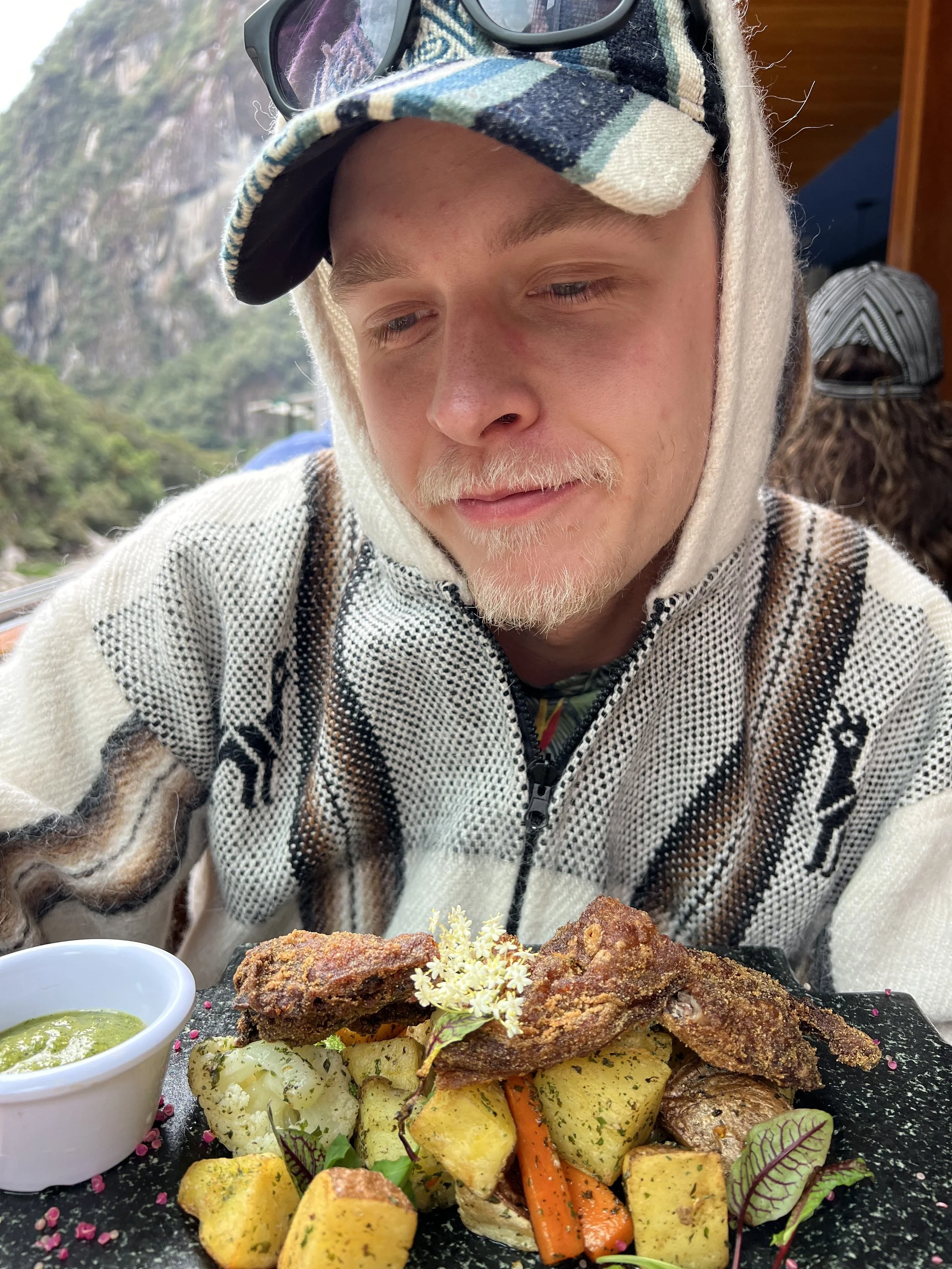
Aguas Calientes offers many delicious restaurants. If you want to try some typical food, I recommend trying the Guinea Pig, a traditional Andean delicacy. They are considered a crucial part of rural life, often served at celebrations such as weddings and festivals.
(It tastes almost like fried chicken!)
Visit the Gardens of Mándor
Mándor gardens are ideal if you are a nature lover like me. The gardens are located an hour's walk from Aguas Calientes.
The trail from Aguas Calientes to the gardens of Mándor is full of lush vegetation with orchids, ferns, begonias, fungi, and more. During the walk, you can also see different species of birds and butterflies. At the end of the road, you can also admire the beautiful ‘Waterfalls of Mándor’.
Relax in the Thermal baths
The town of Aguas Calientes is also known for its hot springs in the jungle. The thermal baths will allow you to relax after your excursion through Machu Picchu. The temperature of its waters varies from 38º to 46 °C.
These natural springs are attributed to have healing properties in the treatment of rheumatic diseases of all kinds. The thermal baths are located in the highest part of town. It can be reached following the end of Hermanos Ayar de Aguas Calientes Avenue.
The entrance fees vary according to the nationality of the people: Peruvian visitors pay 5 soles (2 USD), and foreigners pay 10 soles (3 USD).
Shopping in the handmade market of Aguas Calientes
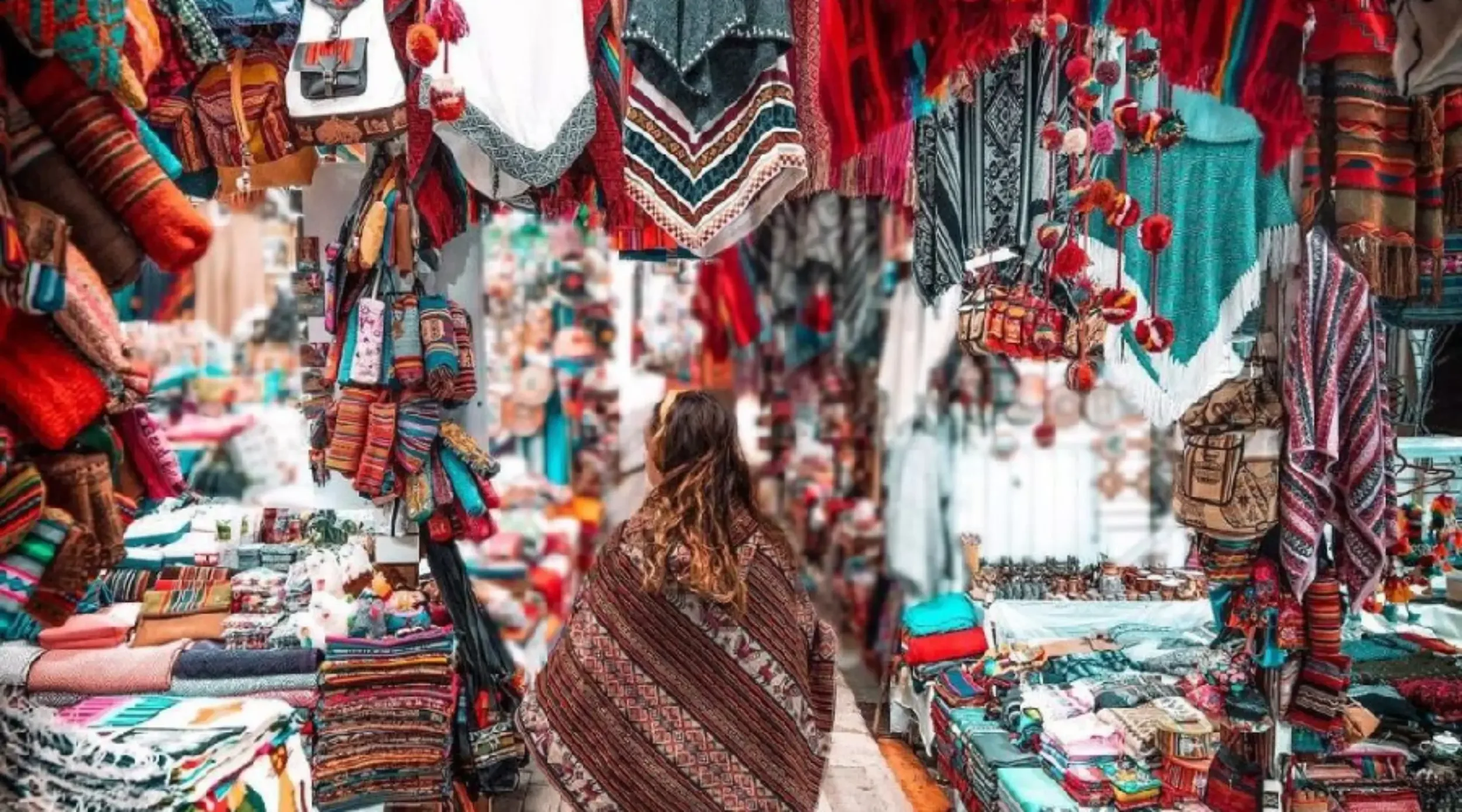
A must is to visit the artisan market of Aguas Calientes. This market is located next to the train station. Tourists can find a great diversity of handicrafts and utensils such as alpaca clothes, paintings, wood sculptures, stone, musical instruments, masks, gold jewellery, ponchos, and much more.
Visit Machu Picchu
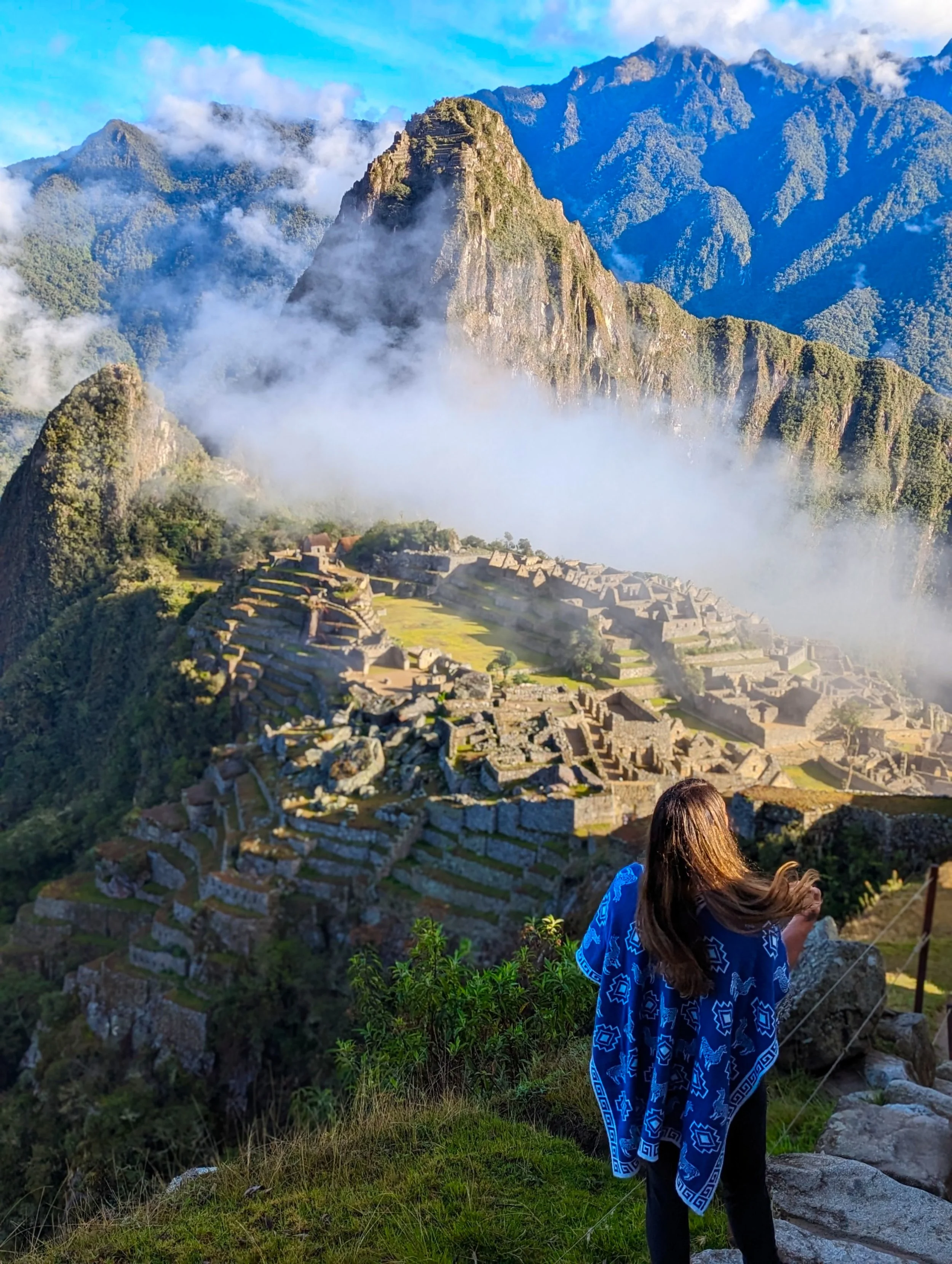
Since you are so close to the Inca citadel, it is a must to visit Machu Picchu. If you are looking for the best Machu Picchu Travel Guide, click here.
Thank you for reading this post! You can find more about PERU in the Travel section above.