Why I left Italy for the Arctic? Life in the Northernmost point of Europe
Leaving Italy.
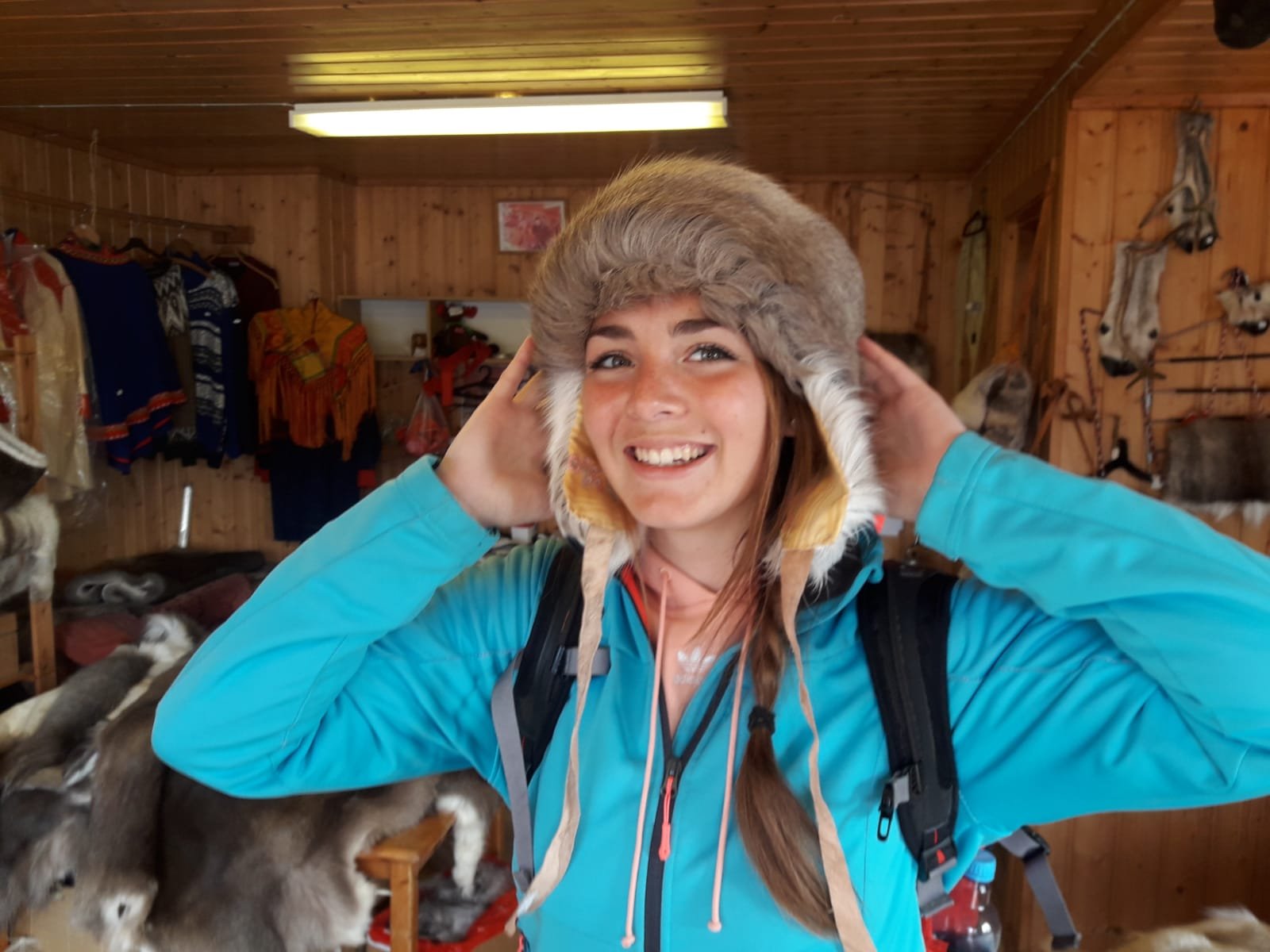
This is probably the question that I get the most when I’m working with tourists at the North Cape: ‘‘Why the hell did you leave the Dolomites to live in such a cold and dark place?’’ There are some days that I wonder the same. The main reason is that I have always craved to move abroad, to a remote location, away from crowds and stress, which is definitely what was missing in Italy.
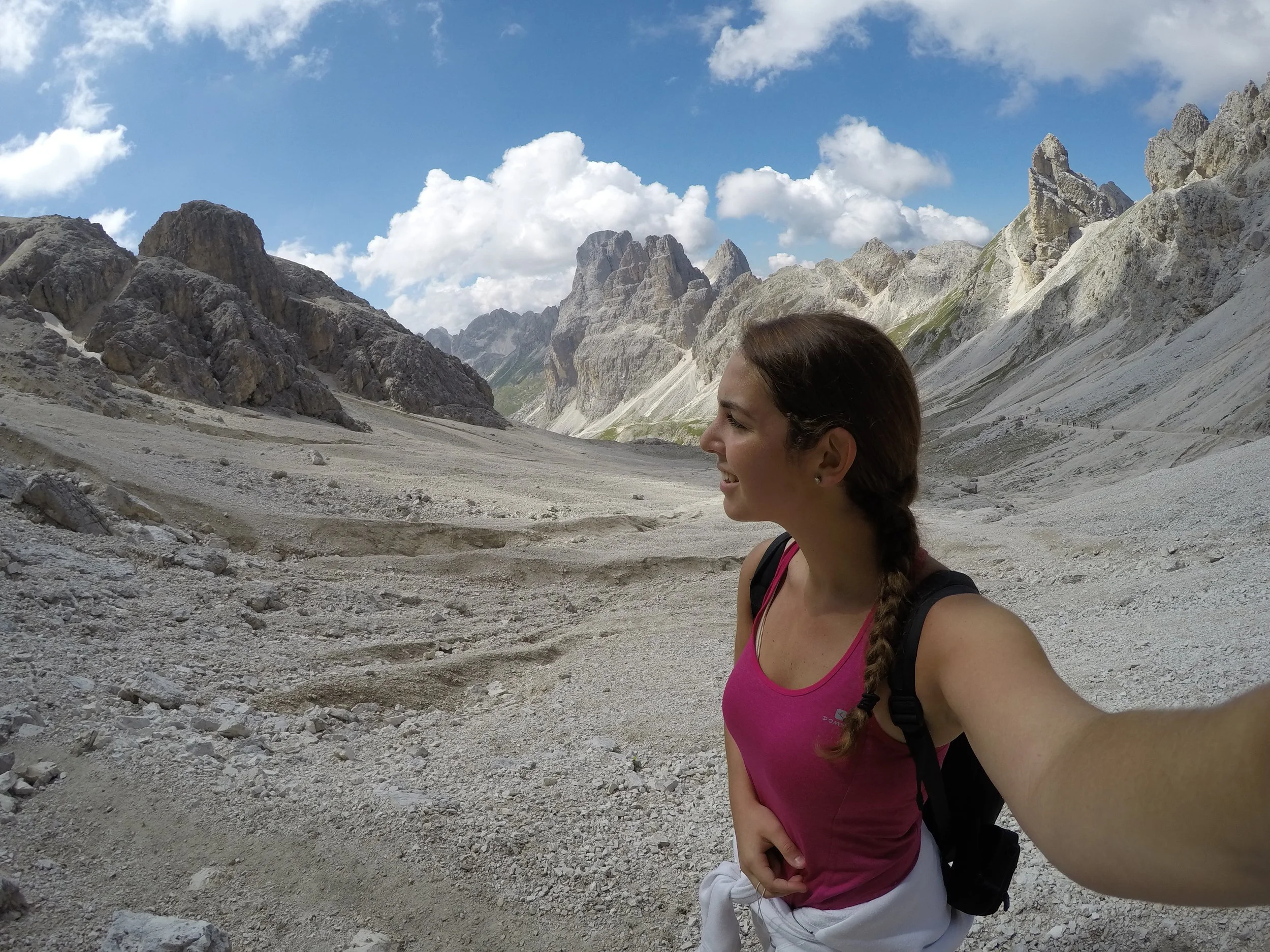
Italy is the perfect destination for a vacation — we have the best food, the ideal climate, and natural diversity, but it’s hard to find a peaceful corner in an overpopulated country. Moreover, living in a gerontocratic society is quite stressful — young people don’t have a voice or any decision-making power, and they get exploited no matter what degrees they have.
When I got a job as a tour guide in the Northernmost point of Europe — the North Cape, it seemed like the perfect place to escape from daily life problems. But living on an island above the Arctic Circle comes with its own challenges..
Life in the Arctic at 71°N.
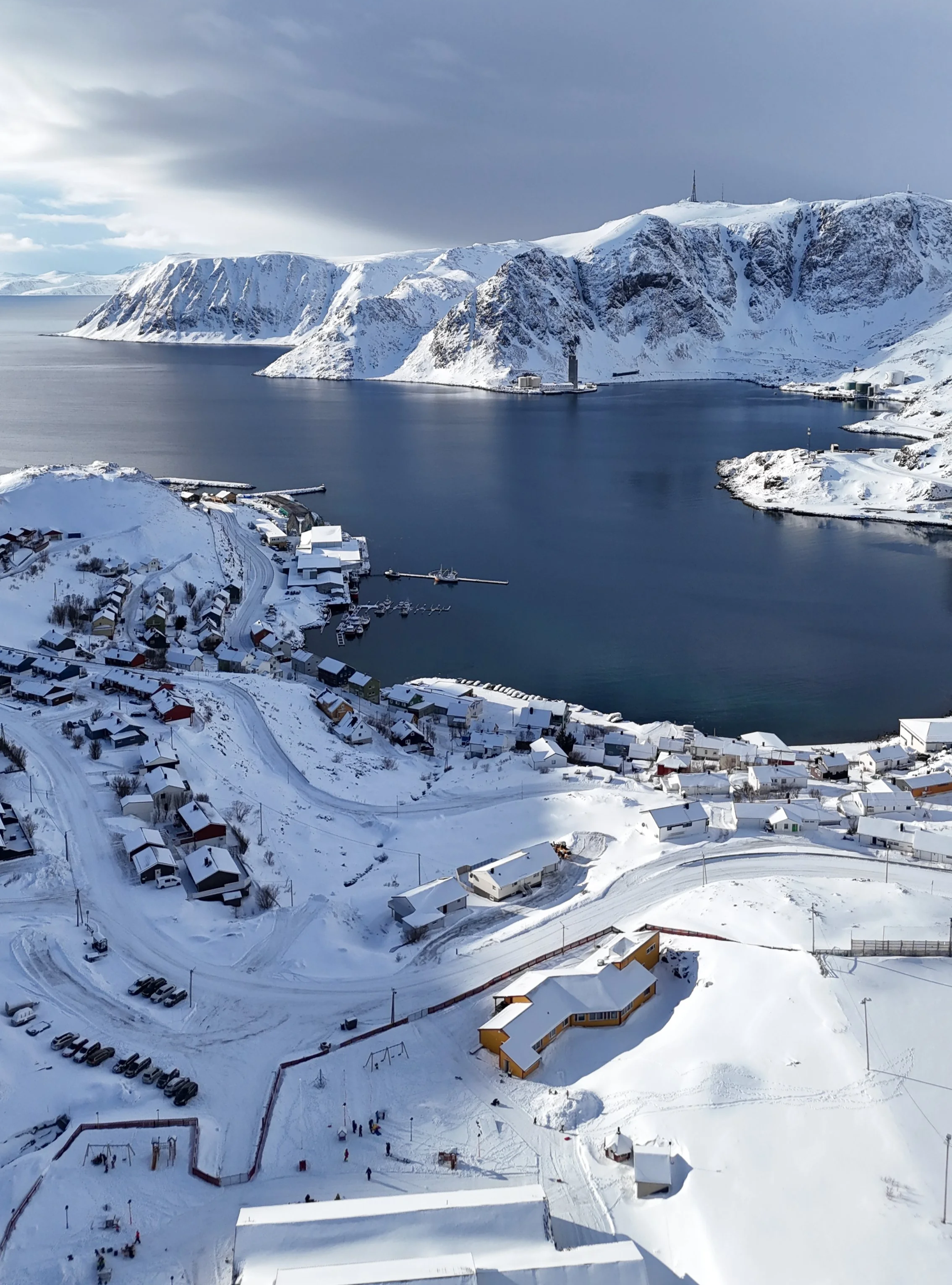
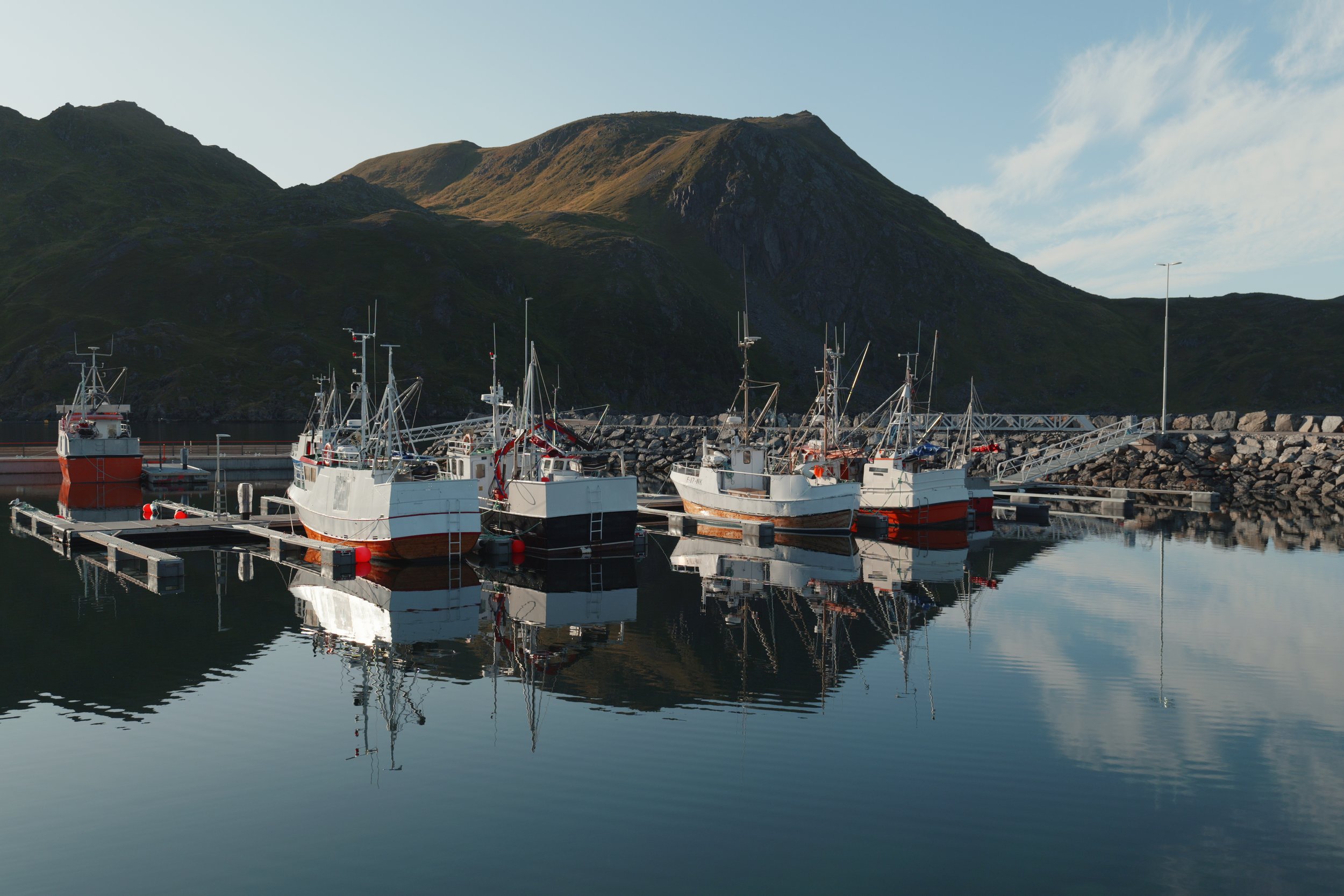
Since 2019, I have been living in the northernmost city of continental Europe — Honningsvåg, with only 2500 inhabitants, 2 grocery shops, 1 pub, 3 restaurants - no trees - 1 cinema - 1 bakery — that’s all we've got. From Honningsvåg, people need to change two flights just to get to southern Norway. The closest ‘big city’ to buy spray deodorant is Alta — 200 km away, and to reach the closest hospital, we need to drive for 3 hours, hoping that the roads in winter are gonna be open. The good side is — where there’s no civilisation, that’s where we can find nature at its purest: we meet reindeer while we wander in the villages, we see eagles and puffins covering the sky, and northern lights bring light to the dark winter.
The seasons of extremes.
I am proud to say that I was able to witness the extreme seasons in Northern Norway — the polar night and the midnight sun. Initially, it was interesting to see the effects on the body and mood, but once I got used to it, I started to get tired and crave ‘normal’ seasons.
The Polar Night
Natural phenomena
At the North Cape, this season starts on the 20th of November and lasts until the 22nd of January. We have 2 long months of darkness and many snowstorms. Only at the beginning of January, we do get a twilight in the sky, the so-called ‘blue hour’ (from 11 AM until 1 PM), but we can only see it if there are no clouds or no snowstorms (so basically never).
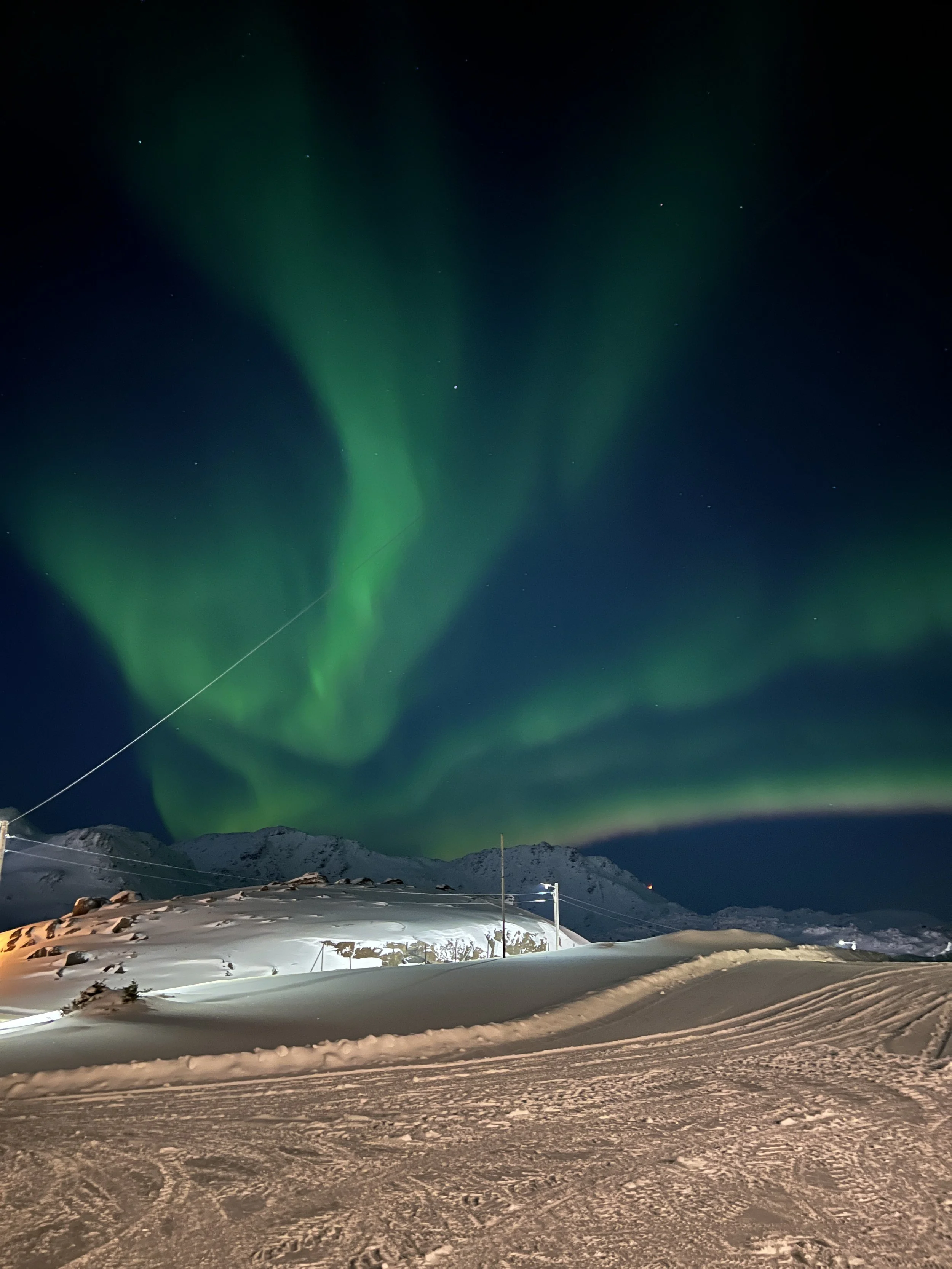
The only light that we can get is from the northern lights, and the best time to see them is from mid-October until the end of March. The best aurora borealis I saw was at the beginning of September and early April, when it was ‘dancing’ and changing different colours (like violet, yellow, green, and purple). Unlike what many tourists think, we don’t see the northern lights every day; it’s actually quite hard where I live, due to the stormy weather. They don't always appear like in the Instagram pictures. I remember my first time spotting them; they were so weak that I couldn’t understand if it was a cloud or actual northern lights. Other times, they can surprise you, turning into an explosion of colours.
Northern lights can last from 20 minutes to one hour, and we usually see them in the evening from 9 PM until 1 AM.
I might sound a bit spoiled, but I remember at the beginning, when I first saw the northern lights, I used to get very excited, running to the top of the mountain to avoid light pollution and get the perfect picture. But, after spending several winters in the Arctic, now I barely stand up from my sofa to check if there are any. XD
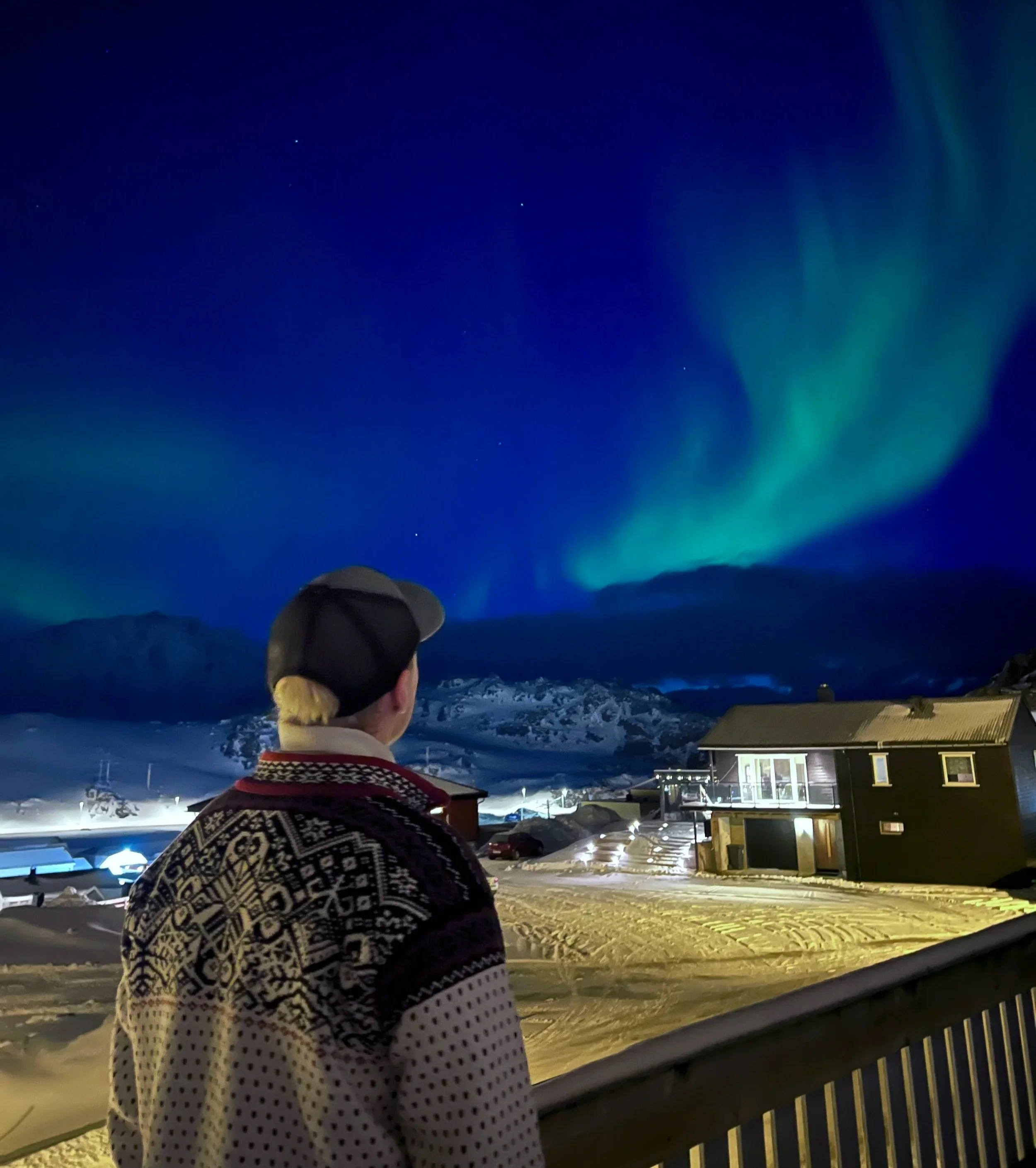
Watching northern lights from my leaving room’s terrace
The effects on the body
Winter depression is a thing, especially in the Arctic, where they call it ‘seasonal depression’ and locals seem to have accepted it pretty well; in fact, they enter into a period of hibernation. After two months of darkness, people lose control of time, napping 6 times per day, forgetting to change their pyjamas, staying awake the whole ‘night’, and others spending hours at the pub.
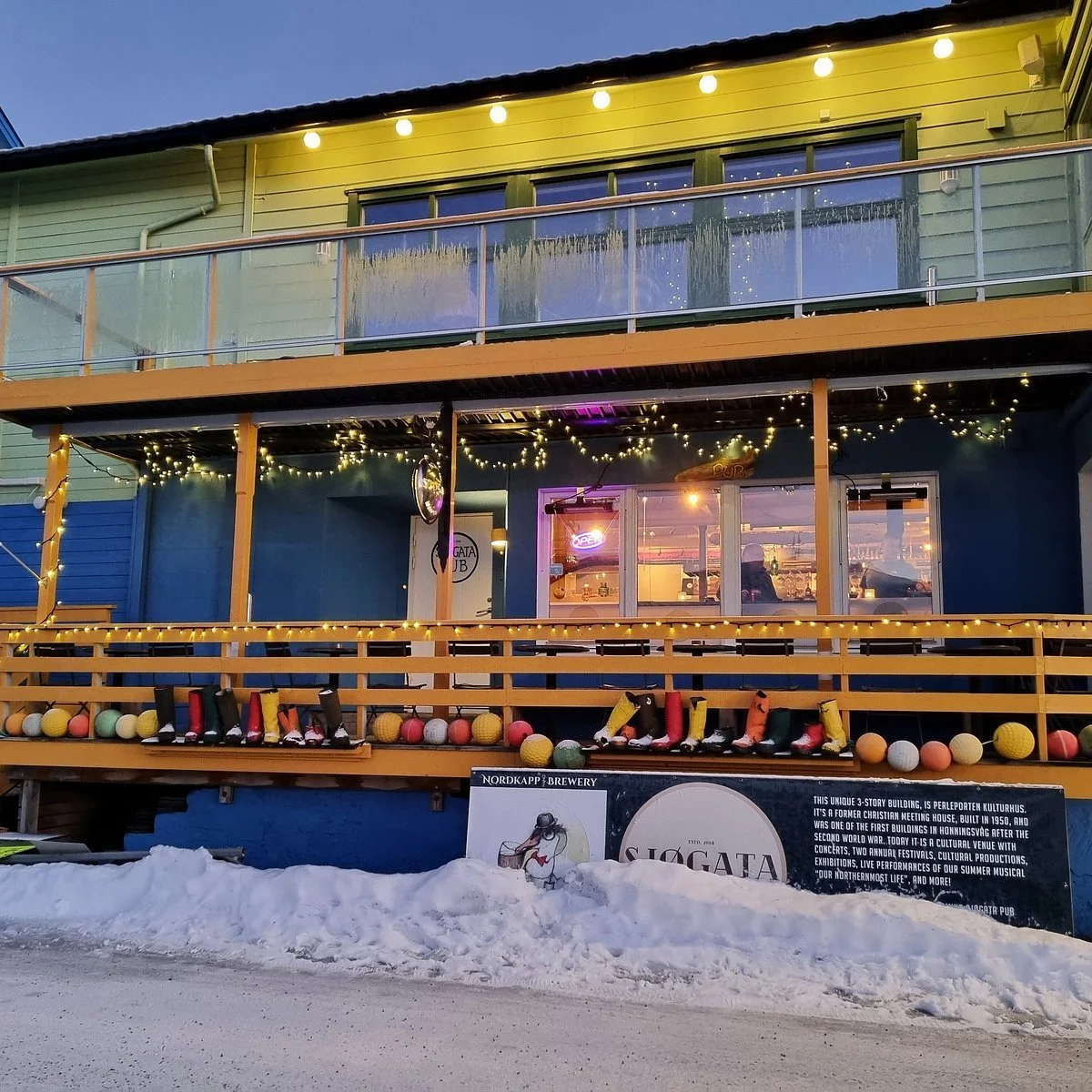
Sjøgata, the local pub
During my first polar night season, I started to fall into these unhealthy habits, giving up on myself. I felt very unmotivated, always tired, and depressed. But at heart, I am a restless soul, and I felt bad about wasting my time instead of using it to do something more productive. After some time, I finally found a way to avoid ‘hibernation’, which requires a lot of self-determination.
How to avoid winter depression?
It’s very simple if you are a motivated person, it’s called — ROUTINE! With the beginning of the darkness, you start to lose track of time. Following a strict schedule can help you to stay focused and be productive. I took advantage of the spare time and lack of distraction to do things that I usually don’t do — like going to the gym (which also helps to produce endorphins), preparing healthy meals, starting a blog, using the sauna, and improving social media.
This system helped me a lot to survive the long winter, and I clearly saw the results! Even though I was struggling less than other people, I still felt some effects on my body that are inevitable. I felt constantly tired, due to the lack of sun and Vitamin D. I got visible dark circles under my eyes, impossible to hide, even with kilos of makeup. The most important thing not to do is to sleep during the day, even when it’s tempting; otherwise, your biological rhythm is messed up, and you are gonna stay awake the whole night.
People buy Vitamin D supplements in the grocery shop, and in the Nordic countries, they also add Vitamin D to milk, cheese, yoghurts, and juices. I also saw that they sell an alarm that emulates the sun rising, and of course, it was always sold out! But, no matter how much you try, nothing can replace the benefits of the real sun.
December is the darkest month, the one I try to avoid the most. At this time of the year, I fly back to South Tyrol to spend Christmas with my family and get some daylight again.
When the sun starts to come back, and the snowstorms ease down, it feels like life is starting again, and people can’t wait to spend as much time outside as they can, and take in the first rays of the sun. Locals in the winter go cross-country skiing or snowshoeing.
My favourite period
January-april
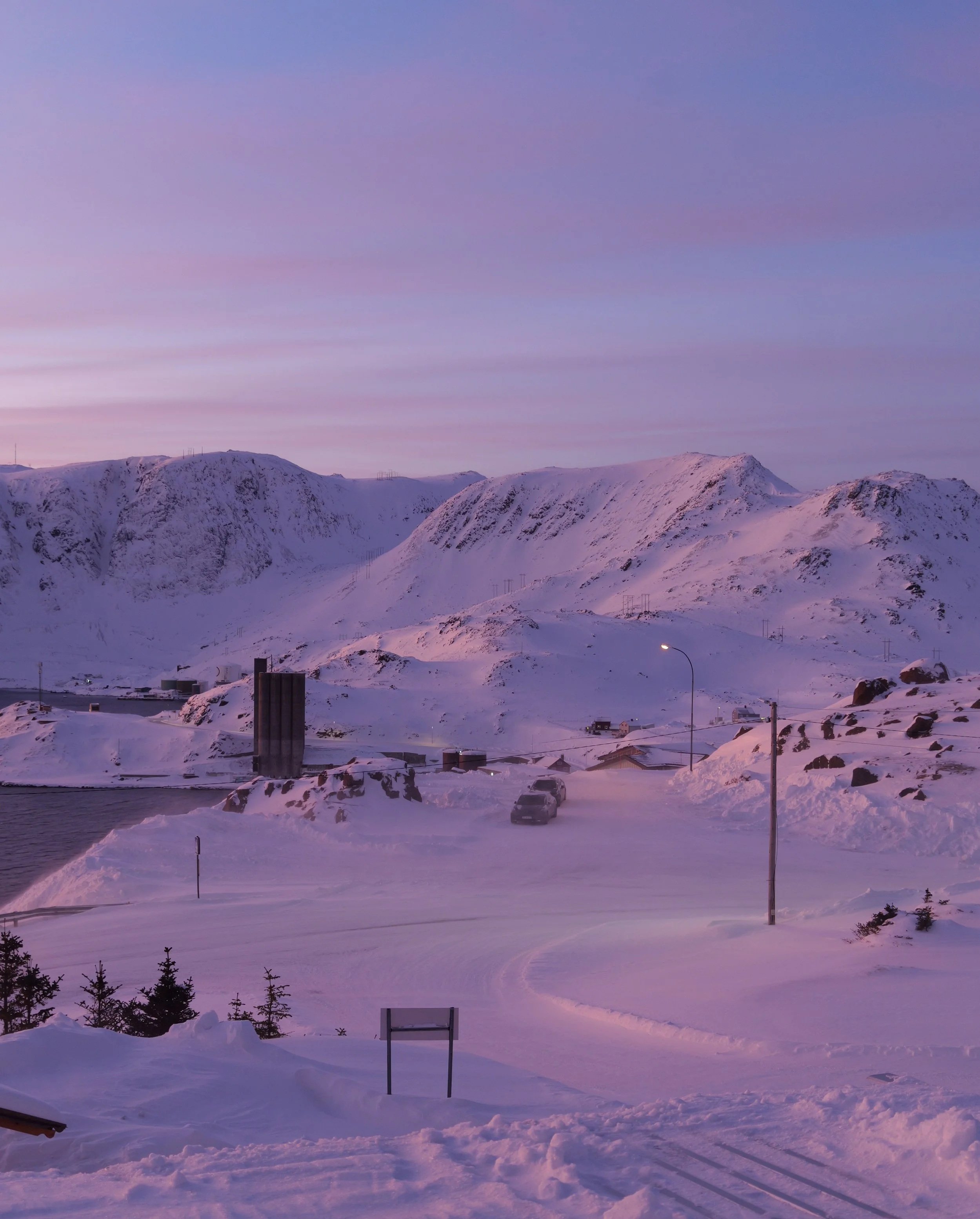
This time of the year (January to April) is my favourite period in Northern Norway!
In January is not completely dark anymore, in the morning for a couple of hours we have some beautiful pastel colours in the sky. Something very hard to find anywhere else. We have a lot of snow on the mountains, which makes everything seem brighter, like a winter wonderland.
In 2024, I also started a new hobby, Ski-touring, which made me fall even more in love with winter.
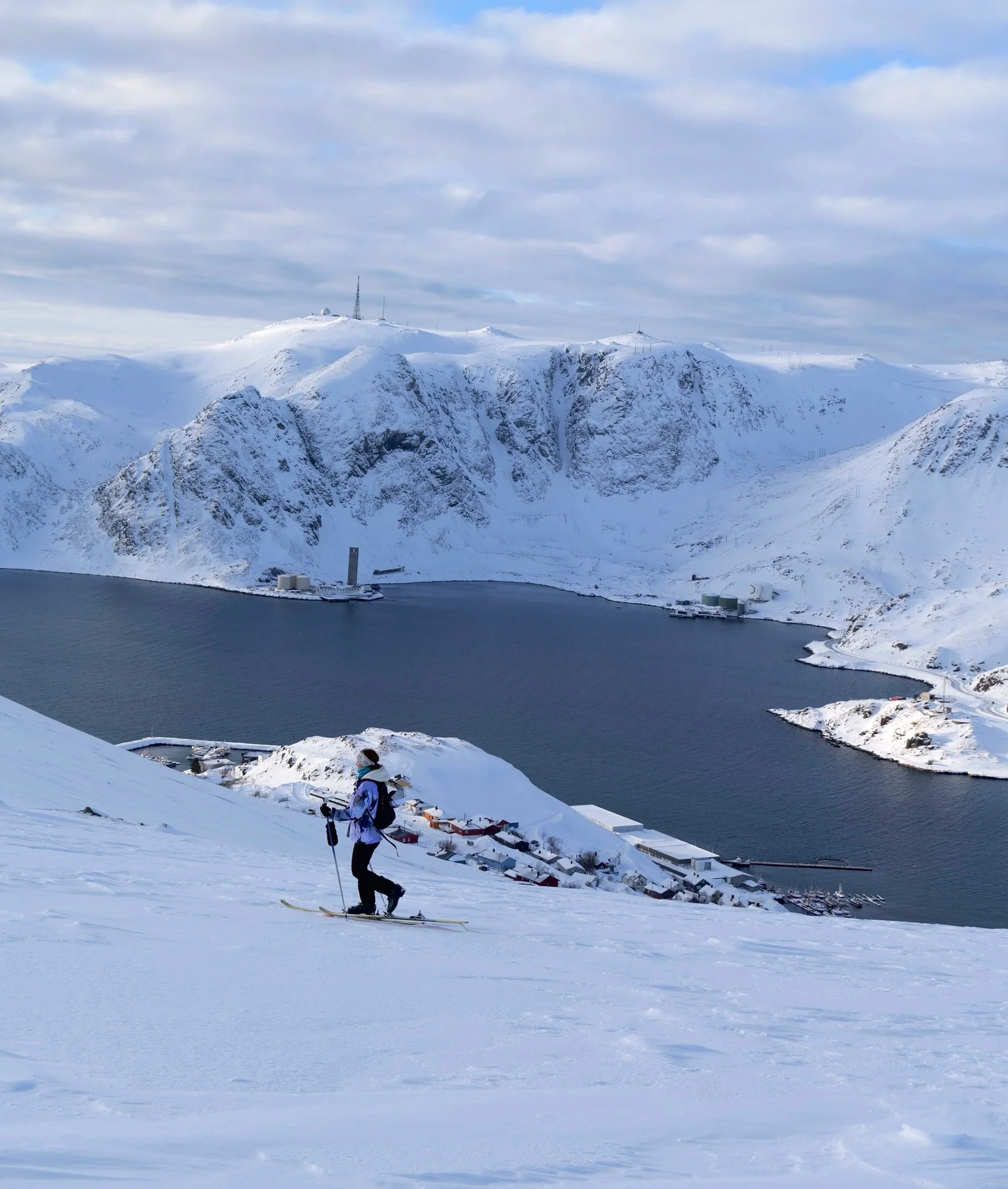
Ski touring is a form of skiing that combines uphill hiking and downhill skiing, allowing you to explore mountains under your own power without relying on a ski lift (since there are none here). To ski uphill, we use "seal skins," which provide traction to glide forward while preventing sliding backward.
The best part is that I can start skiing right from my backyard!
It feels good to have found a hobby where I can be active and appreciate the Arctic’s nature at this time of the year.
From the end of January, the days are getting longer, so I just have to hope for good weather and plenty of snow.
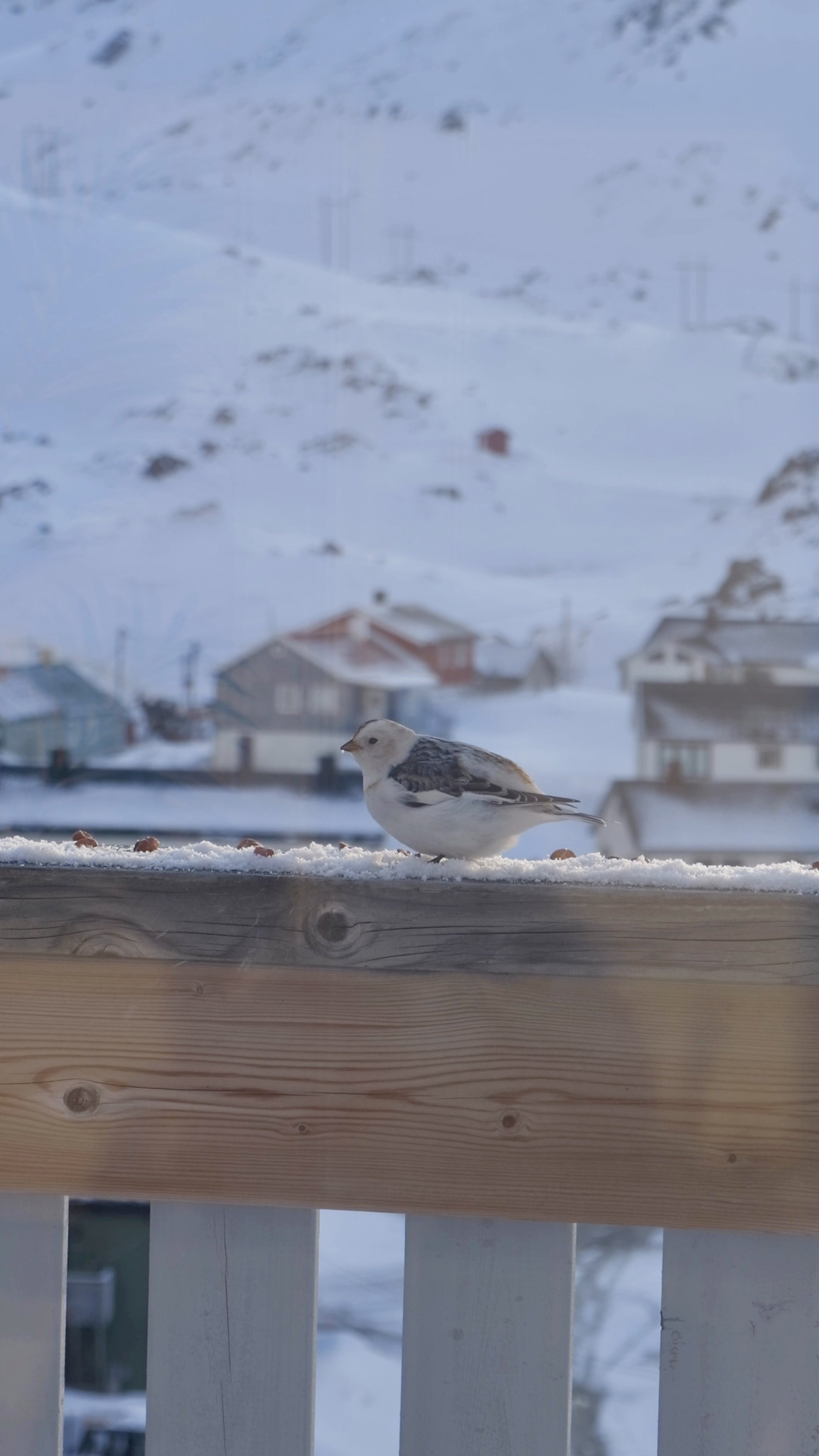
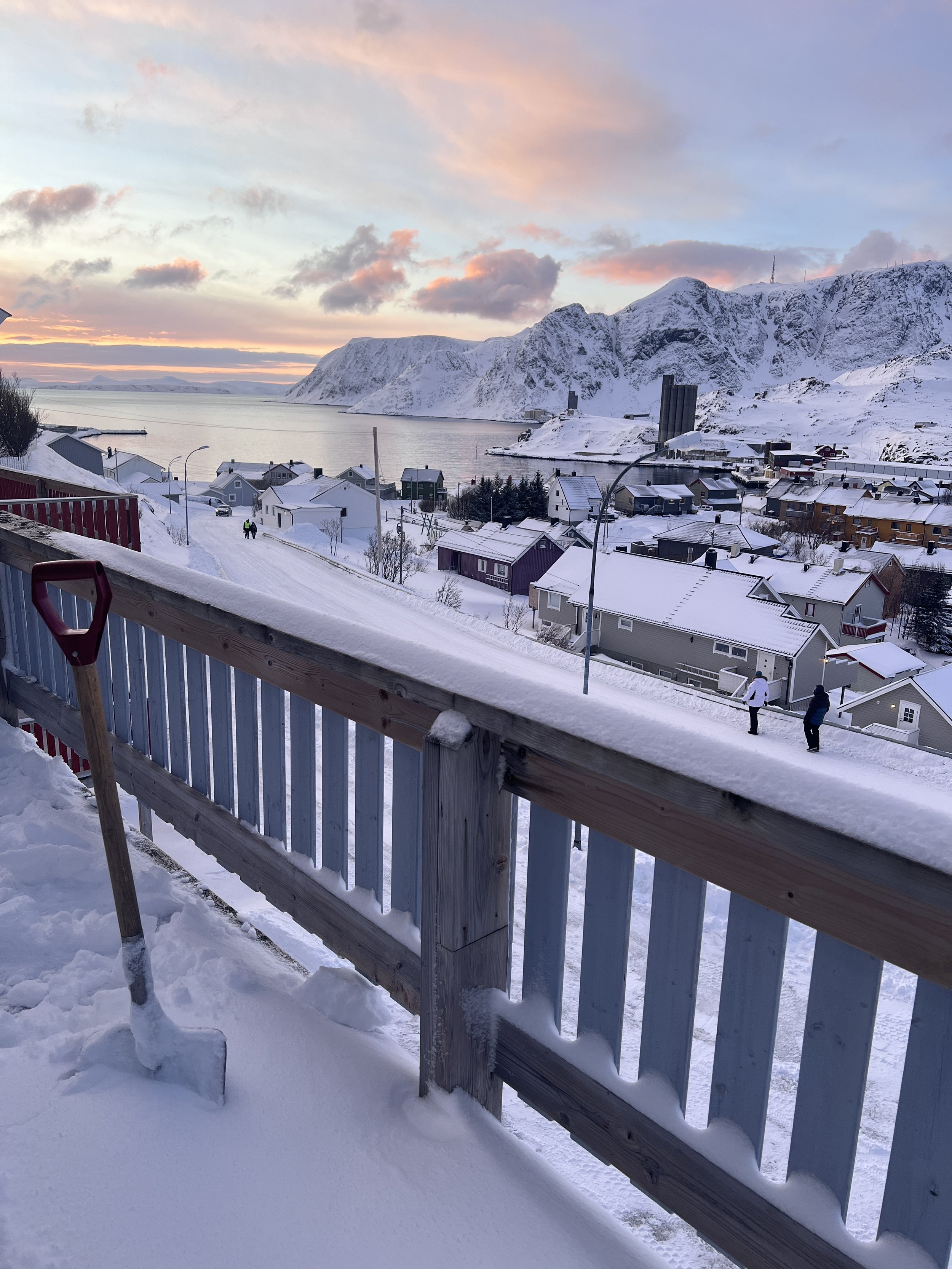
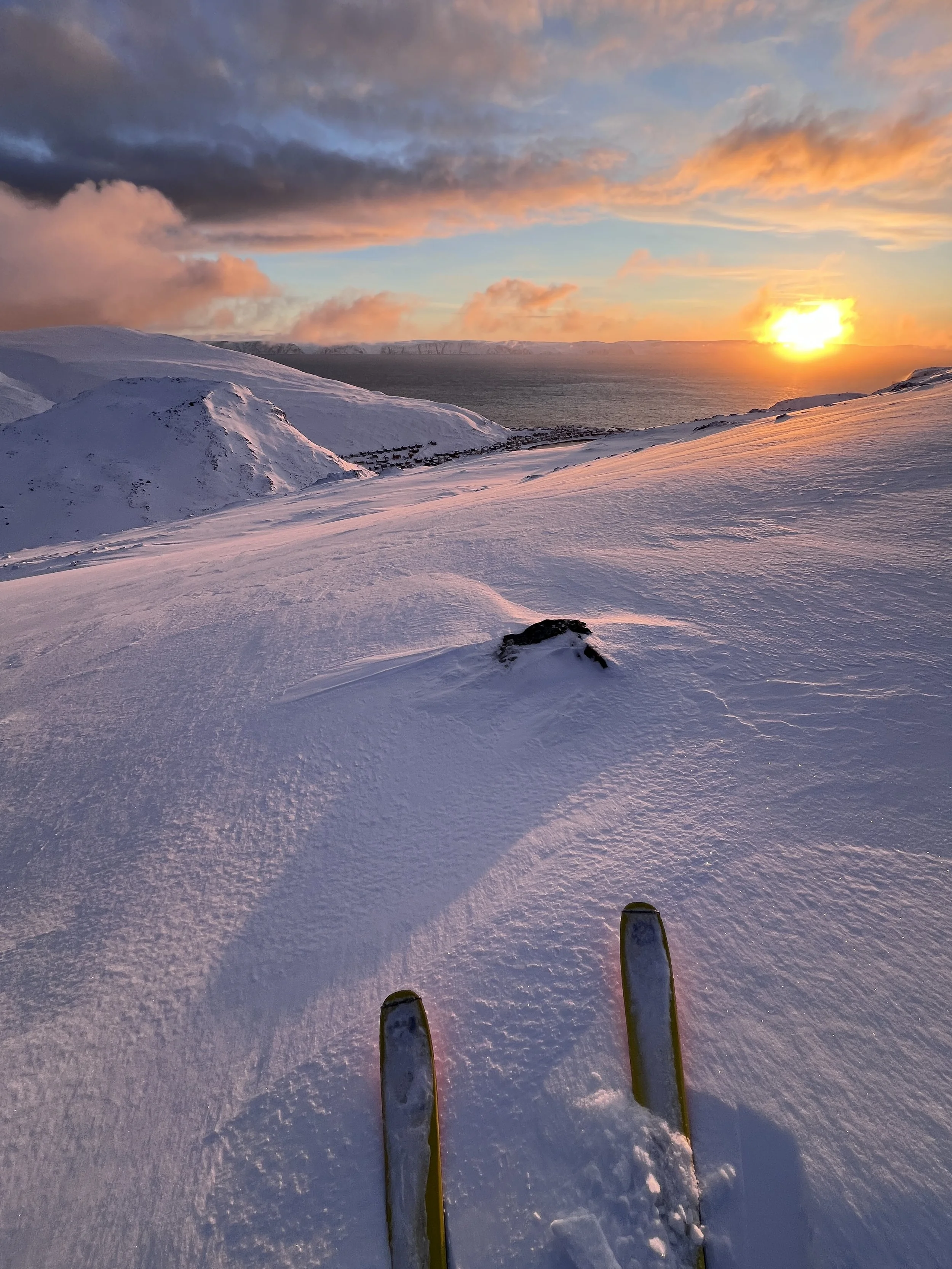
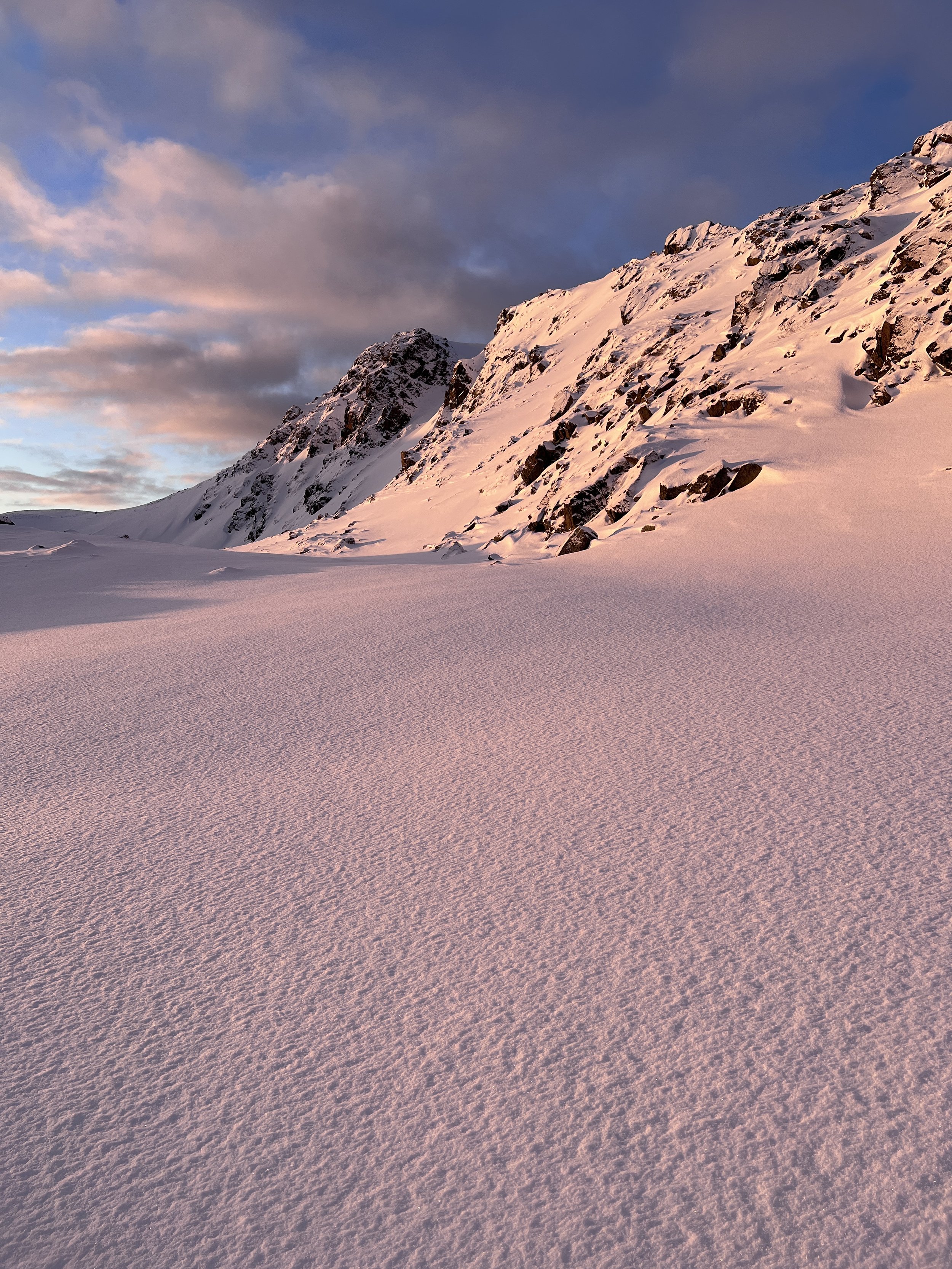
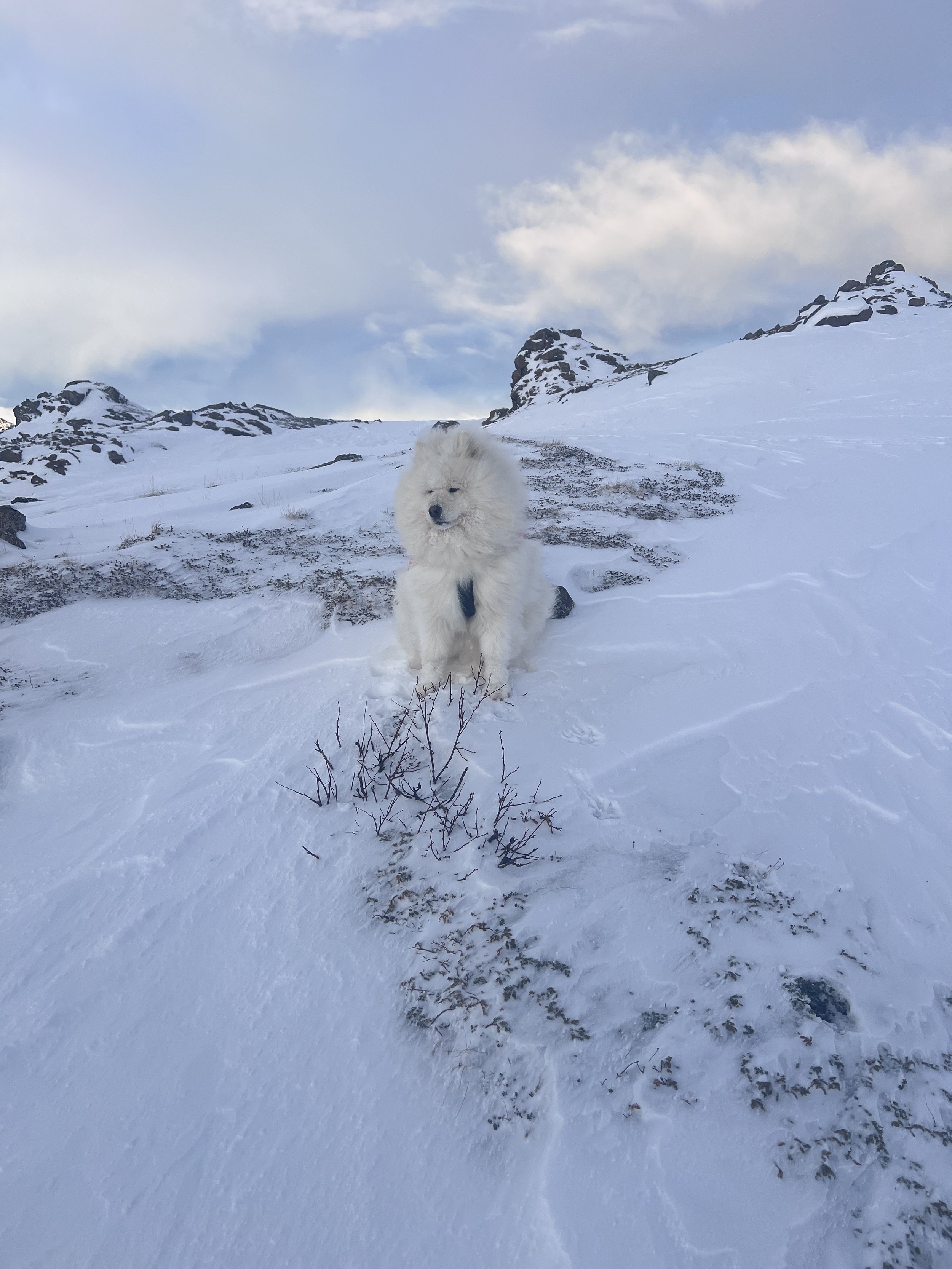
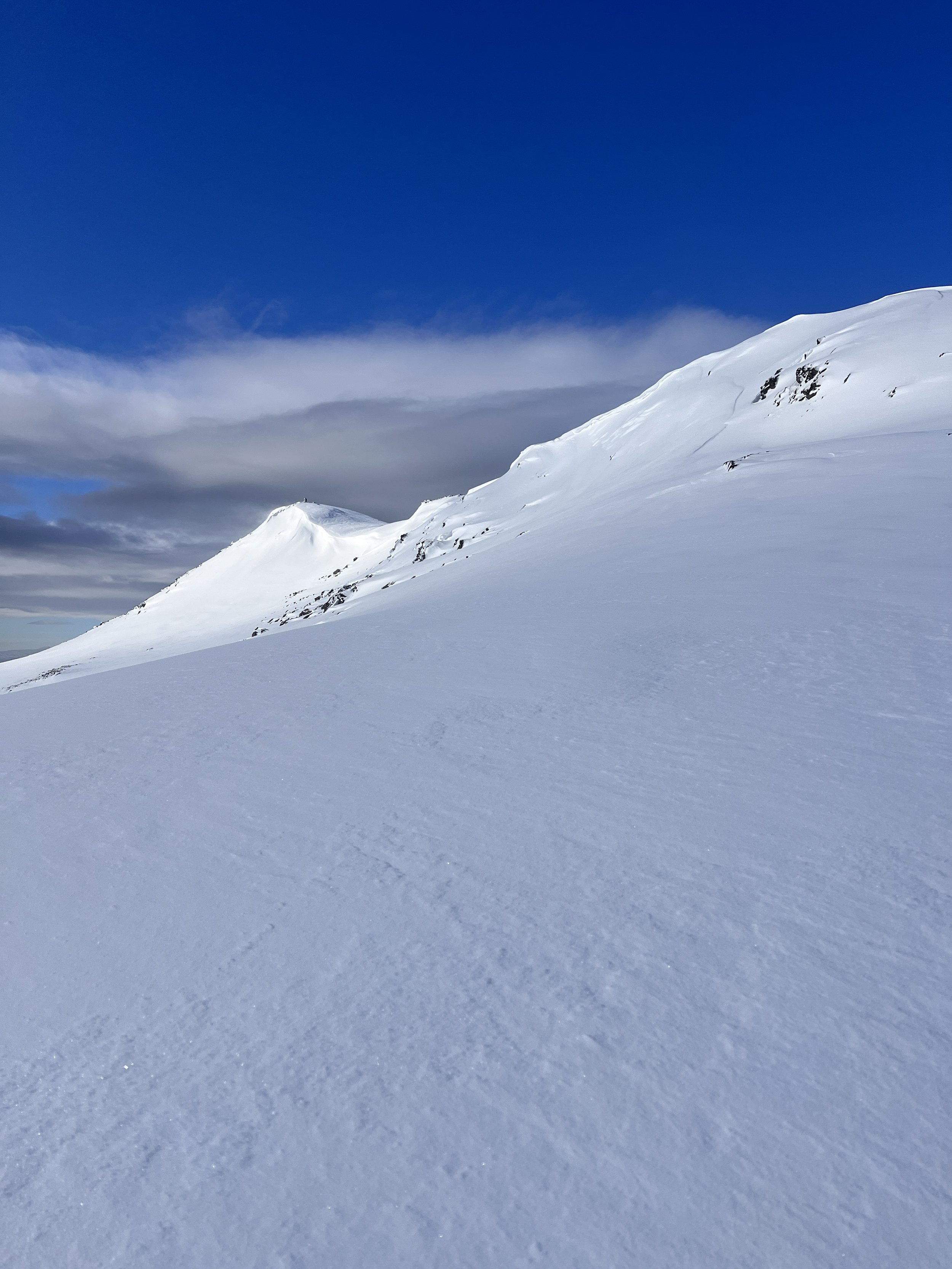
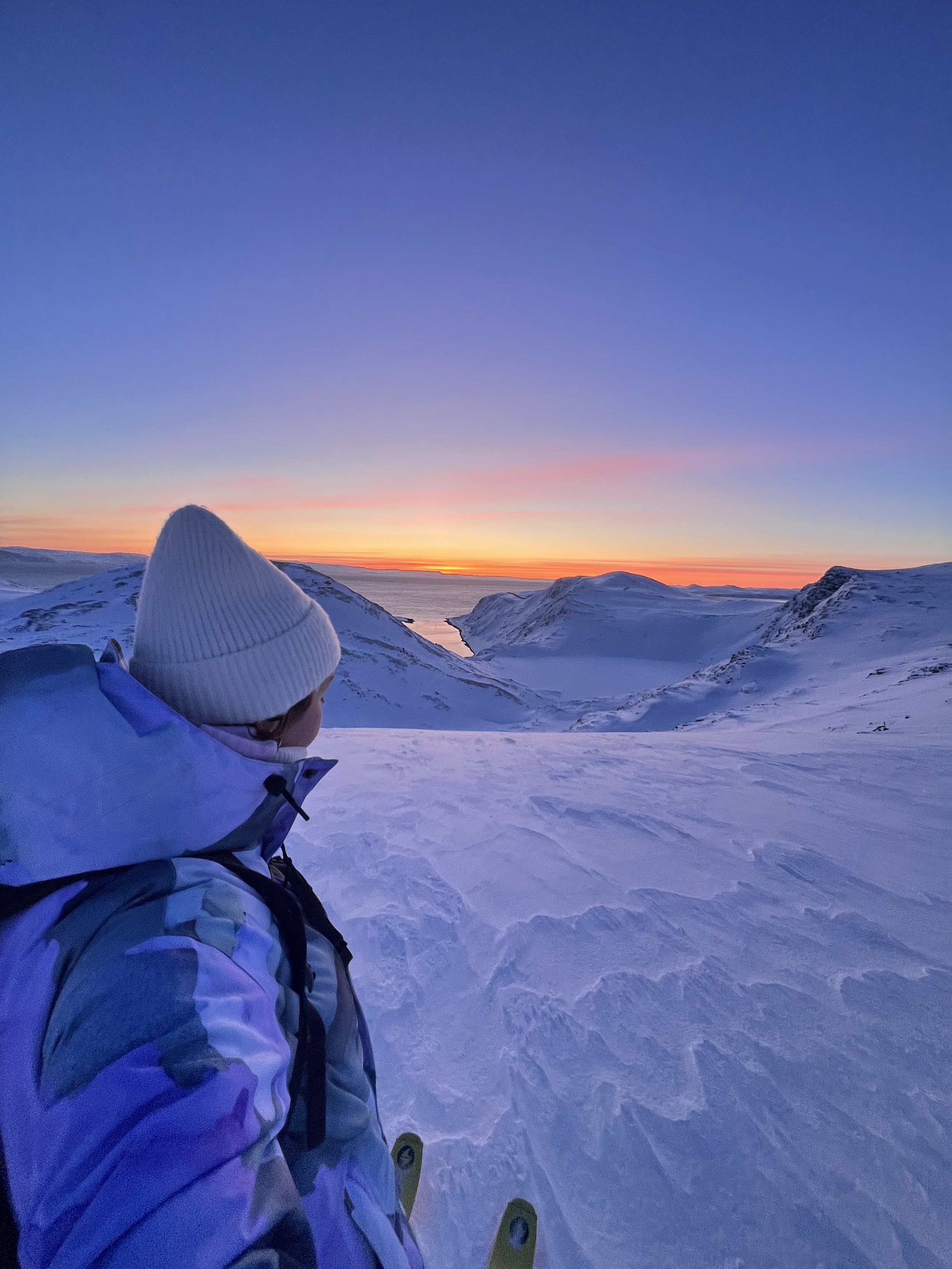
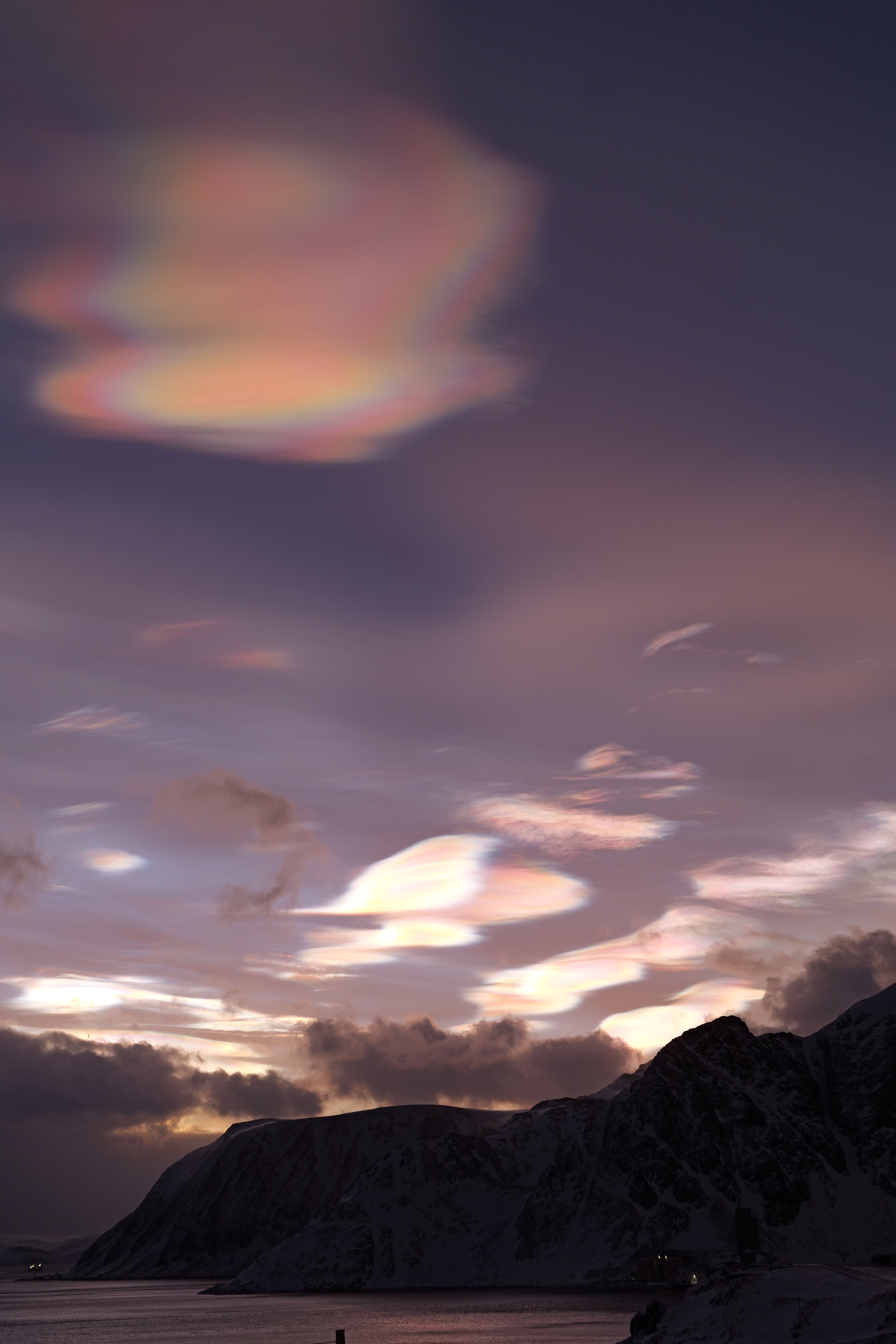
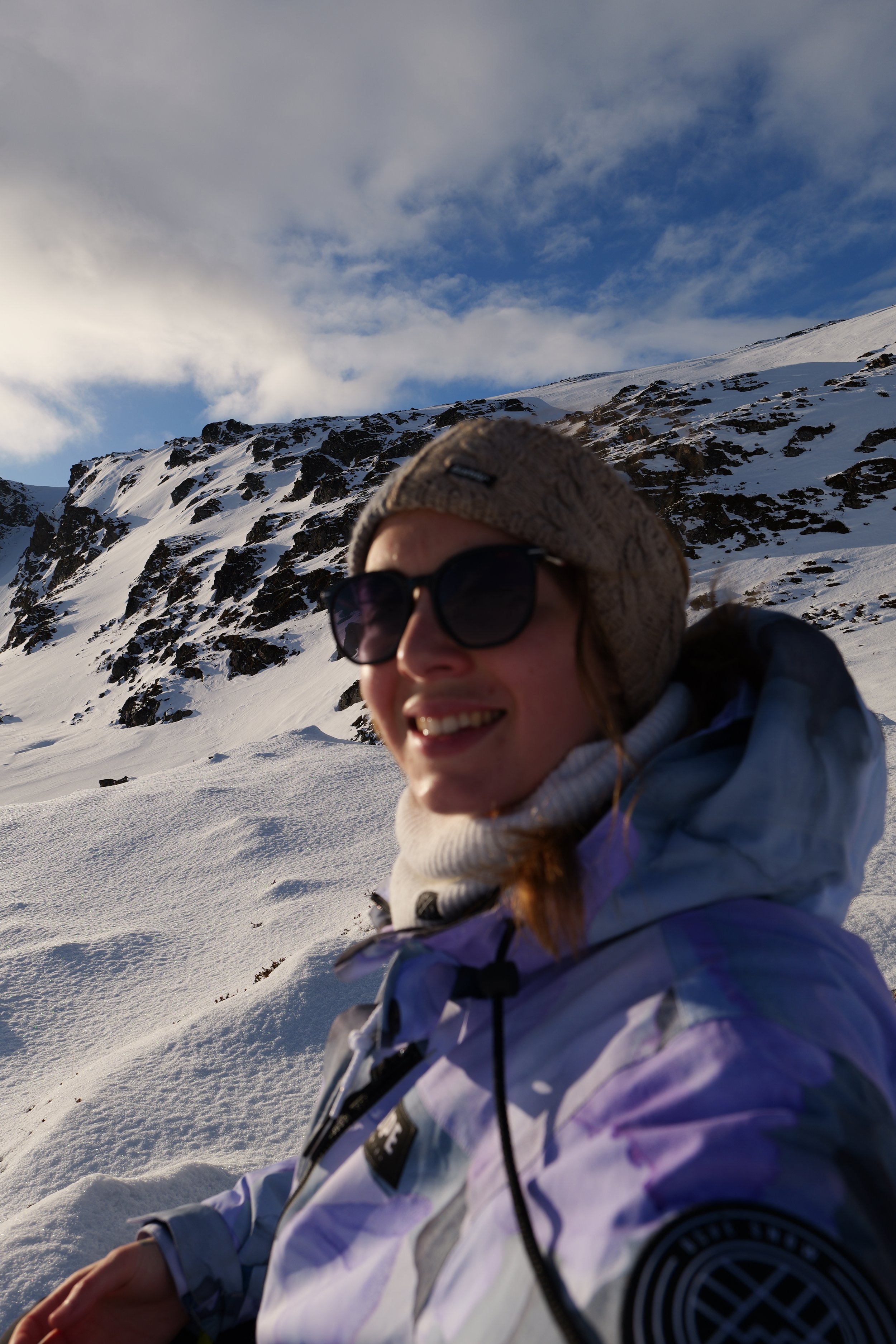
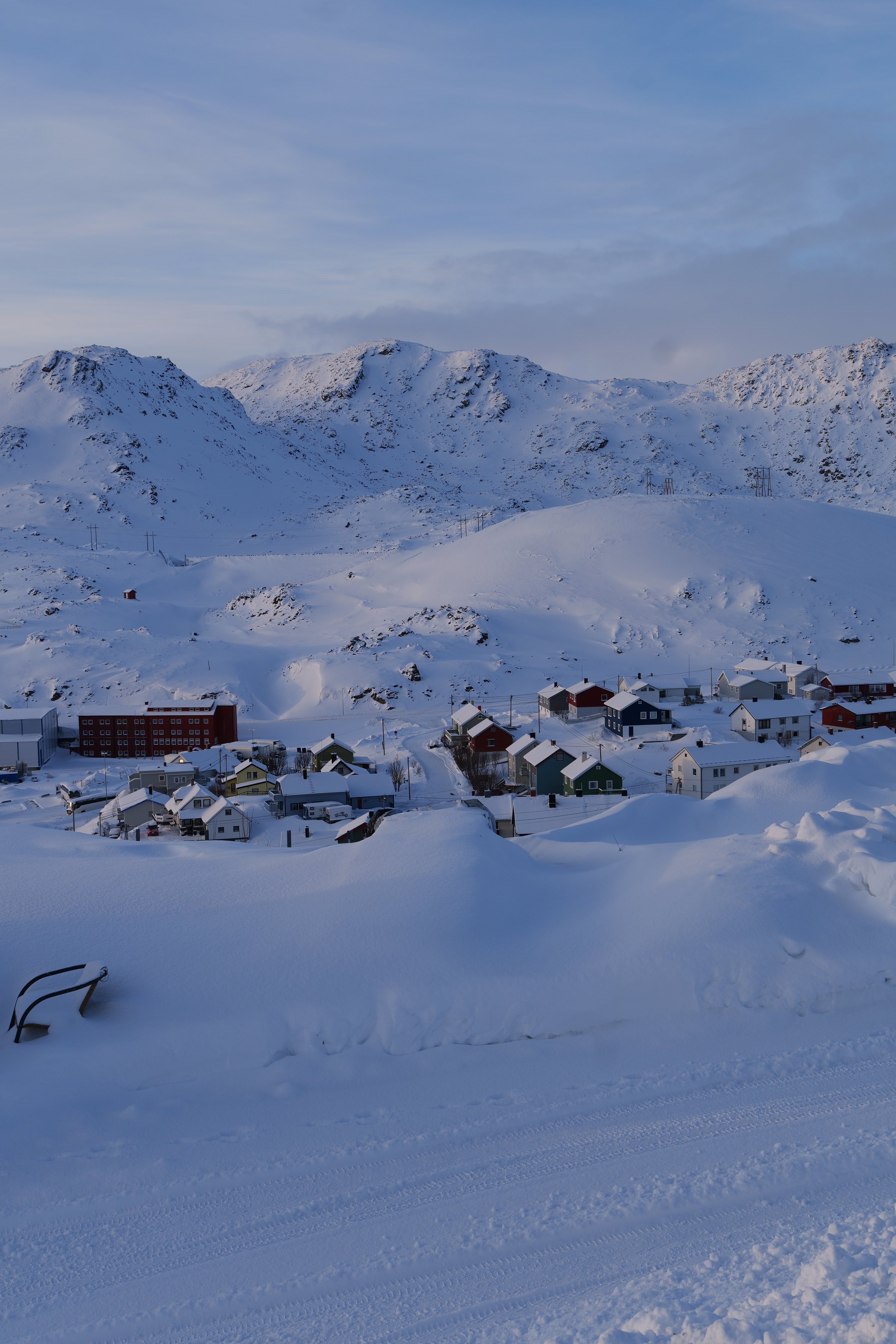
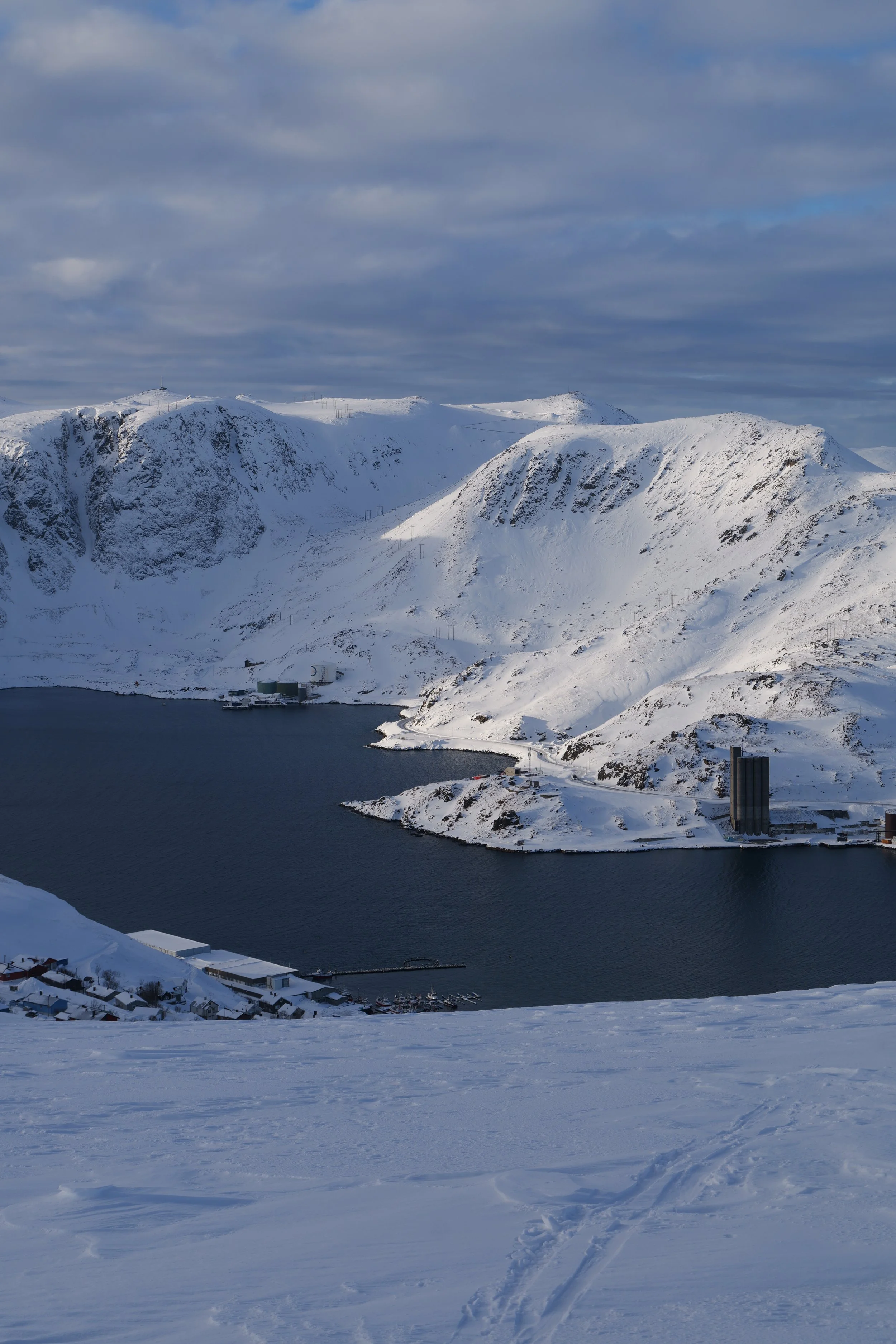
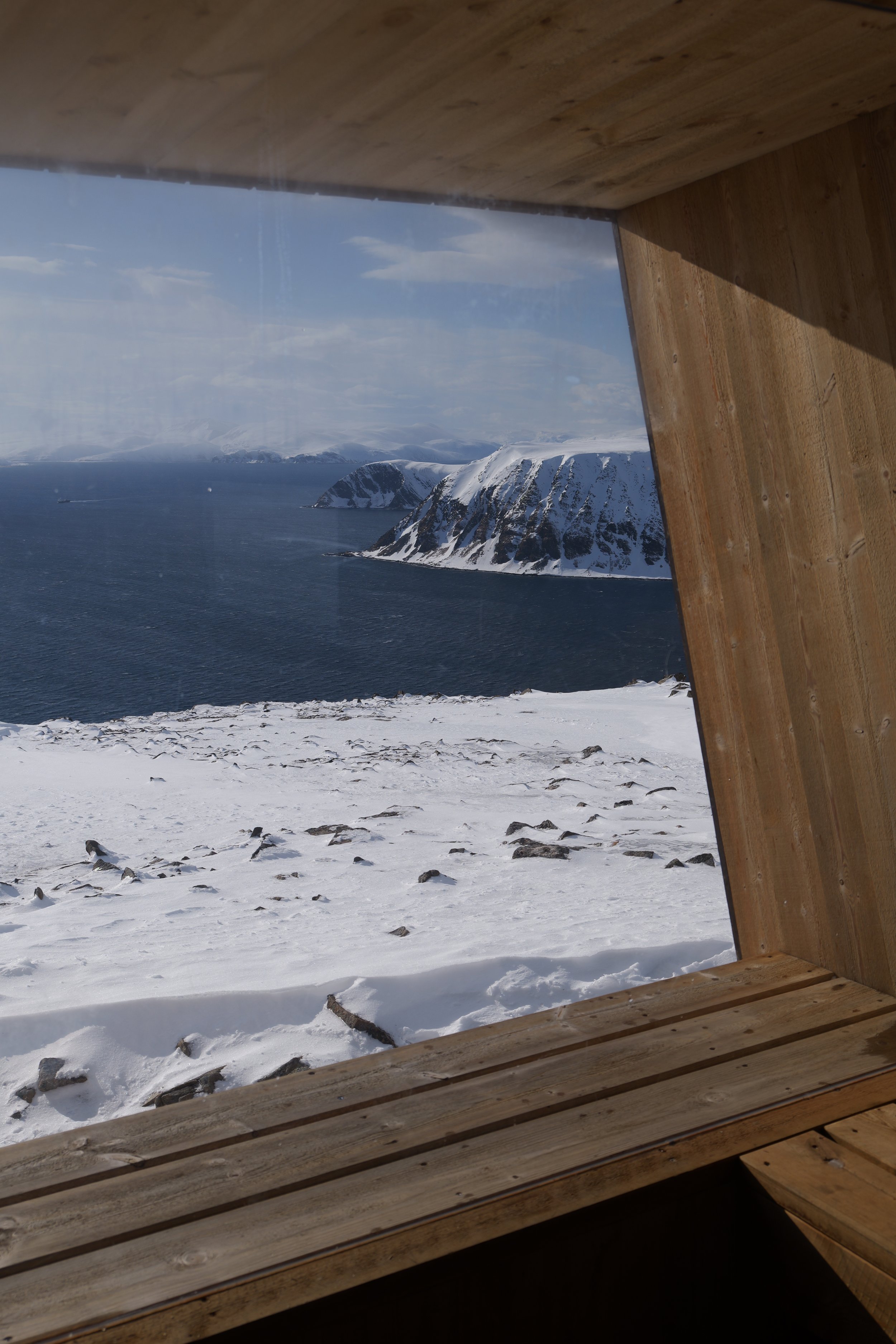
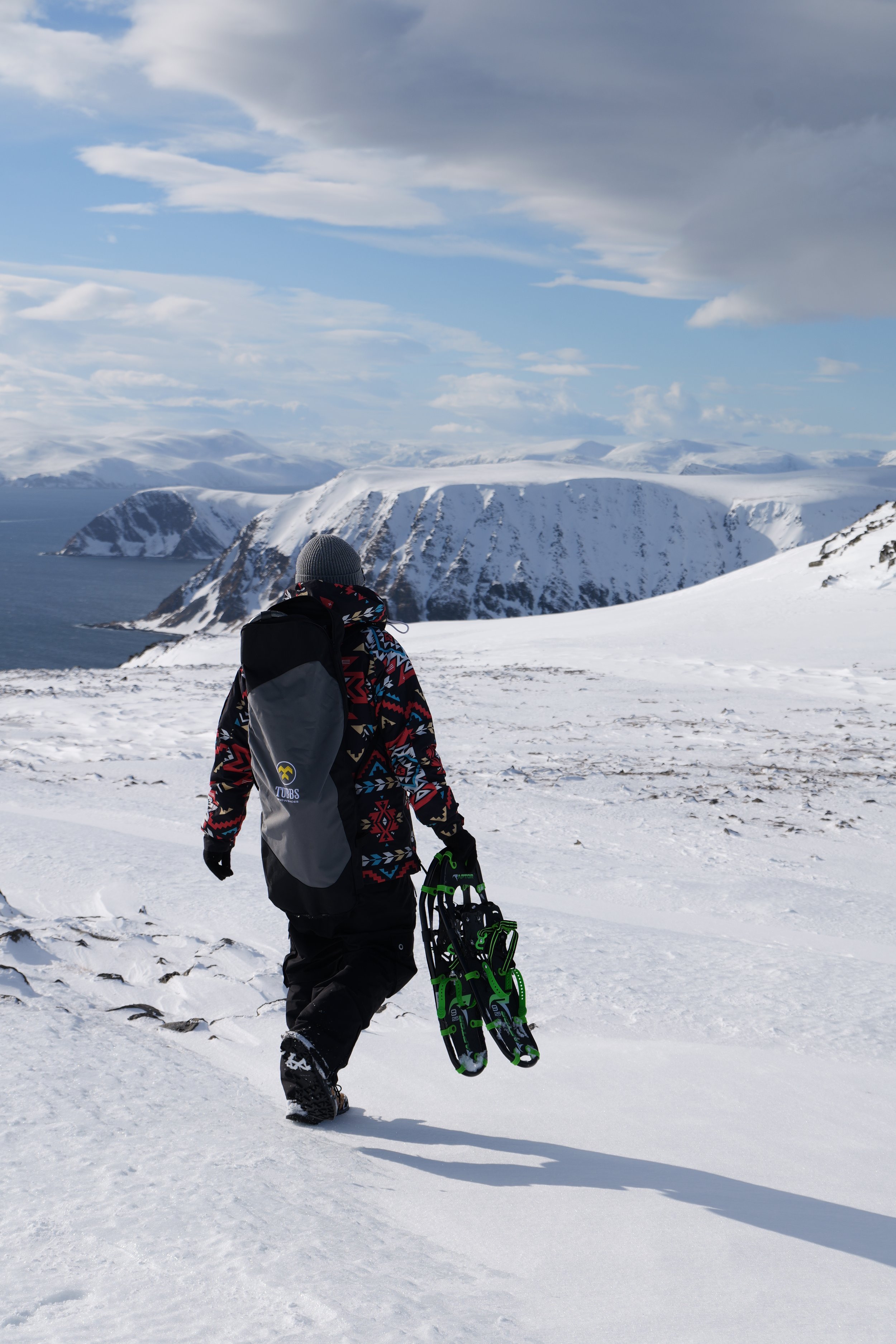
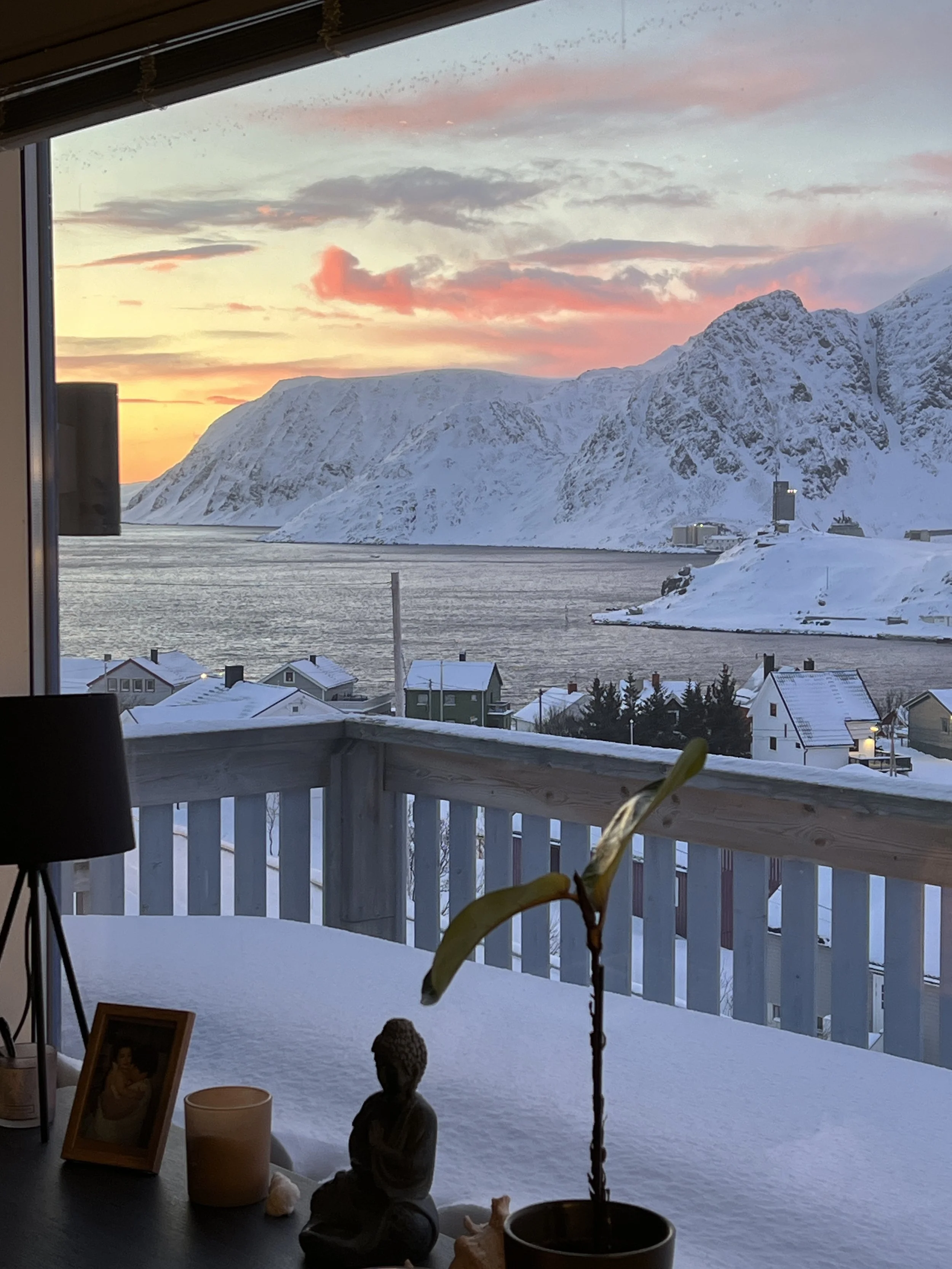
Besides being active, this period is also a good time to enjoy a slow pace of life, spending cozy days at home, with the fire and candles on. The view from my living room is also pretty epic!
midnight sun season
The toughest time for me!
This season starts on the 14th of May and lasts until the 29th of July, and for two months, the sun stays above the horizon for 24 hours.
When I moved here, the midnight sun felt very exciting, especially for outdoor activities.
But after some weeks, I started to crave the night again. It’s nice to have that balance and appreciate the different timings of the day. The only ‘normal’ months, which are almost the same as the rest of Europe, are April and September.
With sunlight 24/7, it is very hard to fall asleep; the body gets confused, and often we don’t have the feeling to go to bed. We need to use very black curtains or an eye mask; otherwise, it’s impossible to fall asleep. After a while, it takes a toll on the body, and I feel mentally and physically exhausted.
Even though the sun officially sets at the end of July, we don’t see proper darkness until the end of August, so quite a long time without the night!
Finally, towards the end of the summer, we can appreciate the sunsets again, and also the beautiful Northern Lights. Nothing hits more than putting the first candles on after the endless period of the midnight sun.
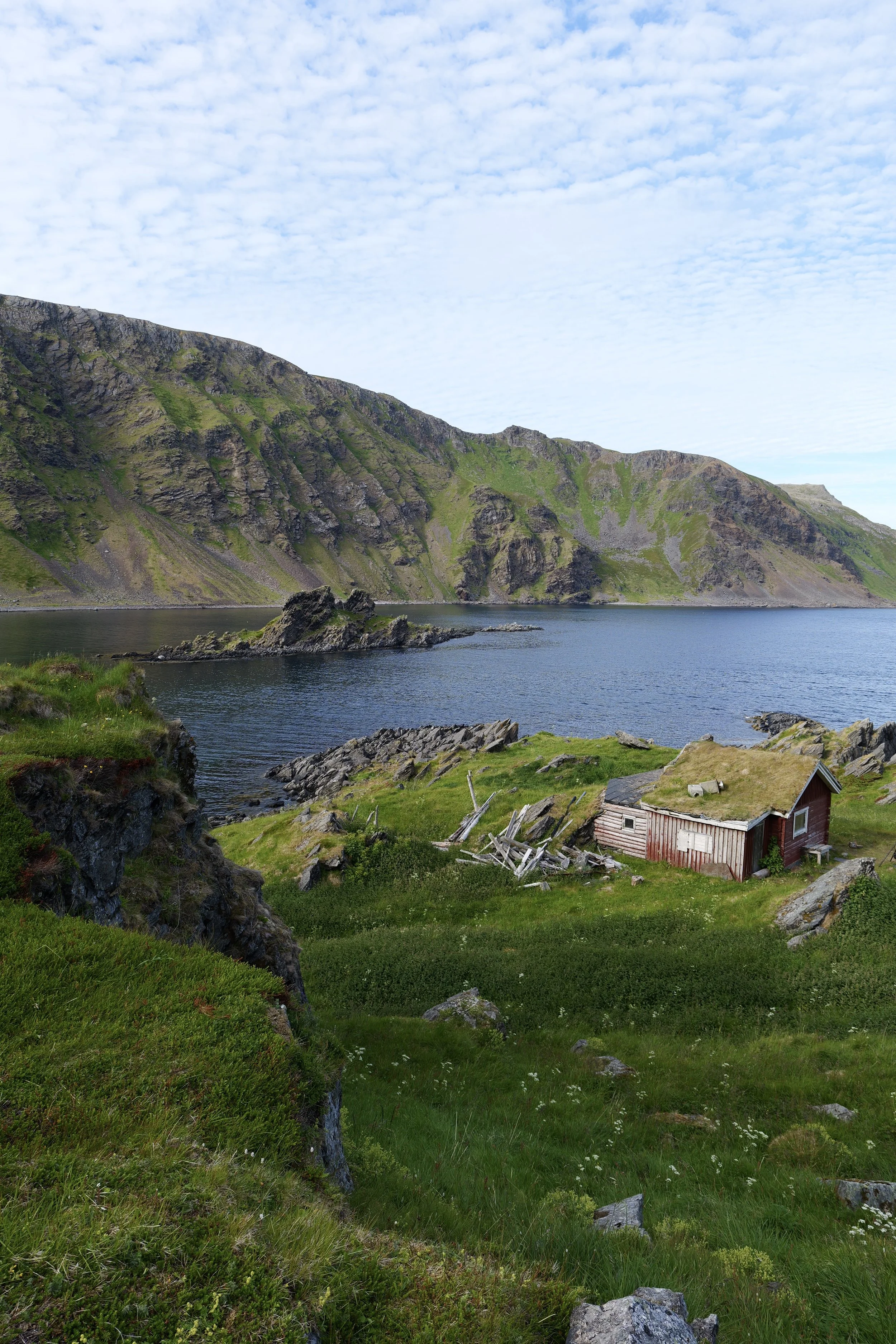
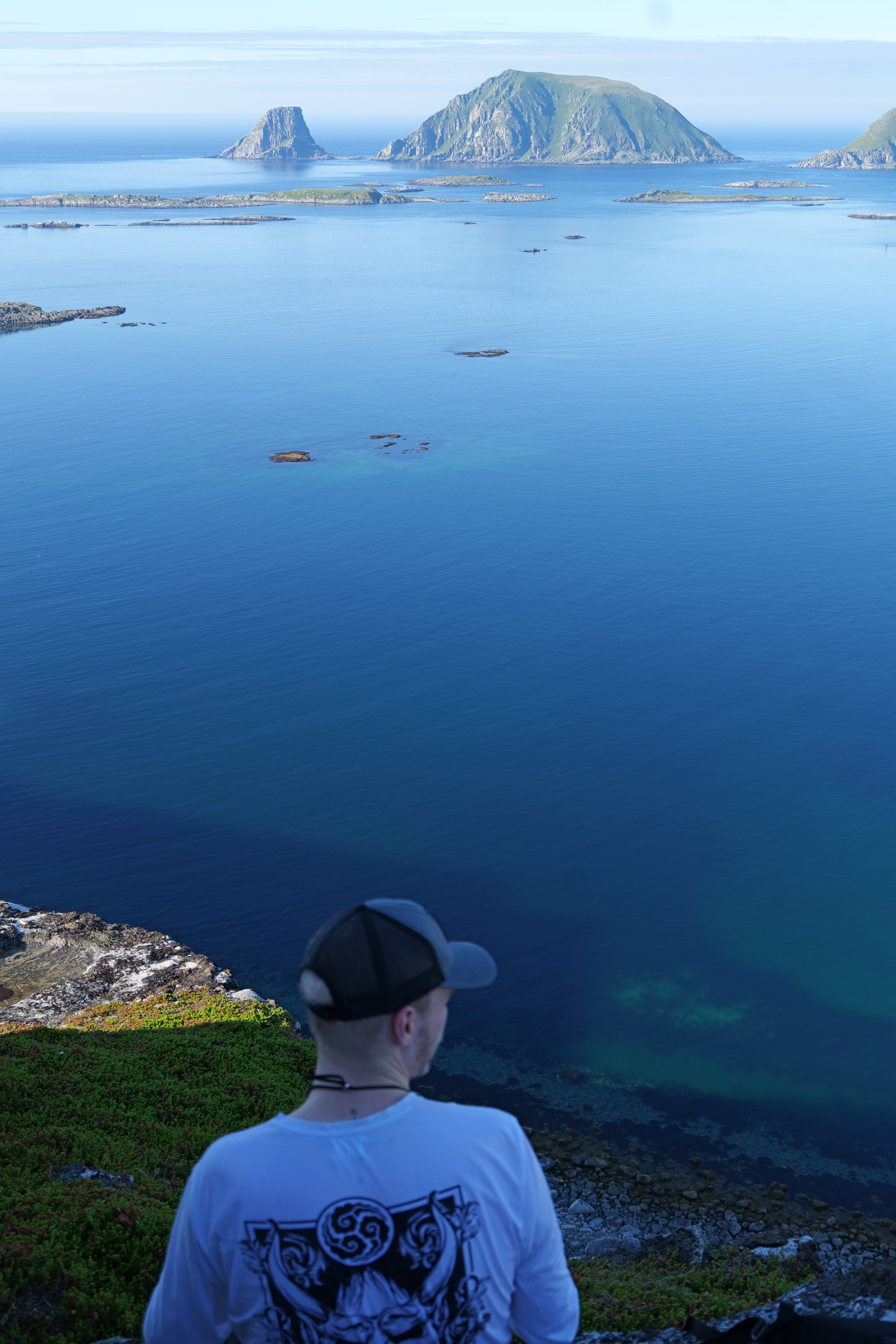
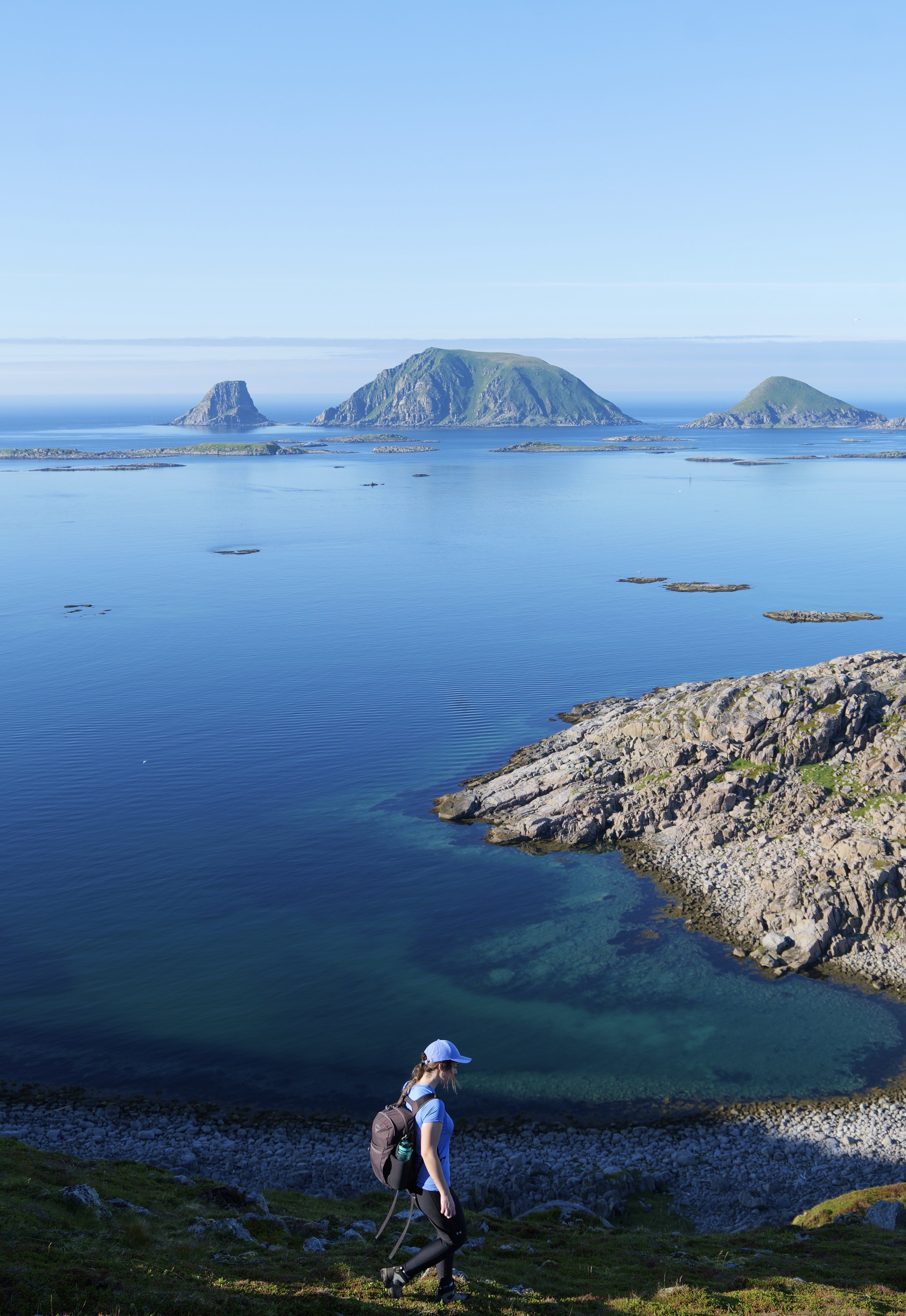
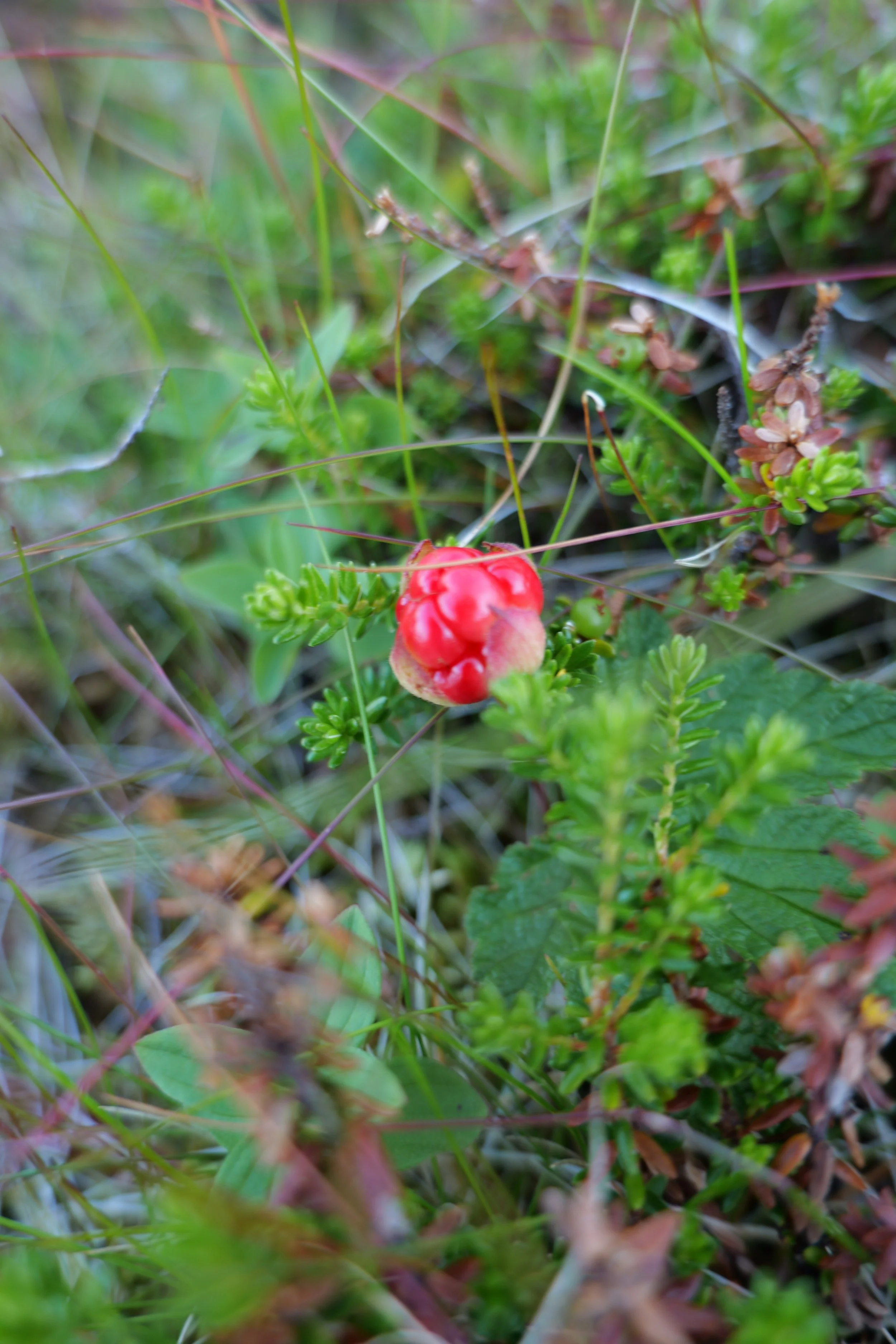
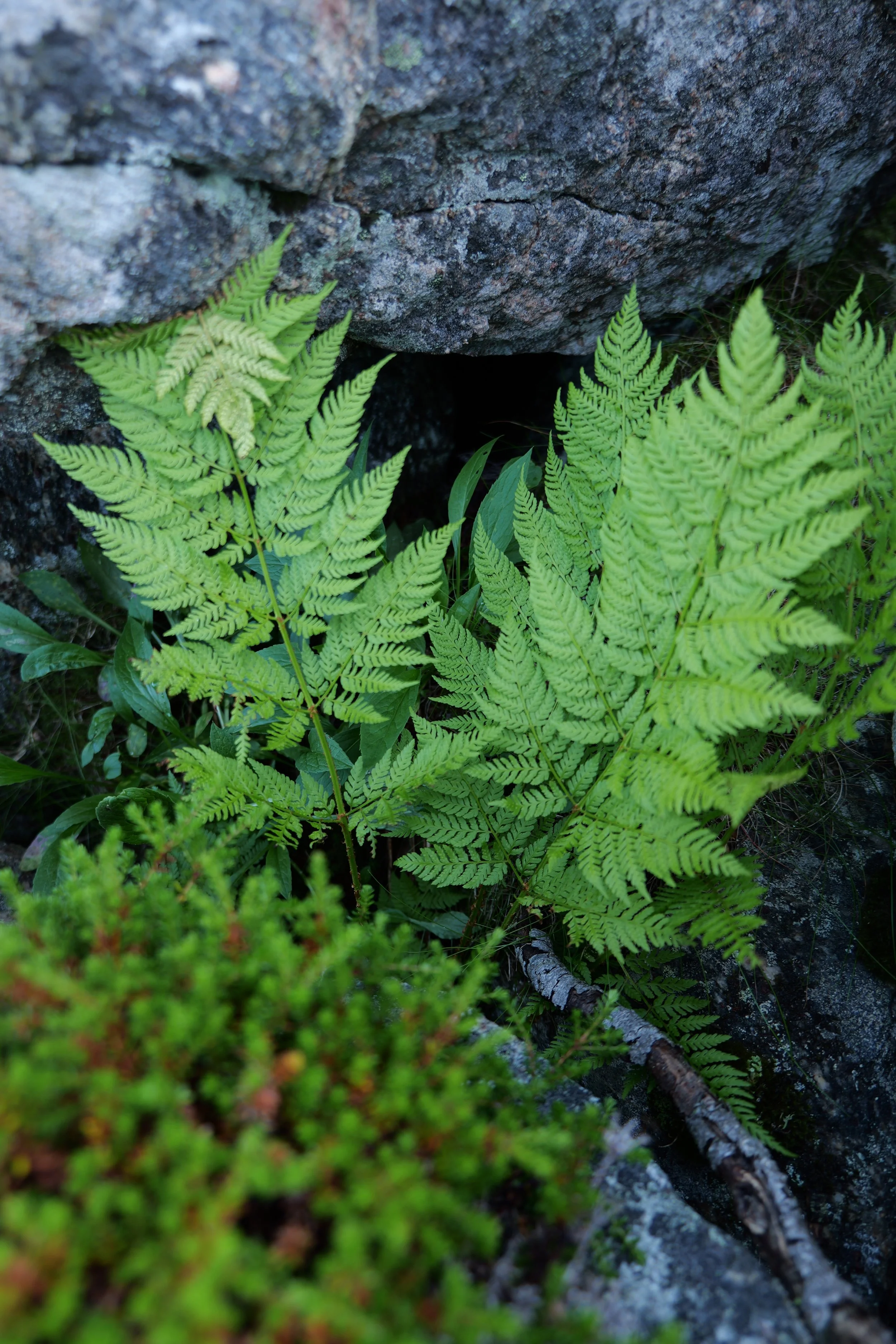
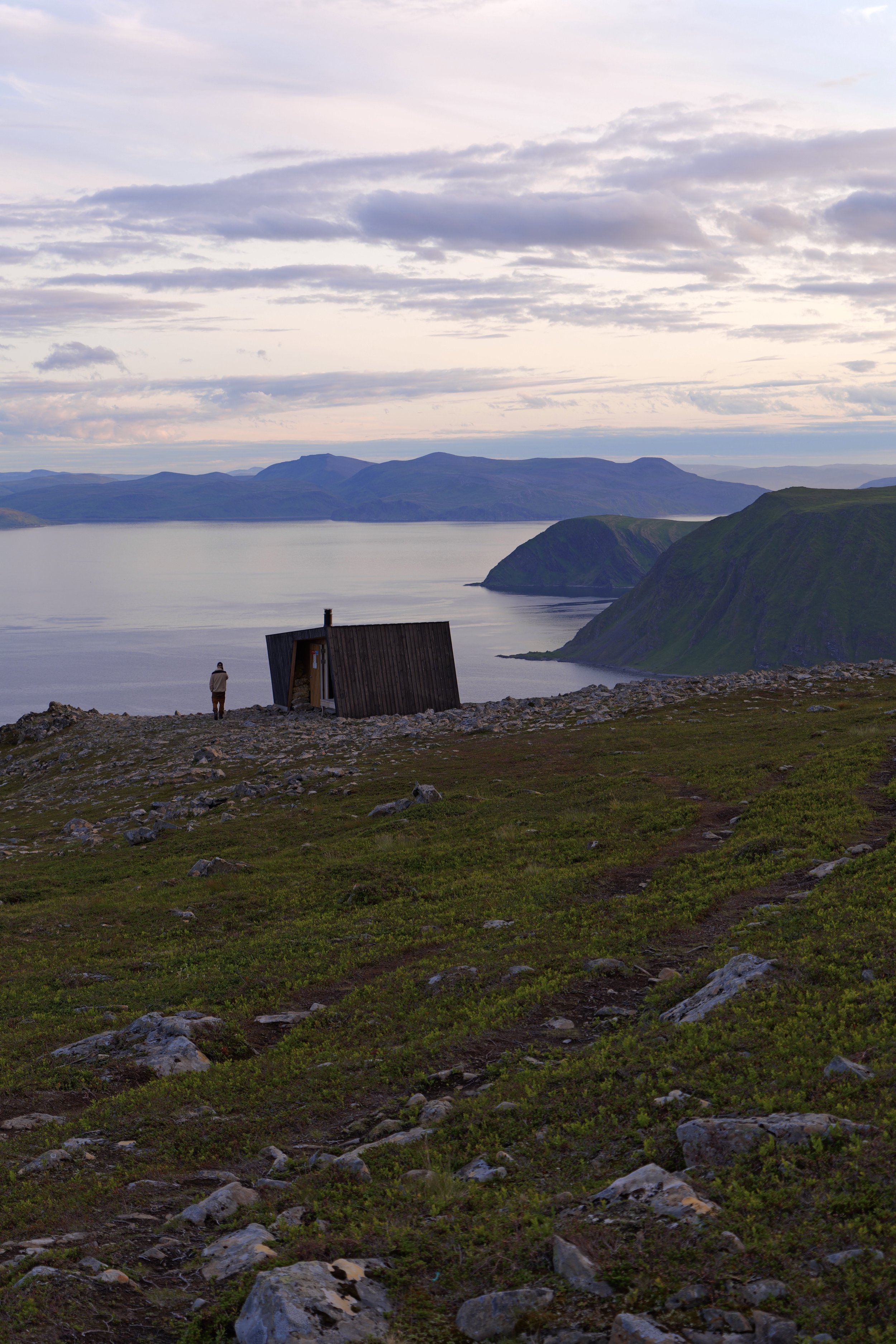
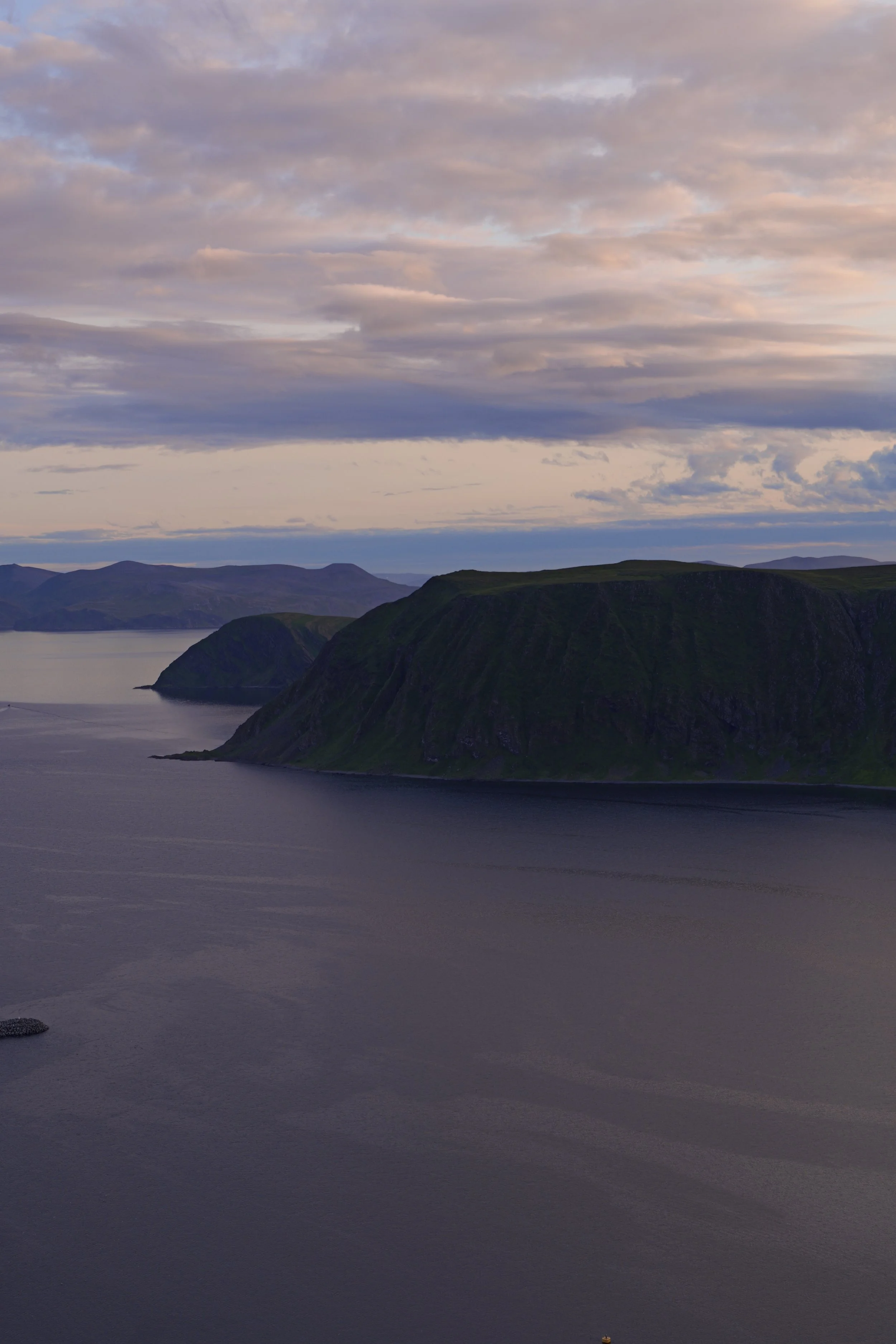
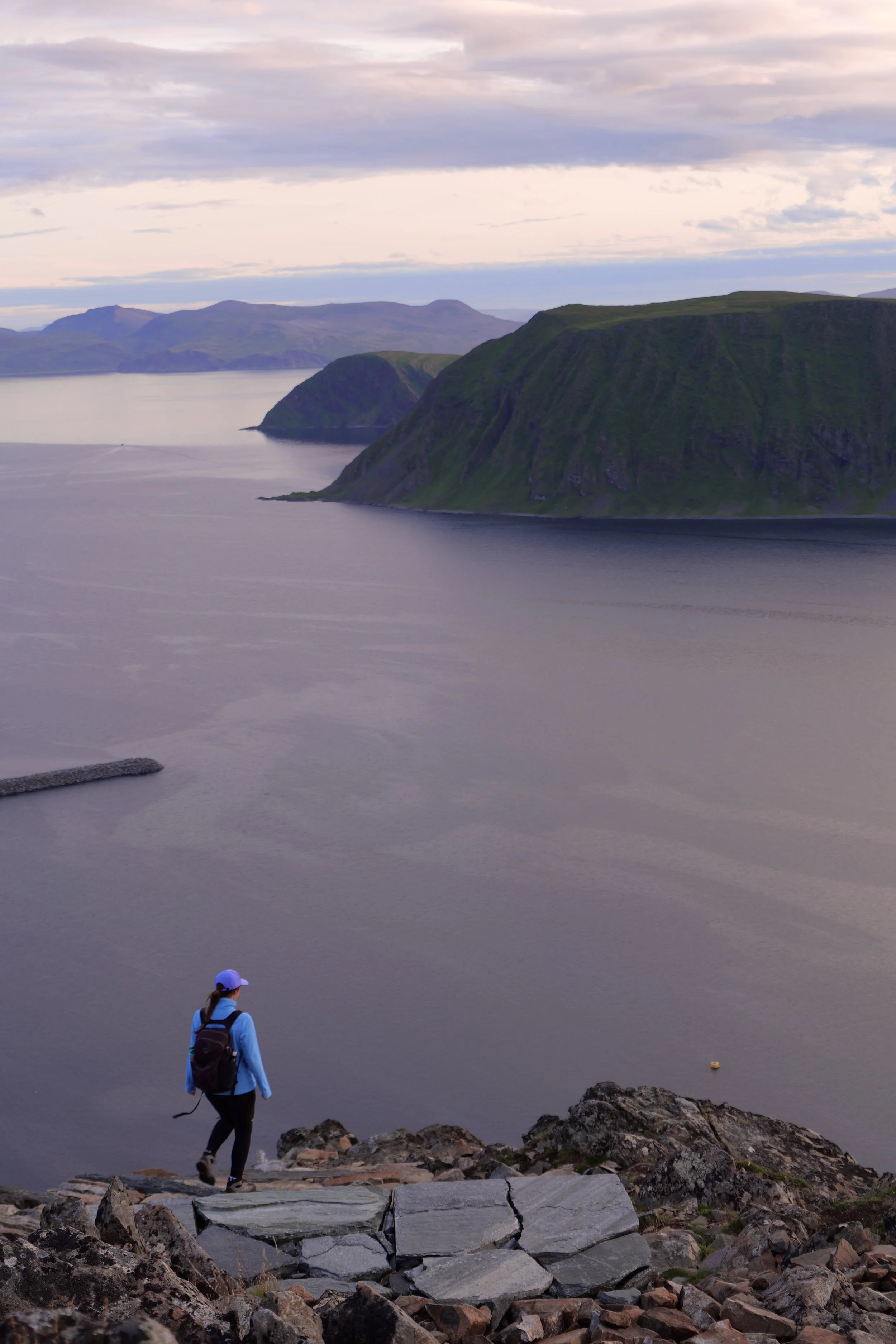
Despite this season not being my favourite, I still try to make the best out of it and spend some time in nature. On my day off, I usually go hiking to a cabin, take pictures, and have a picnic outside.
Cultural differences.
The cultural difference between Nordic people and southern Europeans is real.
Nordic humour
Nordic humour is very hard to understand and too dark for the rest of the world. Very direct and ironic, and that can be misinterpreted as rude or offensive. In Italy, we say that in every joke there is a bit of truth, so good luck surviving the Nordic humour!
In the North, they like to joke about everything & everyone and expect people not to take it personally. For example, they always like to make fun of their neighbouring countries like Sweden and Finland, but in the end, they consider each other like siblings.
Norwegian coffee
Being half-Italian, I am very critical when it comes to coffee. The traditional way to prepare a cup of Norwegian coffee is called ‘kokekaffe’, or literally 'boiled coffee.' Norwegians like to drink their coffee in the ‘Americano style’, which in Italy we call ‘acqua marrone’ — ‘brown water’. An accurate name that gives you an idea about the taste. Since I moved to Norway, I stopped drinking black coffee, and I only stick with cappuccino or tea. I really tried my best to appreciate Norwegian coffee, but at times it gets challenging!
Norwegians really love their coffee; in fact, they are the 2nd highest consumer in the world after Finland (9.9 kg/22 lbs per person per year). 80% of the roughly 5 million inhabitants drink coffee, many at a rate of four to five a day. If you are ever in Norway, don't forget to try "karsk," — a cocktail made with weakly brewed coffee, sugar, and a hefty helping of moonshine.
Drinking culture in the North
To say Norwegians don’t party hard would be like saying that taxes are only a little high in Norway. It would be quite an understatement! In Norway, drinking tends to start at a pretty young age (between 13-14 yo). Generally, this is accepted by society and in some cases, even encouraged, using drinking games as a means of socialization. This gives them an easy framework for interacting with each other.
While in Italy we enjoy alcohol as a ‘tasting experience’, with an ‘aperitivo’ on the terrace, or a glass of red wine during meals, in Norway, there is no better storytelling than a drunk person in the pub. With the cost of alcohol in Norway so high, there’s a local expression that covers Norwegians’ approach to drinking quite well — “being half drunk is a waste of money”. So in Norway, they don’t go halfway when it comes to drinking, more like all the way down. The price for a cocktail at the pub starts from €12, and half a litre of beer is € 9,5.
‘Vorspiel’ and ‘Nachspiel’
Before heading to the pub, Norwegians do a pre-party — ‘vorspiel’. One must try to get as loaded as possible at home first to avoid racking up a sky-high bill at the bar. It’s also a social aspect; Nordic people usually need a few drinks to get started. It allows them to loosen up a bit and be open to doing really crazy things, like talking to a stranger or buying a bunch of bitcoin. After being at the pub, they continue with ‘nachspiel’ — the after-party, usually in someone’s apartment.
Alcohol prohibition in Norway
In Norway, the government-owned alcohol retailer Vinmonopolet is the only company that can sell beverages containing an alcohol content higher than 4.75 per cent. Only low-alcohol drinks are available in regular supermarkets and convenience stores, but only for a limited time: during weekdays until 8 PM; at the weekends until 6 PM. These strict laws are in place to prevent alcoholism and the negative health effects of heavy drinking on health. Despite the high efforts in alcohol prohibition, the consumption of alcohol in Norway increased in the last few years, reaching a volume of 98 litres per capita in 2021.
‘‘On Sundays, we don’t work.’
Good luck in finding something open on a Sunday. Restaurants, bakeries, cafés, shopping malls, and grocery shops are always closed on Sundays, and the city of Honningsvåg transforms into a ghost town. One reason is that locals spend the weekends in their cabins (holiday homes). At times, it can get frustrating, especially when people are off and there’s not much else to do; the only option is to enjoy nature!
Mental health
In the Nordic countries, people are very open-minded to talking about mental health problems, unlike in southern Europe. In Italy, depression, anxiety, and more severe issues are still considered taboo, and people would rather hide them instead of sharing them with other people. In the North, from primary school to university, schools offer daily free therapy. Definitely, an approach to take as an example from.
Nordic education system
Norway boasts some of the best schools and higher education institutions in the world. Attending public universities in this country is tuition-free, even for international students! This is because Norway believes that everyone should have access to education regardless of socioeconomic background. The Norwegian school system can be divided into three parts: Elementary school (Barneskole, ages 6–13), lower secondary school (Ungdomsskole, ages 13–16), and upper secondary school (Videregående skole, ages 16–19).
The Nordic education system focuses more on practice, rather than theory, involving students with outdoor activities, essays, projects, and class presentations. In Italy, we have the most ancient school system, where teachers speak the whole time on the blackboard, and students have to listen and seat on the same chair for many hours. As the results show, a very unproductive method! Moreover, in the North, they would rather let students have a lot of free time to discover their passions, rather than bombarding them with homework. I really hope that those other countries can advance and take an example from the Nordic education system, which has proven to be more effective, and the perfect preparation to approach students’ transition to work life.
Wildlife & unspoiled nature
A good reason to move to the Arctic.
Reindeer.
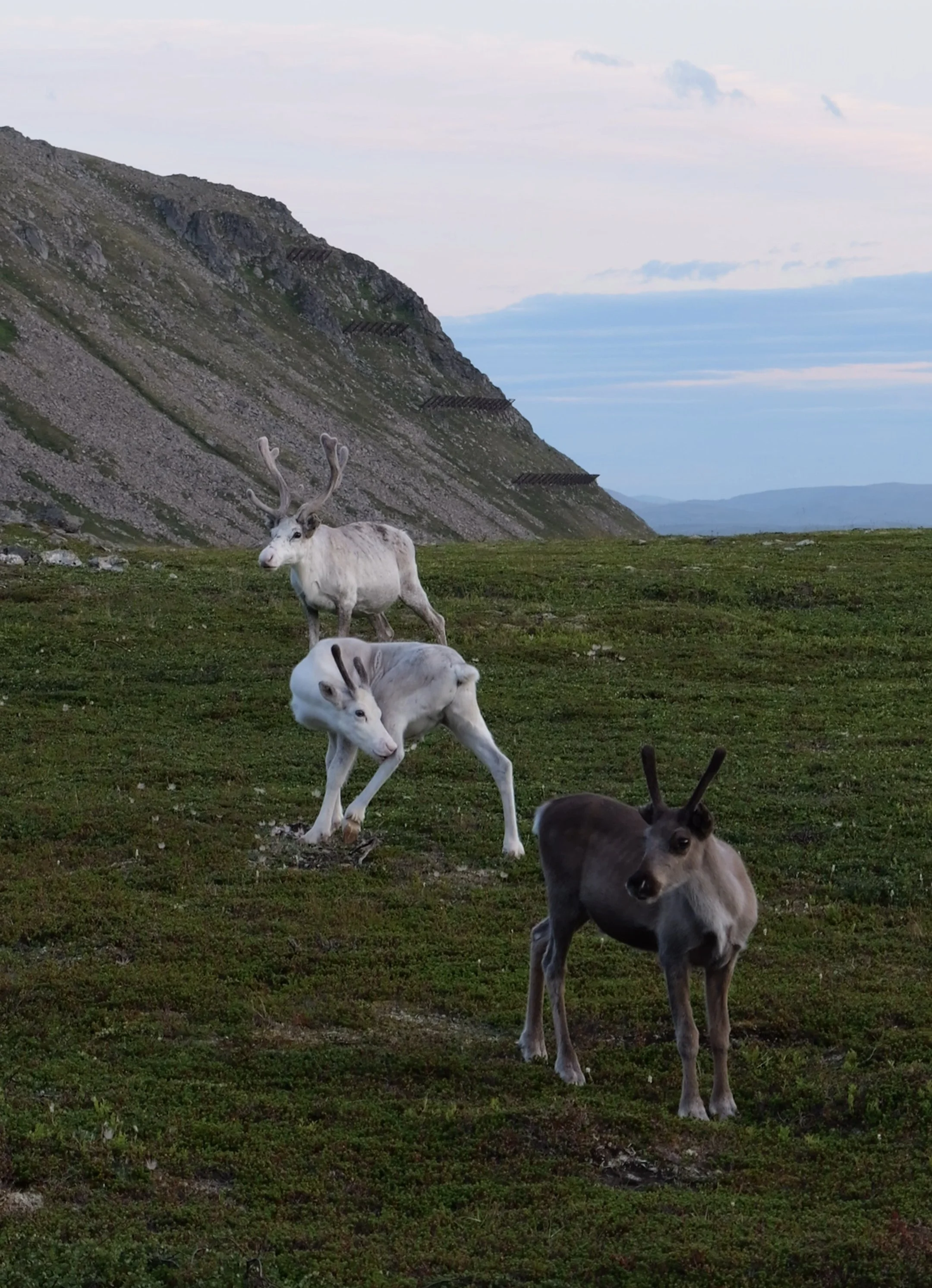
On the Island of Magerøya, we have approximately 6000 domesticated reindeer by the Sami people — the indigenous population of the North. The reindeer only spend the summer season on the island — they arrive in April on a ferry (with the help of the Sami), and they stay until early October. After the summer, they have a lot of fat and energy, and they are able to swim in the sea for 4 kilometres, to reach the mainland of Norway, where they are gonna spend the winter season.
I will never get tired of reindeer; they are majestic and beautiful animals, and I still get excited when I meet some while hiking in the tundra. Sometimes, I also see reindeer eating the flowers in the gardens of Honningsvåg. Reindeer are afraid of humans, so they usually run away when we are 20 meters from a reindeer, but sometimes it happens to meet a curious group, and when you get really close, it’s an unforgettable experience!
A bird-watching paradise.
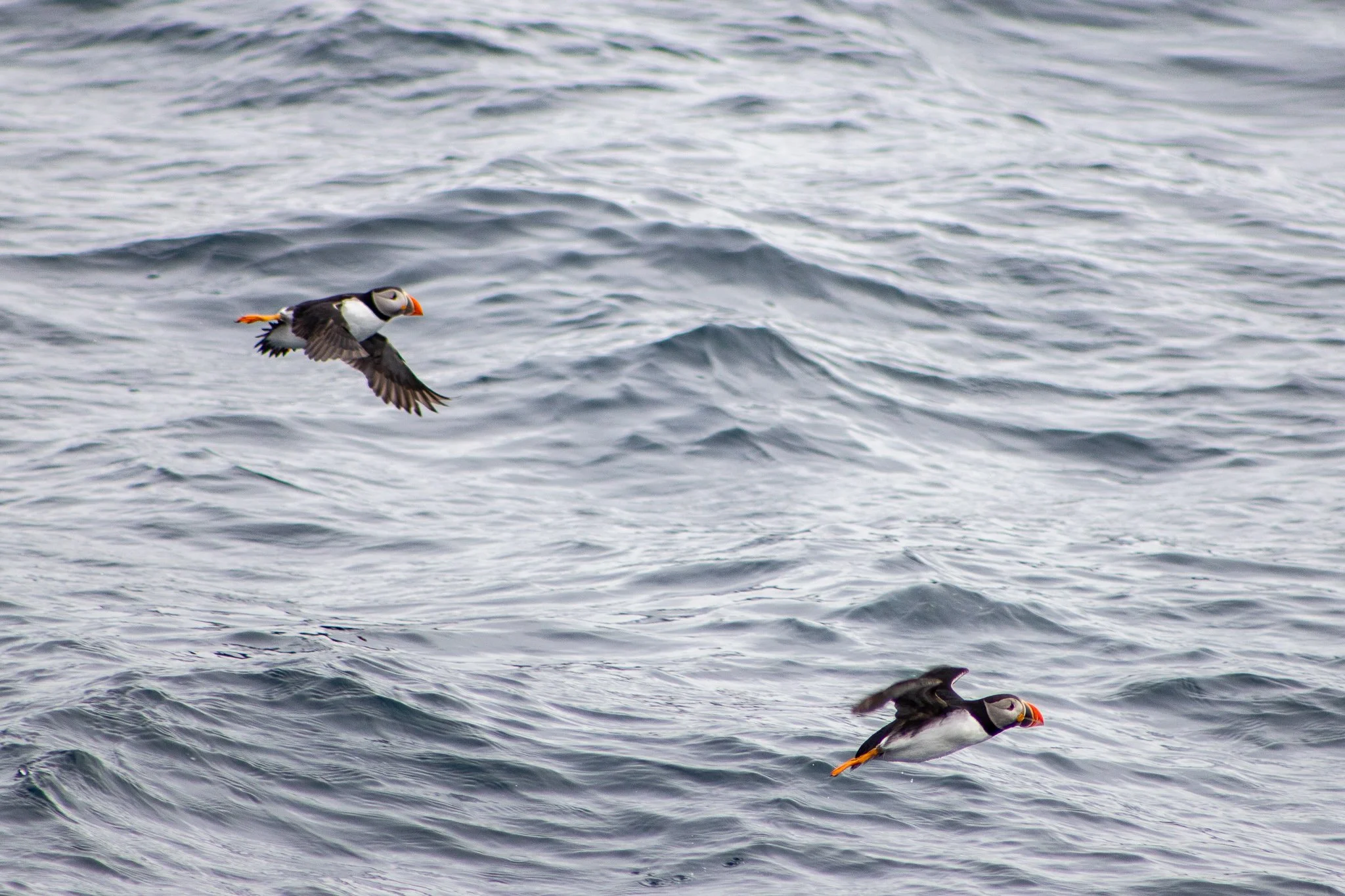
Gjesværstappan hosts Norway’s largest groups of puffins and kittiwakes. The puffins are easily recognisable by their colourful bill, and nest in holes on the grassy hills. The nesting period, from April to September, teems with life in the air and on land. Mighty White-tailed Eagles can be seen hovering overhead as they hunt for prey. Guillemots, Razorbills, Cormorants, Arctic Skuas, Fulmars, and Gannets are also part of the flourishing bird life at Gjesværstappan. The best way to enjoy wildlife close by is by booking a tour with the local captain Ola, who will take you on a 2-hour boat tour along the majestic Natural Reserve of Gjesværstappan.
Sea life.

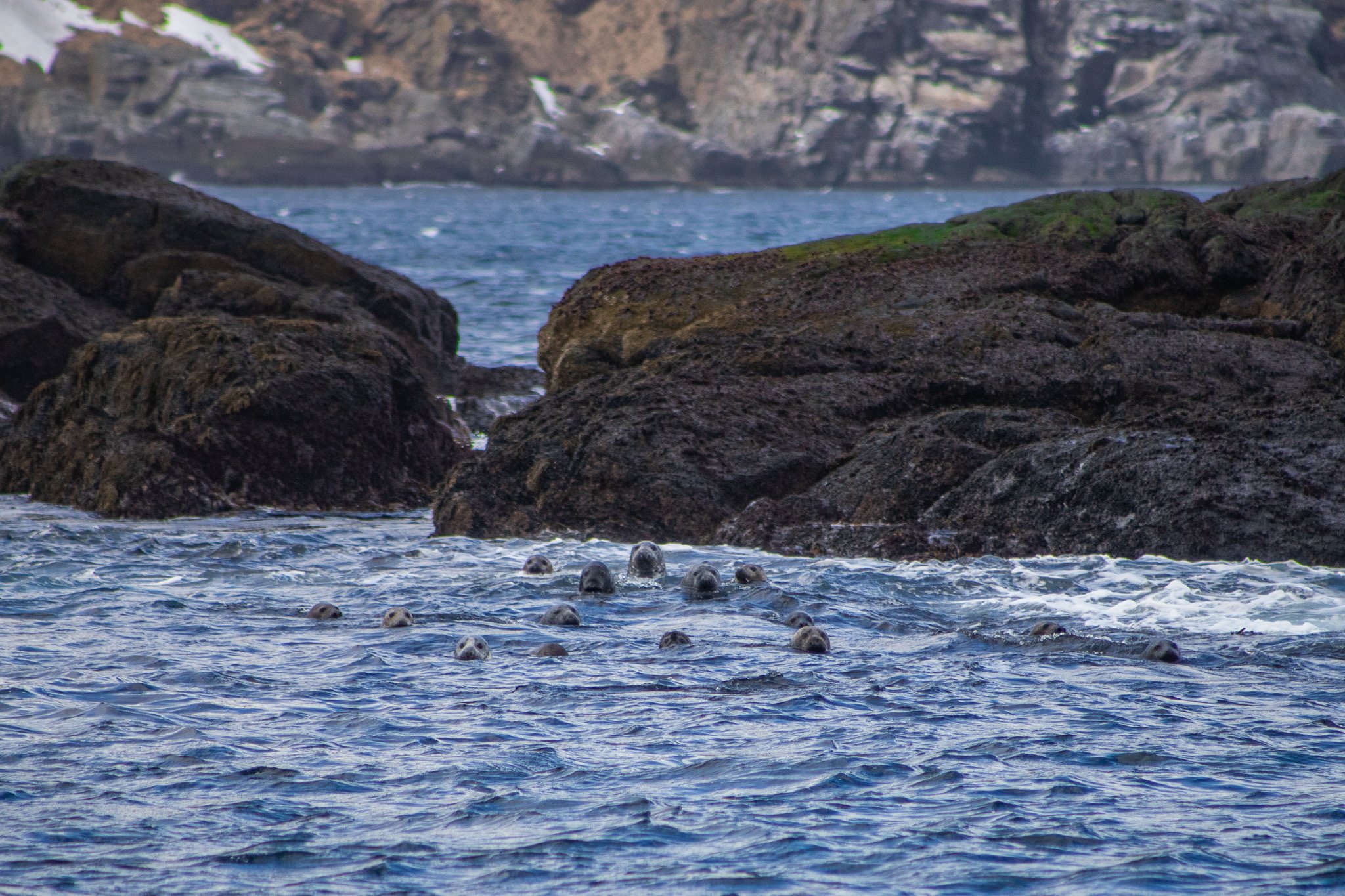
One of my favourite activities in the Summer is paddleboarding. I get to enjoy nature and get close to sea life. The perfect place for paddle-boarding and wildlife is Gjesvær — a fishing village where I used to live for 6 months (while working in a fish factory during Covid). Here, I often encountered different species of whales and seals.
One day, while I was wandering on my paddleboard, I was lucky enough to get close to a group of harbour porpoises — whales related to the family of dolphins. Or, during the bird safari tour, I even saw some humpback whales swimming next to the boat.
While I was working on the stockfish racks, the seals always used to come close to the pier, waiting to get some fish heads.
Living in the Arctic is the perfect place to detach from the rest of the world and escape from a hectic lifestyle, which is the main reason I moved to such a remote location. To experience unspoiled nature and encounter wildlife is what makes living here so special. Coming from a crowded place like Italy, I truly appreciate meeting no people while hiking, and seeing only reindeer eating lichens, or minks and snow rabbits going around. Definitely, a very unique place for very special people!
Thank you for reading this far!