

Top 5 places worth visiting in Norway
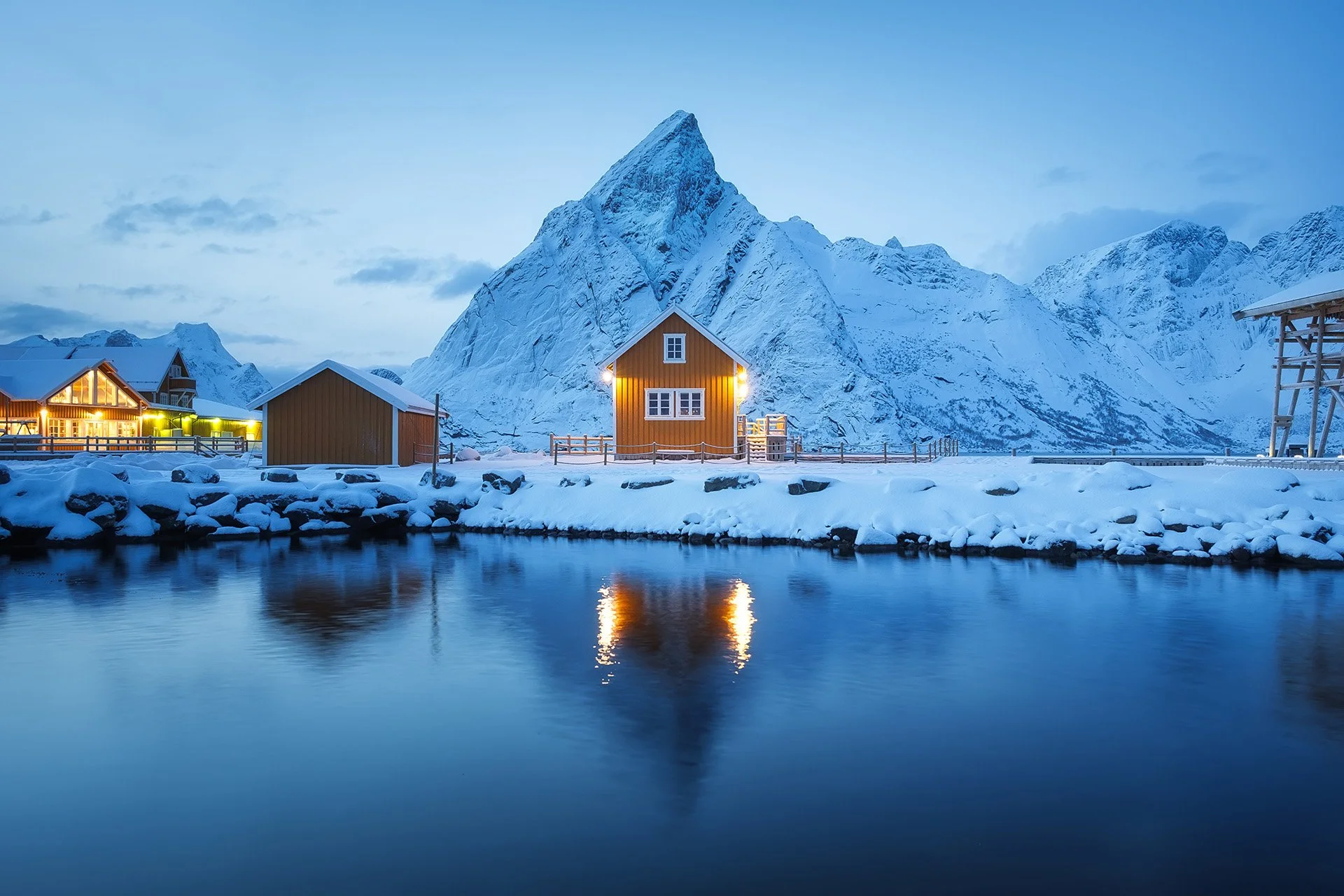
In 2019, I moved to Northern Norway, and after venturing through various destinations above the Arctic Circle, I put together a list of my favourite places to visit in Norway.
1) Svalbard
EUROPE’S NORTHERNMOST POINT
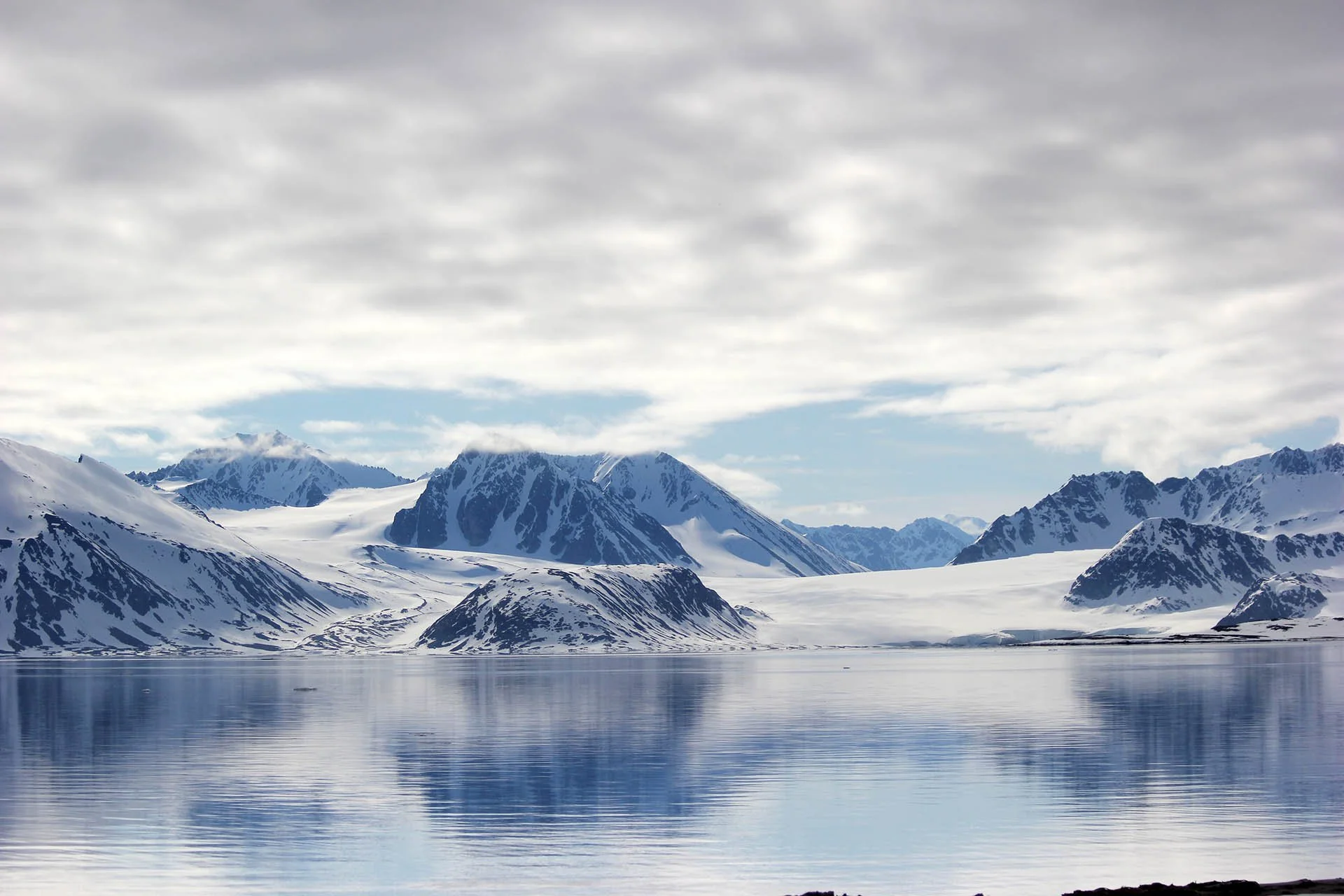
Why is Svalbard special?
Svalbard is a Norwegian archipelago in the Arctic Ocean. Located at the top of the world, it contains endless areas of unspoilt, raw Arctic wilderness. Longyearbyen is the main town of Svalbard and the world's northernmost permanent settlement, located at 78 degrees north, halfway between mainland Norway and the North Pole (1,050 km away). The 2,300 residents here are used to extremes. When the sun sets on the 5th of October each year, the town will not see it again for 155 days until the 8th of March next year. For most of this time, the town is covered in complete darkness.
Svalbard is perhaps one of the most accessible inaccessible places in the world — despite its remote location, there are daily flights to and from Svalbard throughout the year. And it’s one of the few visa-free zones in the world; therefore, there are more than 50 nationalities — just 57% are Norwegian; there are many Thais, Swedes, Russians, and more.
Wilderness
Halfway between Norway and the North Pole, Svalbard is often referred to as Europe’s last wilderness, offering Arctic nature at its rawest. The island features untouched glaciers and craggy mountains and is famous for its polar bears, reindeer, whales, seals, walruses, and Arctic foxes.
Life with Polar Bears
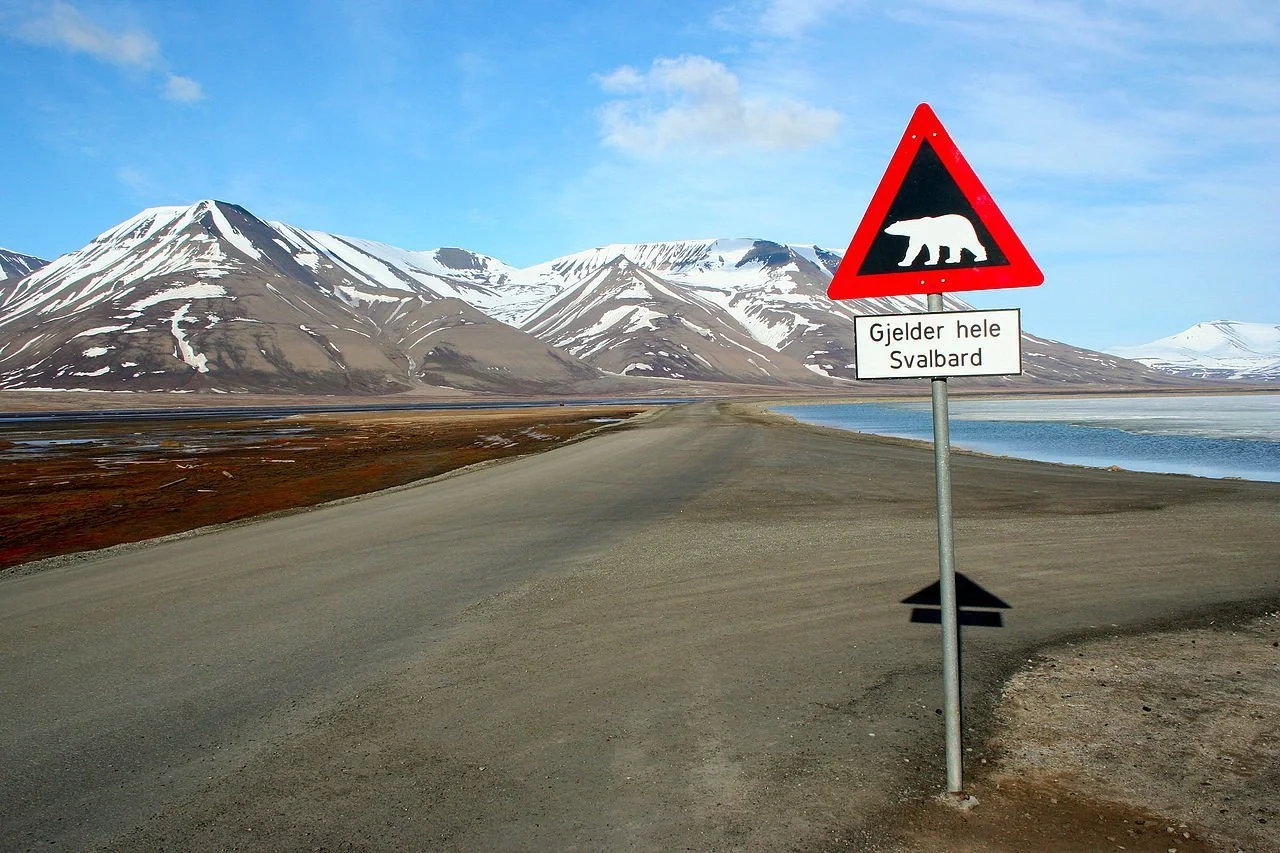
There are 3000polar bears in the archipelago, which is more than the region's human population! When living in Longyearbyen, it’s the law that people must be armed, just in case.
However, other than firing warning shots, weapons can only be used in situations where human life is at risk. Relatively few serious confrontations, 11 in total, occurred in the field. Until now, only five fatal attacks on humans by bears have been recorded in the last 50 years. The most recent one was in the summer of 2020, when a Dutch tourist was camping and got attacked by a polar bear during the night.
Curious and unpredictable animals
Most confrontations between people and bears result from the polar bear’s inherent curiosity, which derives from its adaptation to life in a very barren and inhospitable environment with scant access to food. All potential food sources must be checked out. Add in the bear’s extreme patience and total unpredictability, and it’s clear that people have to be vigilant. It’s practically impossible to determine in advance whether a bear will continue strolling along the beach or turn and run at you at great speed, so be prepared for both.
How to reach Svalbard?
The most common route to reach Svalbard is to fly via Oslo to Longyearbyen. Flying time is 3 hours. If you are already in Northern Norway, there are also direct flights from Tromsø. Longyearbyen Airport is the northernmost airport that receives regularly scheduled flights. There’s no boat service to Svalbard, just expedition cruises.
Seasons & Best time to visit Svalbard
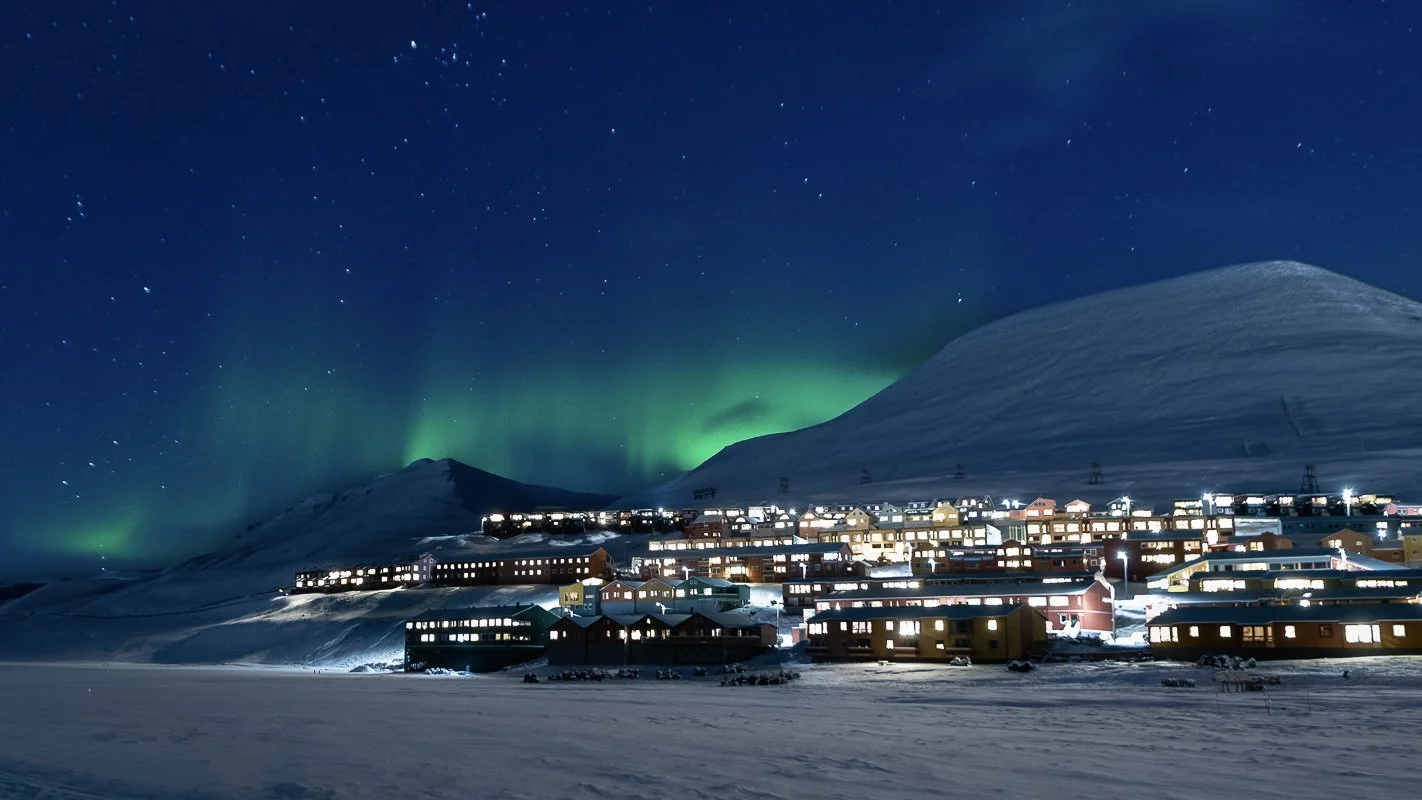
Each season has its unique charms and characteristics! It really comes down to what interests you have and what you want to experience in Svalbard. If you want to enjoy the winter and northern lights, but still have a few hours of light, I recommend going between March and April. If you have an adventurous spirit, in the summer (from May until September), the island offers many tours and activities.
Climate
Svalbard has an arctic climate with cold winters and cool summers. Average summer temperatures range from 3 to 7 °C (37.4 to 44.6 °F), and winter temperatures are from −13 to −20 °C (8.6 to −4.0 °F). The highest temperature ever recorded was 23.0 °C (73.4 °F) in July 2020.
Polar night season
In October, it starts to get dark in the afternoon, and there is noticeably less daylight as each day passes. This two-and-a-half-month period of complete darkness is called Polar Nights — it lasts from mid-November to late January. The sun is at least 6 degrees below the horizon during this period, and it’s pitch-dark 24/7. The darkness is the same around the clock, so it does not give you any hints about what time it is.
Northern lights
The only light sources outside the settlement are the moon, the stars, and the Northern Lights. Svalbard is so unique that it’s the only permanently settled place on earth where you can experience dayside Northern Lights, which differ in colour and strength from what normally occurs in the evening and at night.
The best period to see northern lights in Svalbard is from late September until mid-March, from 6:00 PM to midnight, and between 4:00 AM and 8:00 AM
The blue hour
In the weeks before and after the Polar Night, they have what is called the “blue hour”. This provides Svalbard with unique light conditions during the daytime, and the beautiful blue tone is something you must experience to fully appreciate. This period of the year is a favourite among photographers, because they get to capture the unique blue light by day and the magical Northern Lights in the evening and at night.
Midnight sun season
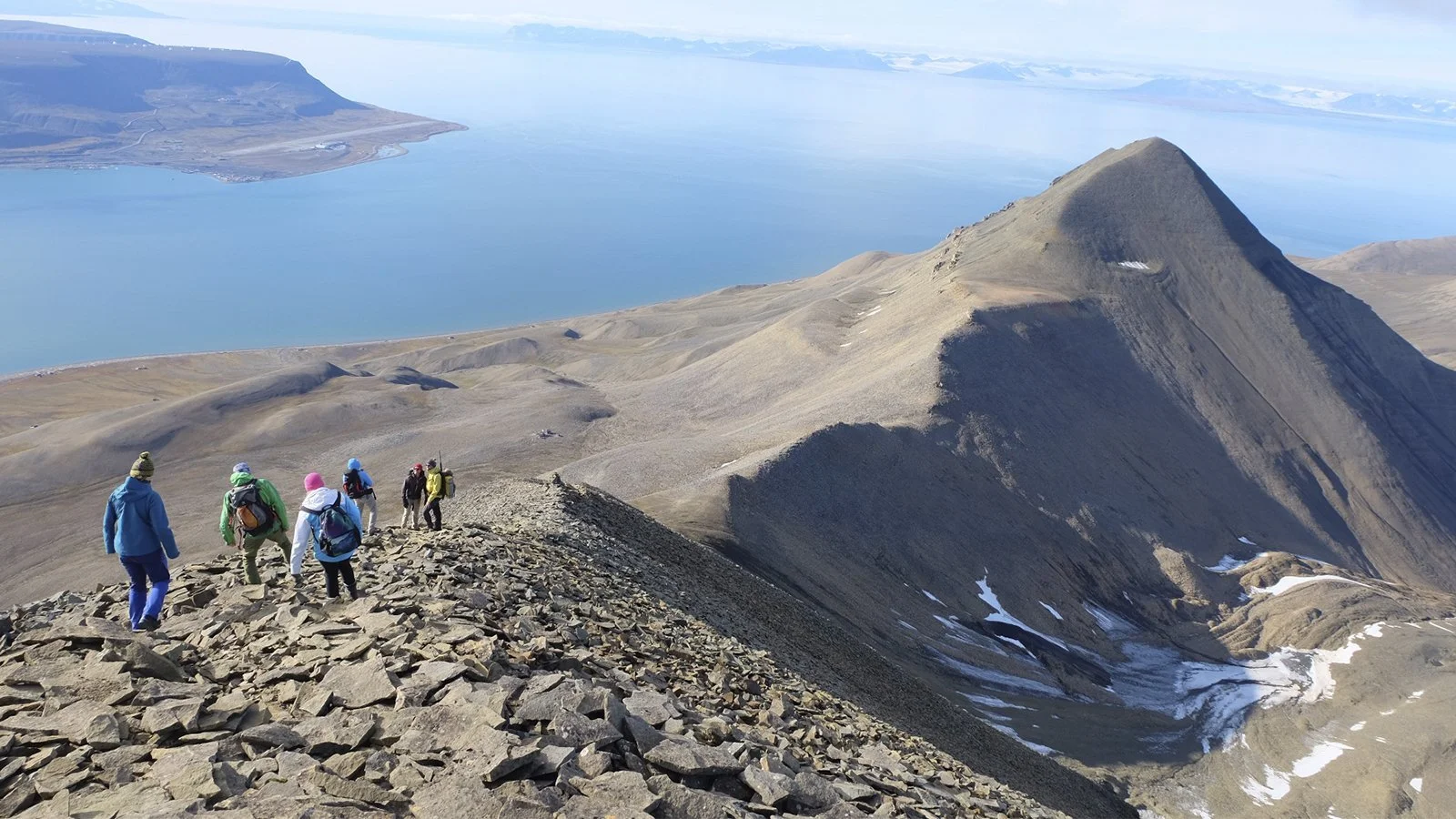
The midnight sun means complete daylight for 24 hours, from the 17th of May, and won’t drop below the horizon again until late August. During this magical time of the year, the midnight sun affects the biological clock of humans and animals, and it’s easy to lose track of time.
The archipelago is invaded by birds that migrate here in vast numbers to nest. The waters surrounding the archipelago are very nutritious and offer a plentiful supply of food. An abundance of walruses, seals, and whales enter the fjords of Svalbard. If you are interested in experiencing Arctic animal life, summer is preferable because of the greater diversity.
Activities
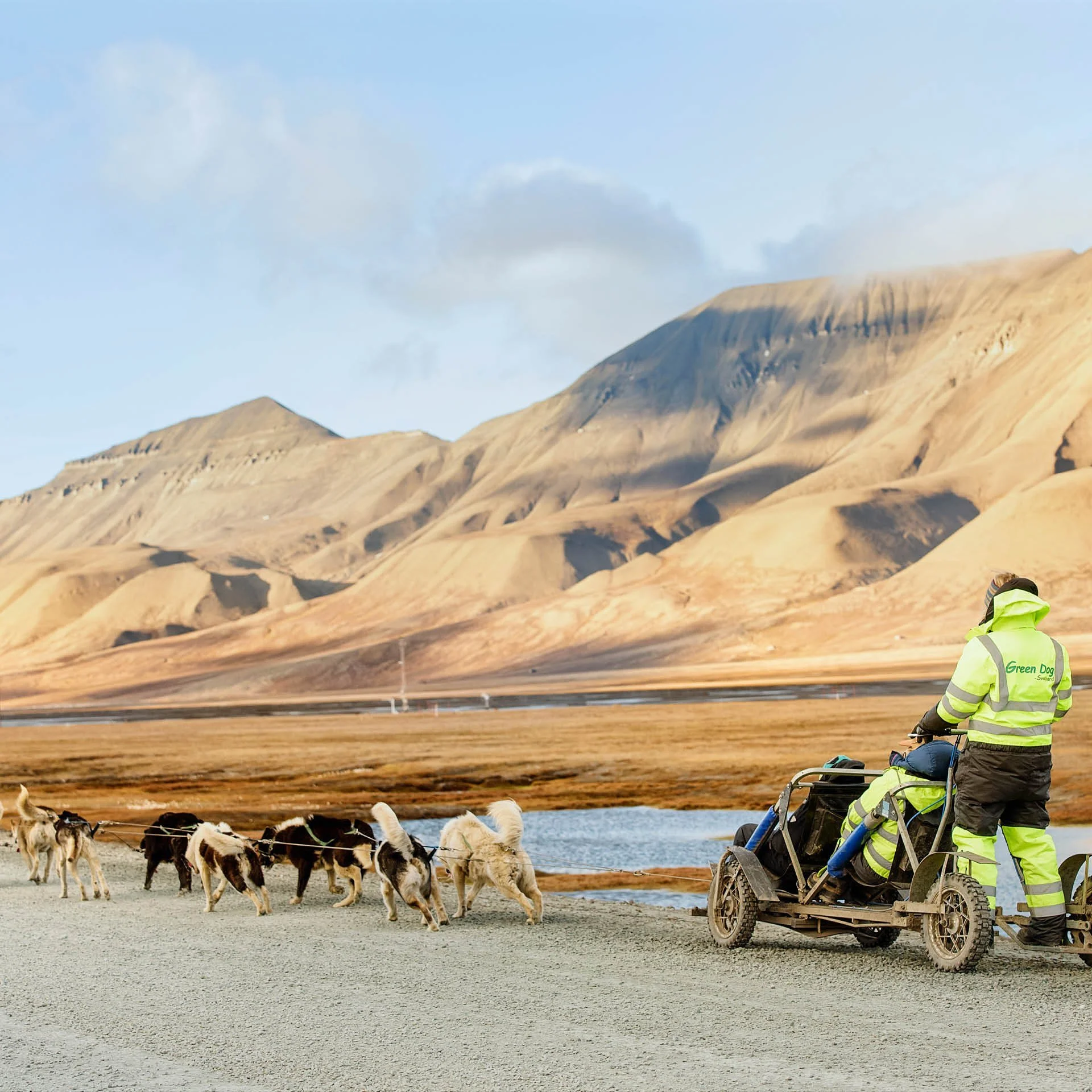
In the Winter, the most popular activities include snowmobiles, dog sledging, and northern lights hunting safaris.
During the Polar Summer, you have a wider choice of activities like boat trips, kayaking, and various hiking excursions. In addition, mining and sightseeing tours by bus are offered all year, like dog sledging adventures.
Hiking in Svalbard
In the town of Longyearbyen, you can walk around on your own. But, if you want to get out of Longyearbyen and explore the Arctic wilderness, you should NOT do any trekking without a local guide. You will have to be familiar with local regulations, particularly those that deal with the environment and safety precautions.
Camping in Svalbard
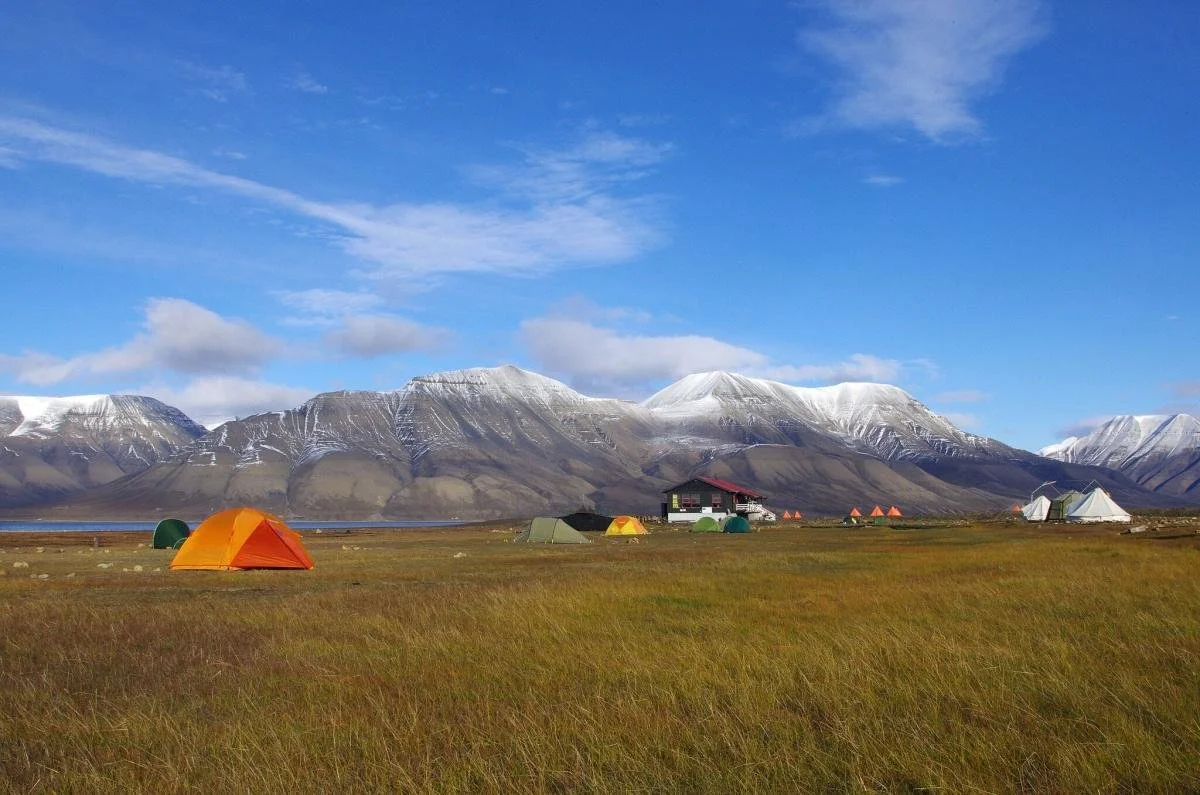
Camping in Svalbard is at your own risk. Many serious polar bear incidents in Svalbard occur when camping out. Avoid camping in areas where encounters with polar bears are likely, such as along the shoreline. Set up camp up from the beach, preferably with a good view in all directions. Do not camp ahead of a glacier terminus, and avoid areas where polar bears have recently been seen or where there are fresh tracks.
All campsites should be encircled by tripwires or other polar bear warning systems. When in the camp, it is important to keep a gun nearby. Flare guns, other deterrents, and extra cartridges must be stored so they are easy to find if a polar bear turns up.
Interesting facts..
Svalbard Global Seed Vault
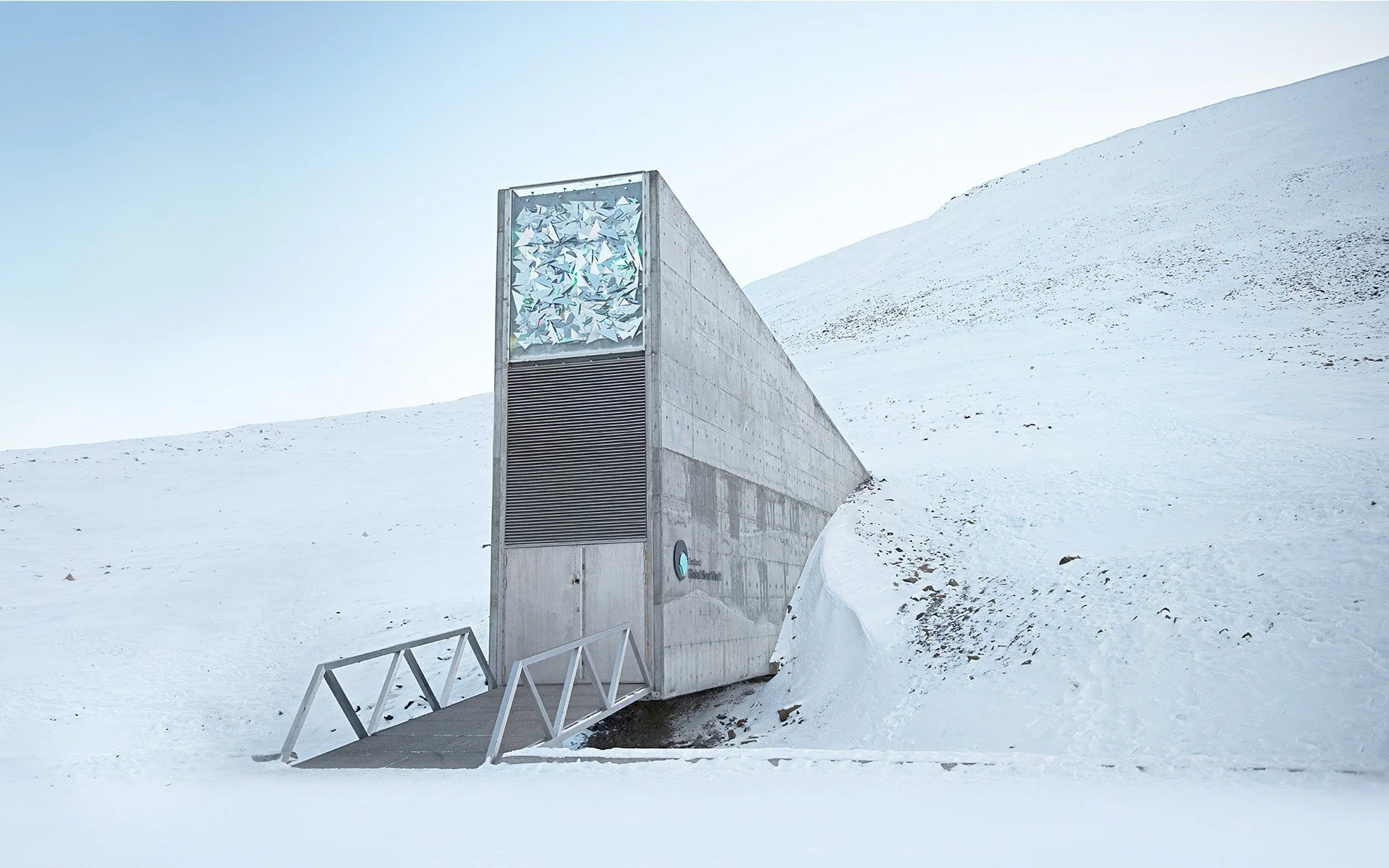
Deep inside a mountain lies the Global Seed Vault — a long-term seed storage facility, built to stand the test of time and the challenge of natural or man-made disasters. The Seed Vault represents the world’s largest collection of crop diversity.
A temperature of -18º C is required for optimal storage of the seeds. Currently, the Vault holds more than 1,000,000 samples, originating from almost every country in the world. Ranging from unique varieties of major African and Asian food staples such as maize, rice, wheat, cowpea, and sorghum to European and South American varieties of eggplant, lettuce, barley, and potato. In fact, the Vault already holds the most diverse collection of food crop seeds in the world.
2) The Lofoten Islands
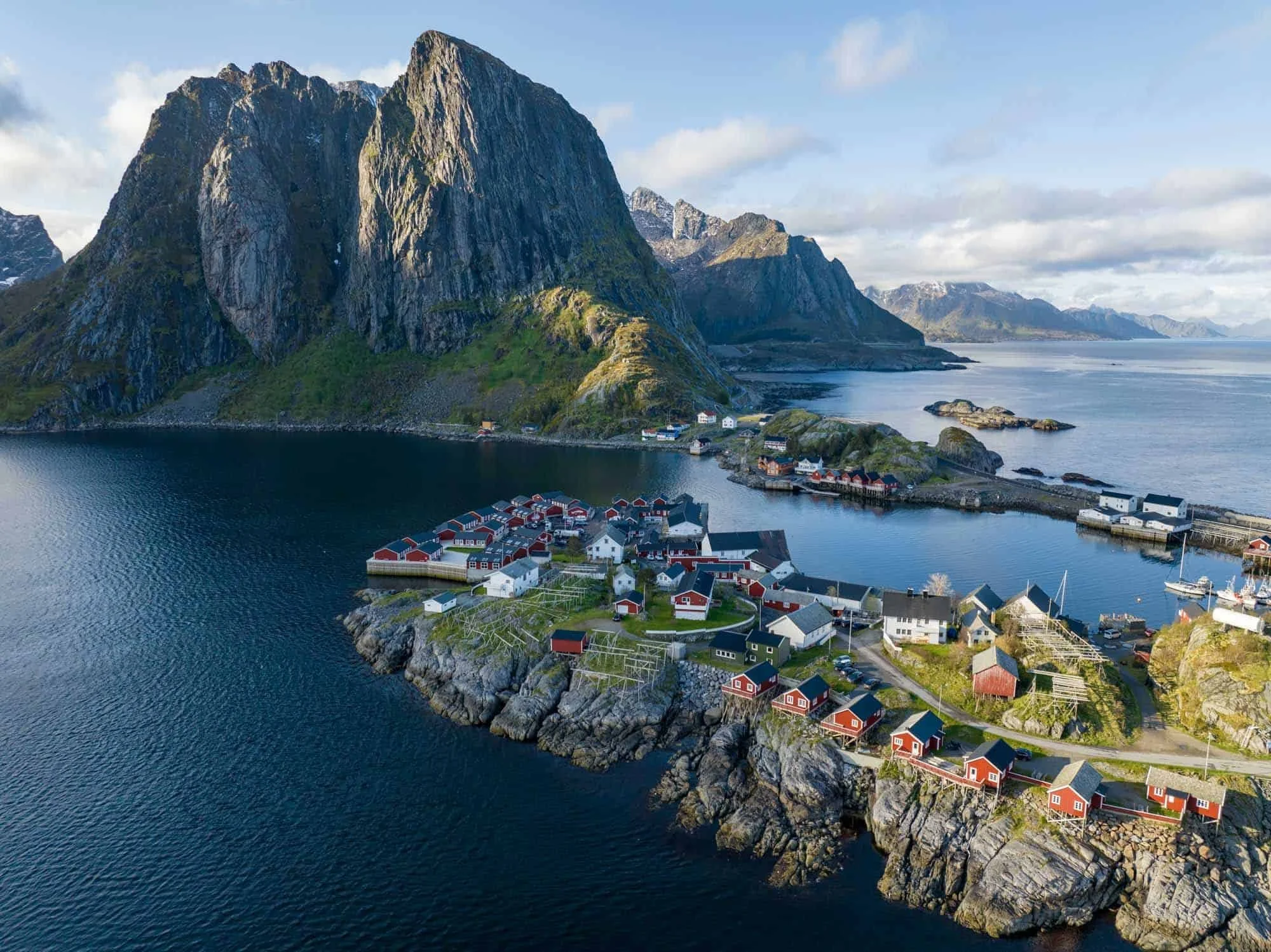
Why should you visit Lofoten?
The Lofoten Archipelago is one of the most popular places in Norway for a reason: expect to see dramatic fjords, the sky painted with midnight sun colours, and beautiful white sandy beaches.
Lofoten is also a mecca for hiking, climbing, fishing, kayaking, skiing, Arctic surfing, and cycling. The tourism scene has a very young vibe, with lots of budget accommodation, and even the luxury accommodation markets itself toward adventure seekers.
This was the place that got me interested in Norway, and after visiting it, I realised how much I would like to move here one day.
Best time to visit
The best time to visit the Lofoten Islands is any time outside of November, December, and January, when the days are very short and for 4 weeks are completely dark, with very stormy and windy days.
Lofoten offers activities regardless of the season, from the Northern Lights in winter, orca spotting in spring, and excellent hiking and biking in summer and autumn. If you want to watch the northern lights, the best time is from September until mid-March.
I recommend spending at least one week in Lofoten. My favourite months to visit Reine are June and July, when the sky turns purple-red and the night transforms into a constant sunset.
REINE, THE MOST SCENIC FISHING VILLAGE
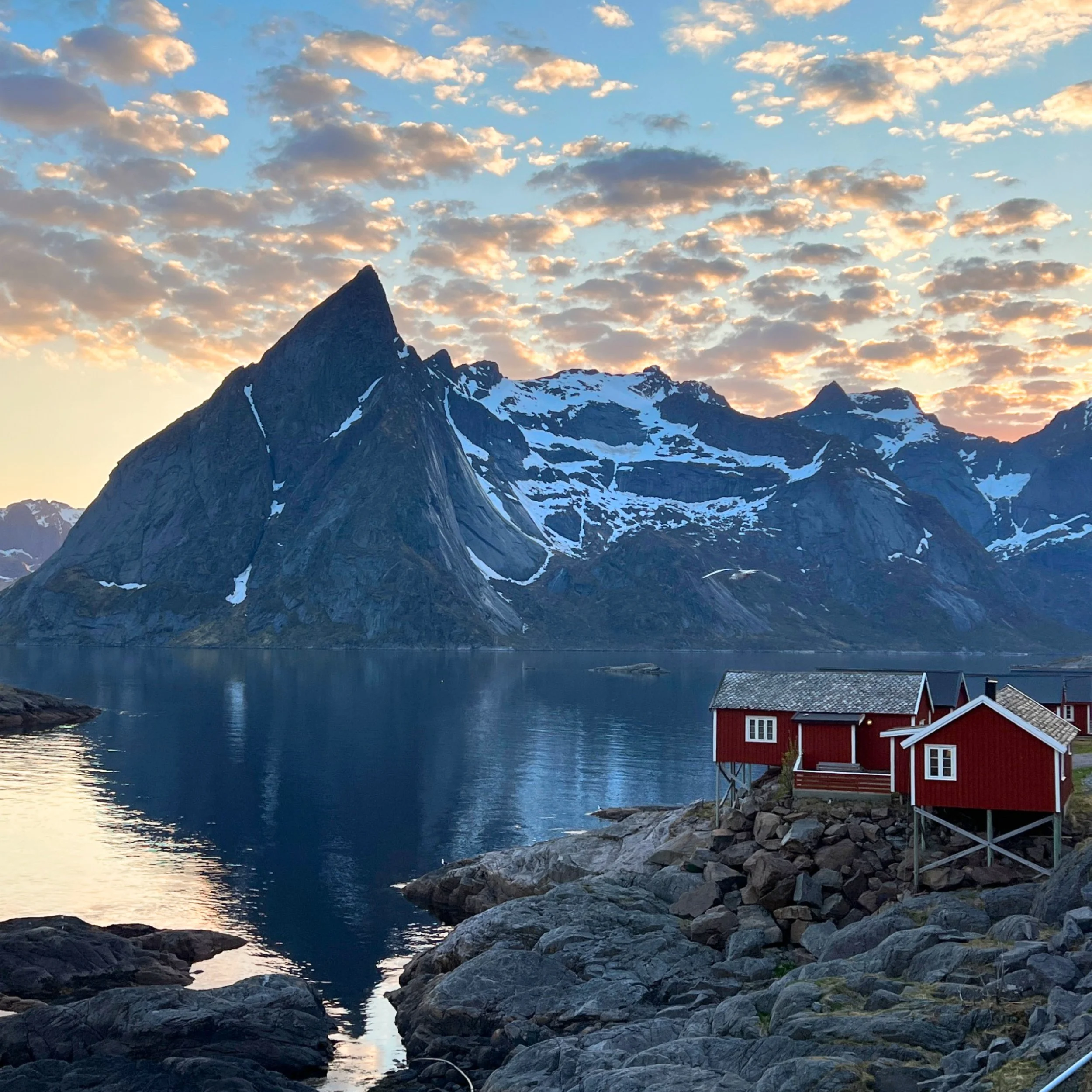
Reine is a fishing village of Moskenes Municipality in Nordland county, Northern Norway. The fishing village is located on the island of Moskenesøya in the Lofoten archipelago, above the Arctic Circle at 68° N.
The closest airport is in Leknes, located 68 km from Reine. You can find better flight connections from Svolvær Airport, located 125 km from Reine. You have many options to reach the Lofoten Archipelago, the most common and more convenient are:
Take a flight from Oslo to Bodø, and take a ferry from Bodø to Moskenes — the harbour is 9 km west of Reine.
If you prefer to rent a car and enjoy the E10 scenic route across Lofoten, you can take a flight from Oslo to Narvik, and from Narvik drive for 340 km (5,5 hours) all the way to Reine.
Activities
Hike to Reinebringen Viewpoint
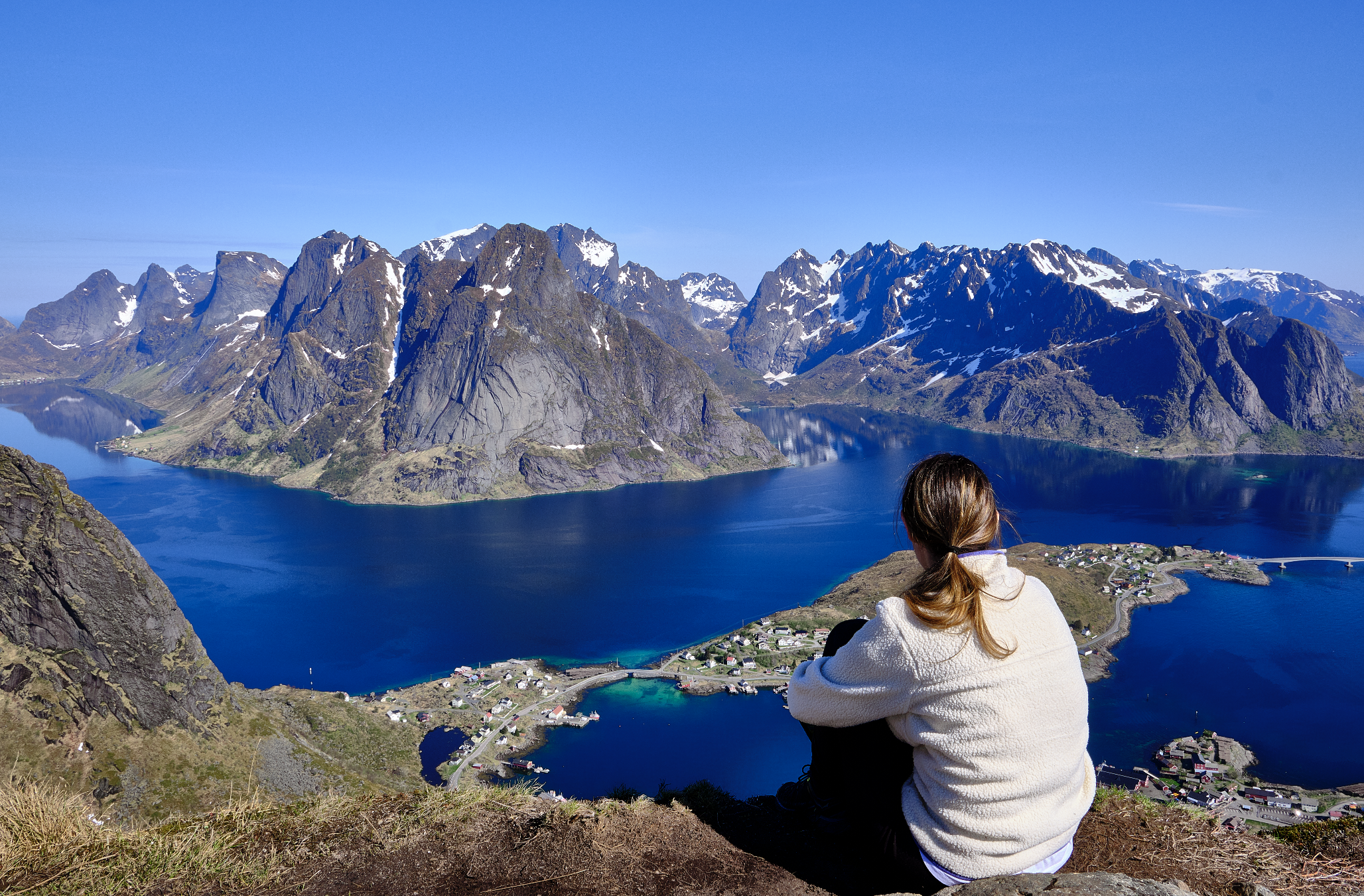
Reinebringen is one of the highest mountains in Lofoten, and the view from the top is known for being one of the most spectacular. It is a must among many hikers, and you will soon understand why. This hike is extremely popular among tourists.
There are two official parking areas provided by the municipality. A small one by Djupfjord Bridge, following the road E10 direction Å. There is a short walk north over the bridge, all the way to the starting point of the trail. If this parking lot is full, drive into Reine and park by the harbour. The trailhead is located about 1 kilometre from Reine, and you can easily walk there.
The hike is short, but steep: 1 h and 1 km long, on a stairway with 1560 steps. Once you arrive at the top, you will be at 450 meters elevation, and you can enjoy the 360° view over Reinefjorden and the villages of Hamnøy, Sakrisøy, and Reine.
Whale watching
In recent years, it has happened more often that Killer Whales are around Lofoten in the springtime. If you are planning to do some self-guided whale watching, we recommend that you ask some locals or check social media if people have recently seen or taken pictures of Orcas. The whales usually stay for some time in the same area and will come back at least once a day. They are travelling in a big circle in the Vestfjord chasing herring. You can spot them sometimes in the Reinefjord, but also all along the coast up to the Flakstad Island. I recommend being patient and always take with you a good camera, and when you least expect it, you might see them. In the summer, it is also possible to see Sperm Whales, Harbour Porpoises, and in the winter, Humpback Whales.
Kayaking and Paddleboarding
If you are in Reine, step in the water with your paddleboard from your lodge, or kayak around the islands of Sakrisøy, Hamnøy, and Reinefjord. This is an activity to enjoy all year round, an experience like no other, to be surrounded by dramatic peaks.
WHERE TO STAY IN REINE?
THE Manor House
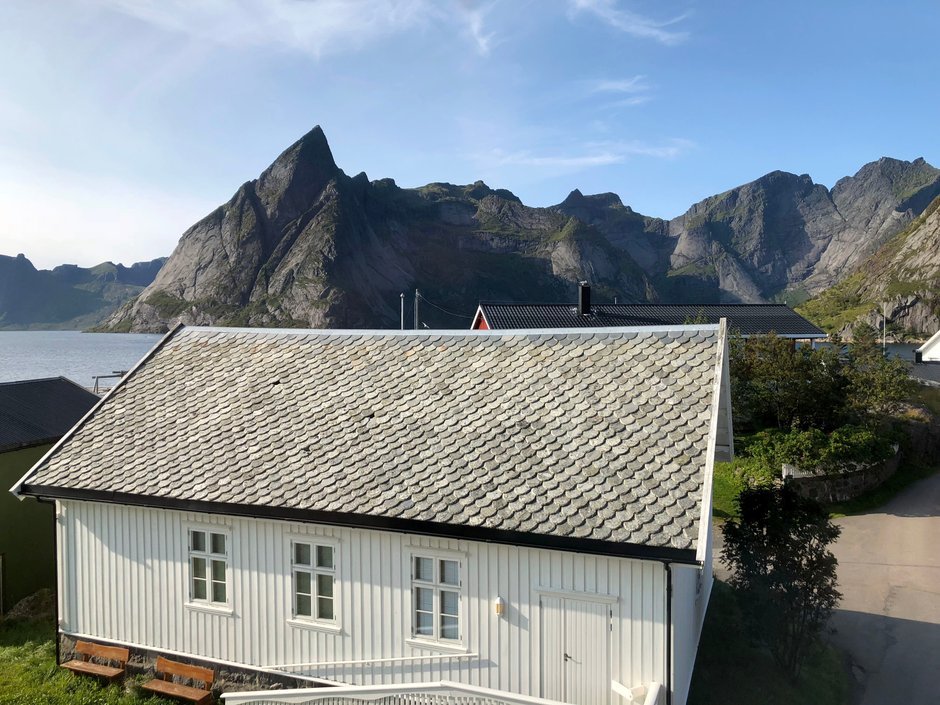
A lovely traditional guesthouse located in the most dramatic landscape of Lofoten. With a kitchen, terrace view, and garden, it's the perfect place to relax and breathe the traditions of the local fishing village.
Adventure on Lofoten’s most scenic beaches
Usually, the words arctic and beach are not mentioned together; however, Lofoten has some of the most spectacular beaches you will ever see.
Horseid and Bunes Beaches
The closest beaches to Reine are Horseid and Bunes. To access Horseid Beach, take the 15-minute ‘Fjordkyss’ morning ferry from Reine to Kjerkfjorden. Upon disembarking, turn right from the pier and follow the signs to the trail. Horseid Beach is a magnificent patch of white sand surrounded by towering granite, and to reach it, it takes two hours by walk, each way.
To reach Bunes Beach, take the same morning ferry from Reine to the village of Vindstad. Follow the path northwest along the fjord, over the ridge, and down to the beach. The path is relatively easy and good for families. Make sure to be back at the dock in time for the return ferry.
VISIT NUSFJORD VILLAGE
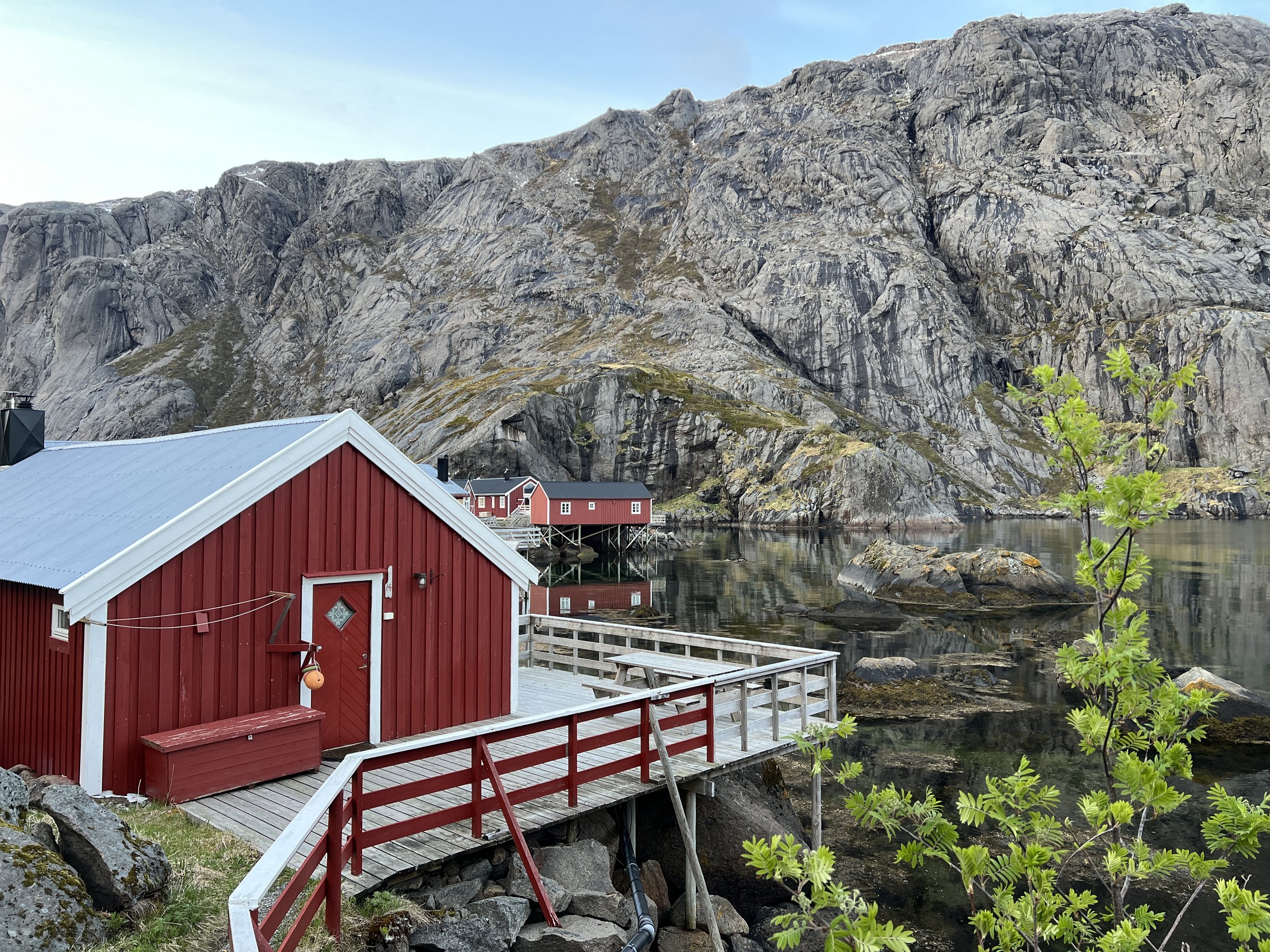
Nusfjord is one of the oldest and best-preserved fishing villages in Norway and is a UNESCO World Heritage Site.
This picturesque village has a long and fascinating history that dates back to the Viking age. For generations, the people of Nusfjord have been fishing for their livelihood, and the traditional fisherman’s cabin symbolises their hard work and dedication to the sea.
Today, the village is privately owned, and only 19 people can call Nusfjord their permanent home.
WHERE TO STAY IN NUSFJORD?
Nusfjord itself has a small, specialized selection of accommodations, primarily centered around a single major resort that offers various types of traditional cabins. If you are looking for more options, I recommend staying in the nearby towns of Ramberg and Ballstad.
We stayed in a typical fisherman's cabin — Lofoten Cottages, overlooking the fjord.
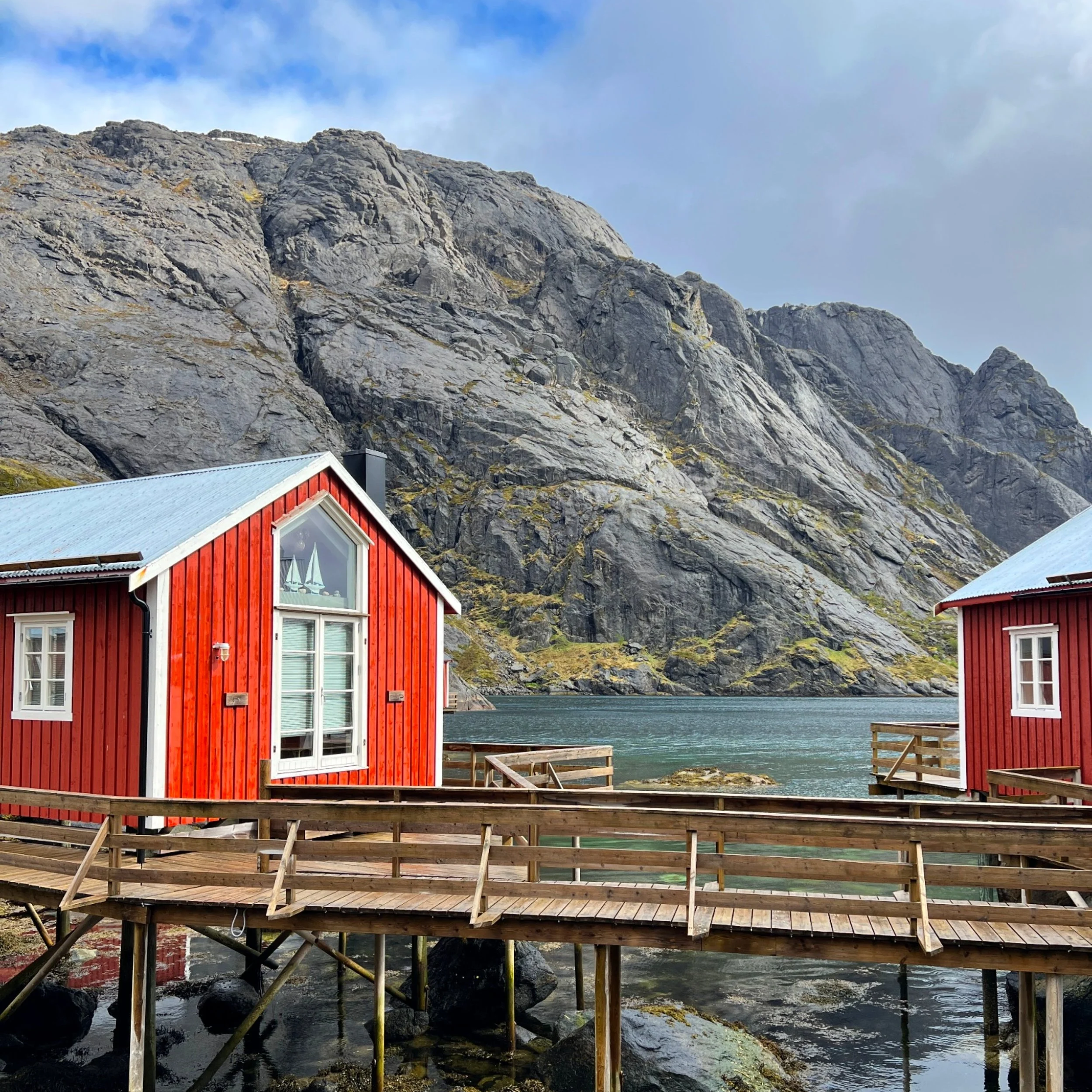
Visit the cutest bakeries
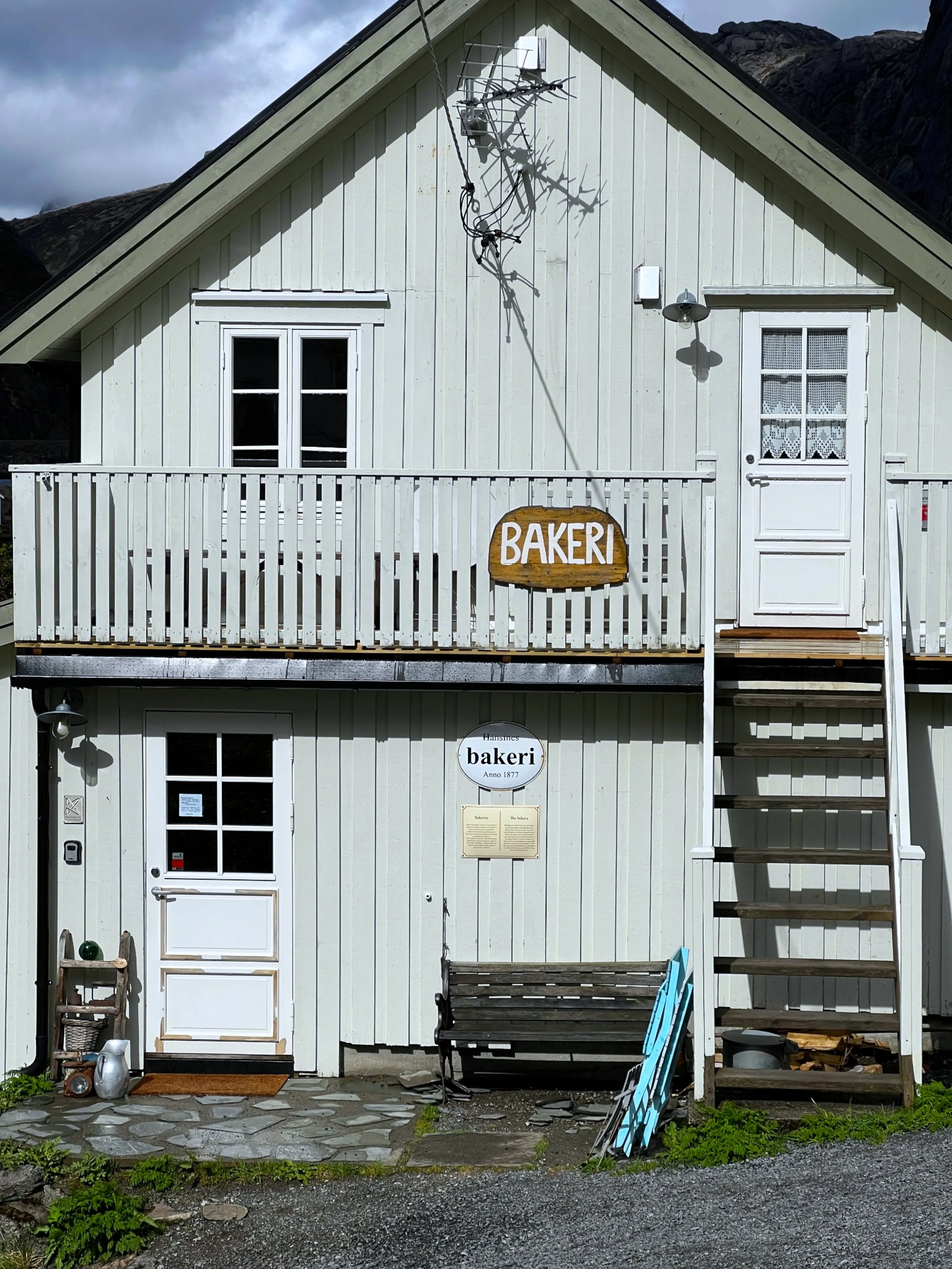
Hansines Bakeri
This historic bakery is a major highlight in the village, along with a café that serves fresh-baked goods. Best known for its cinnamon buns (kanelsnurr), cardamom buns, and school bread (skolebrød)—a Norwegian classic with custard and coconut.
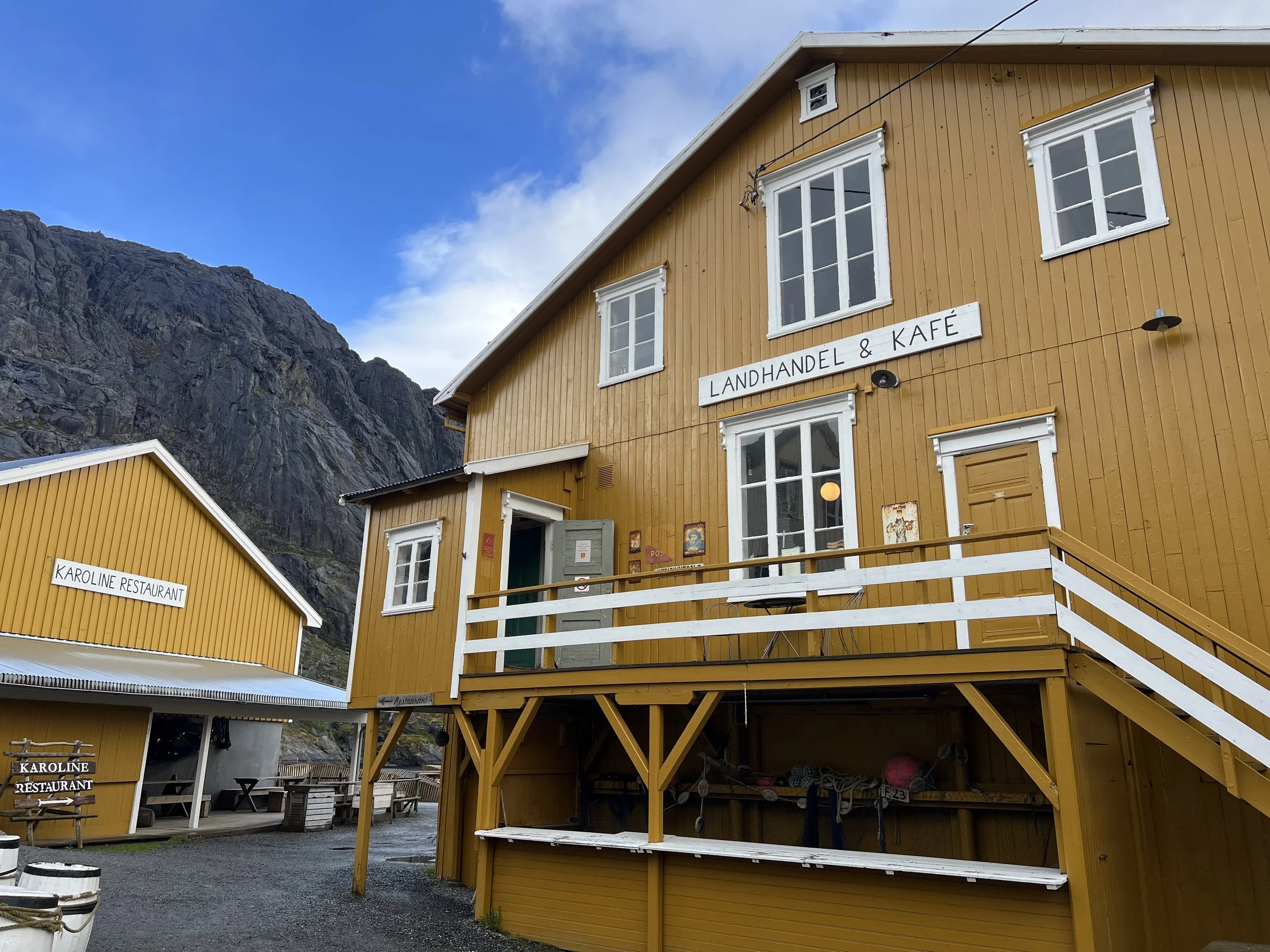
Landhandleriet Café
Landhandleriet Café is a cozy, historic café located in the heart of Nusfjord. I recommend trying the shrimp sandwich and the lemon cream bun.
In the cafe, there is also a beautiful souvenir shop with postcards, soaps, and other local products. I bought a sea urchin candle.
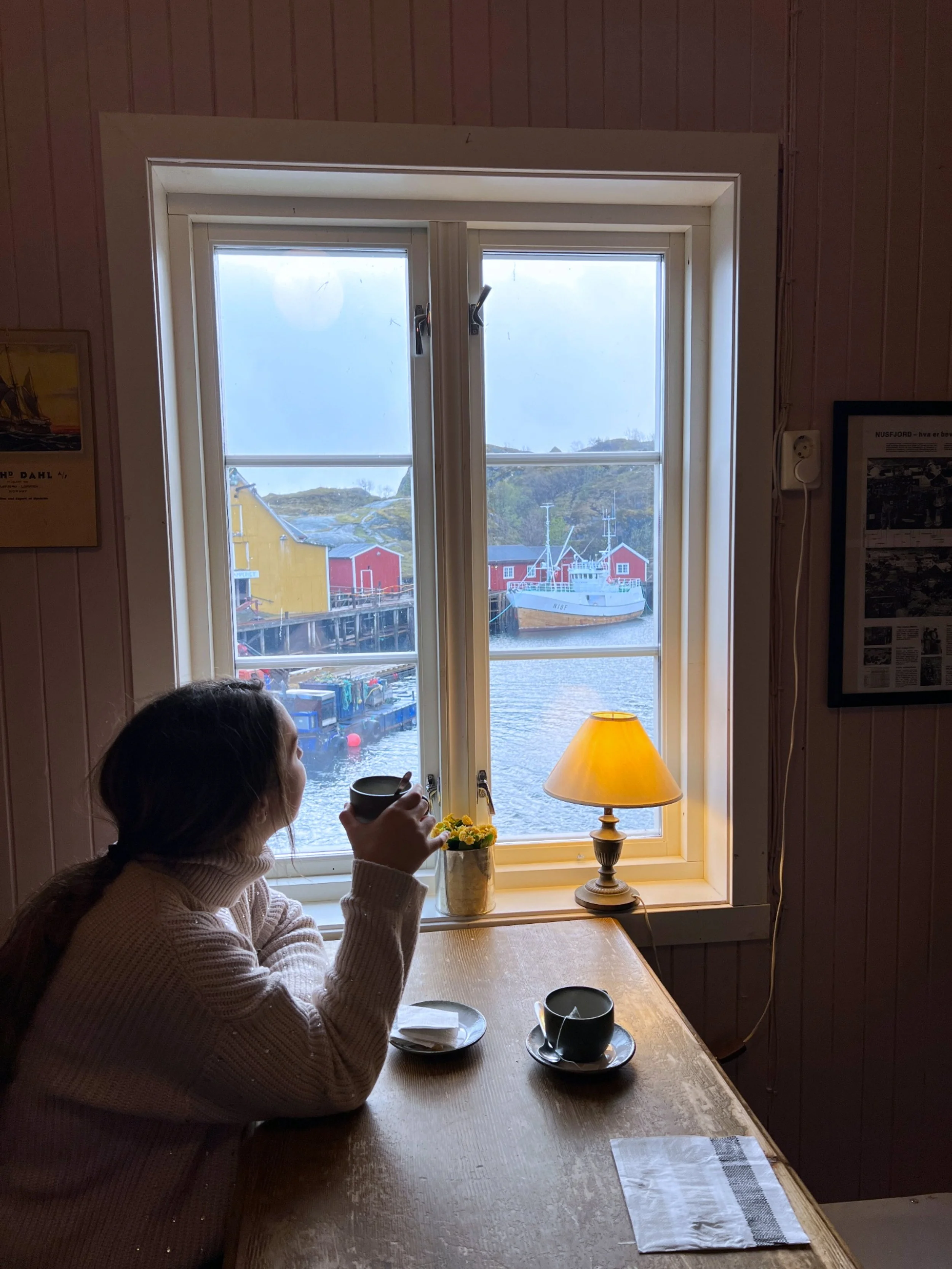
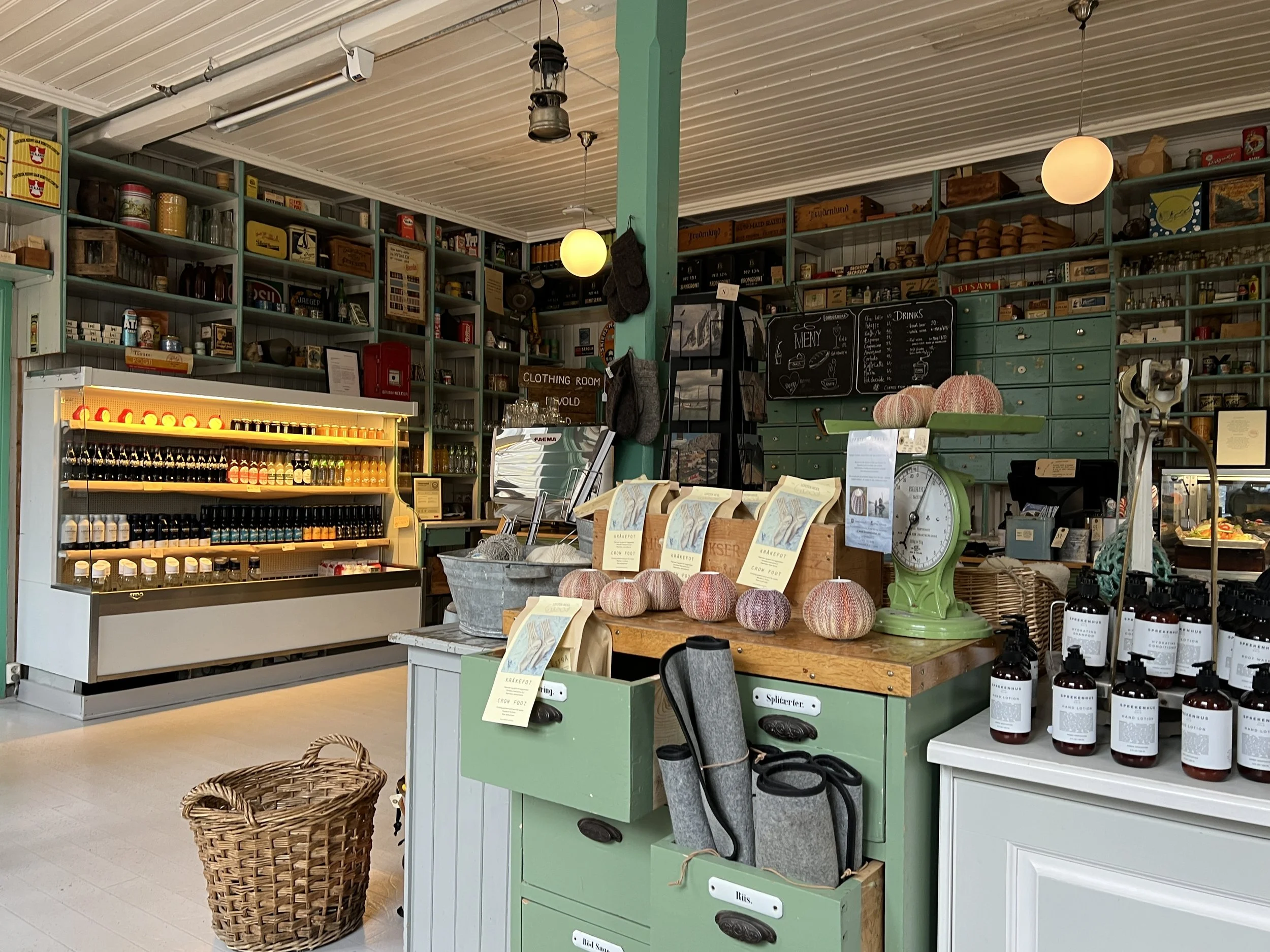
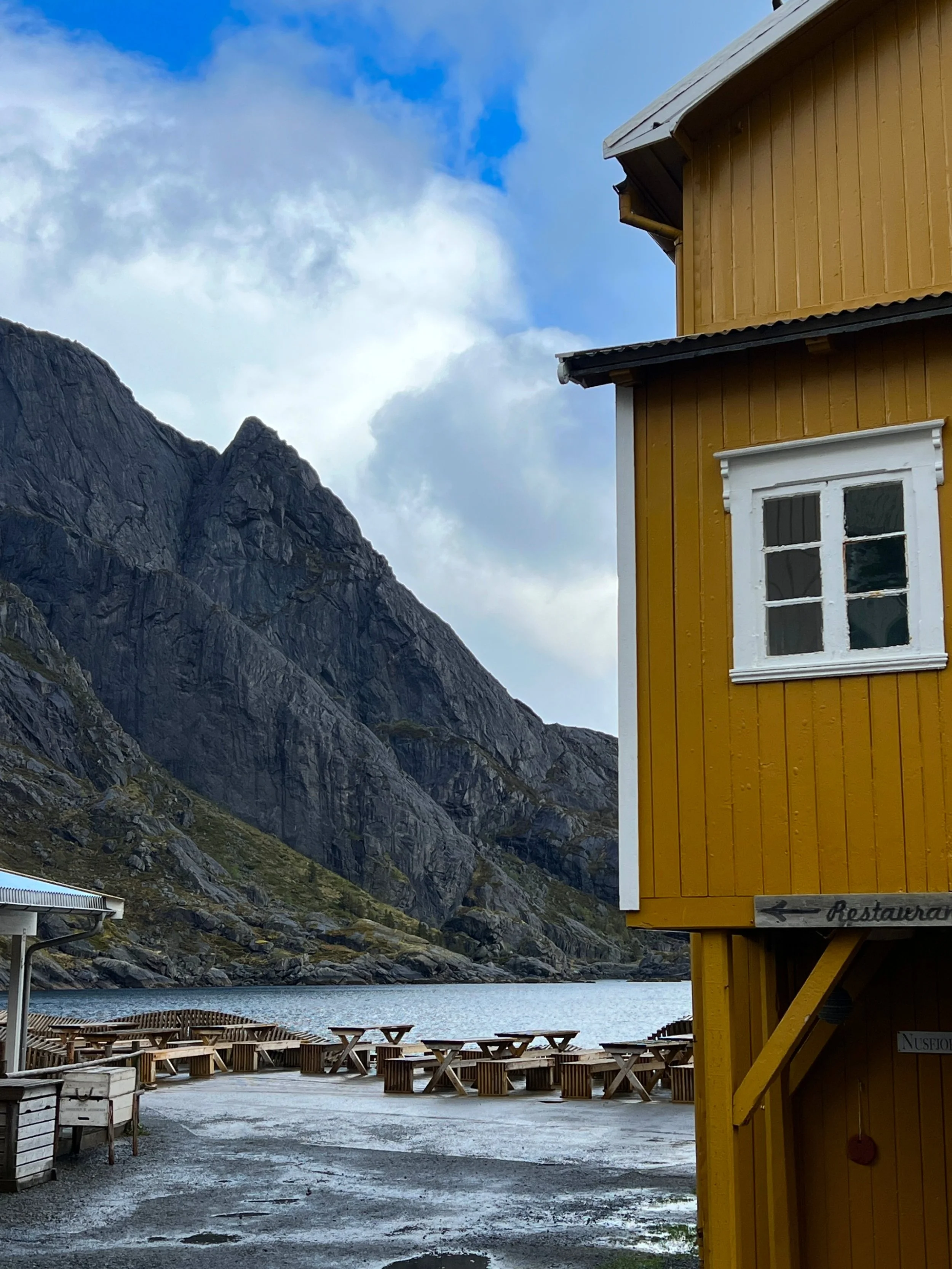
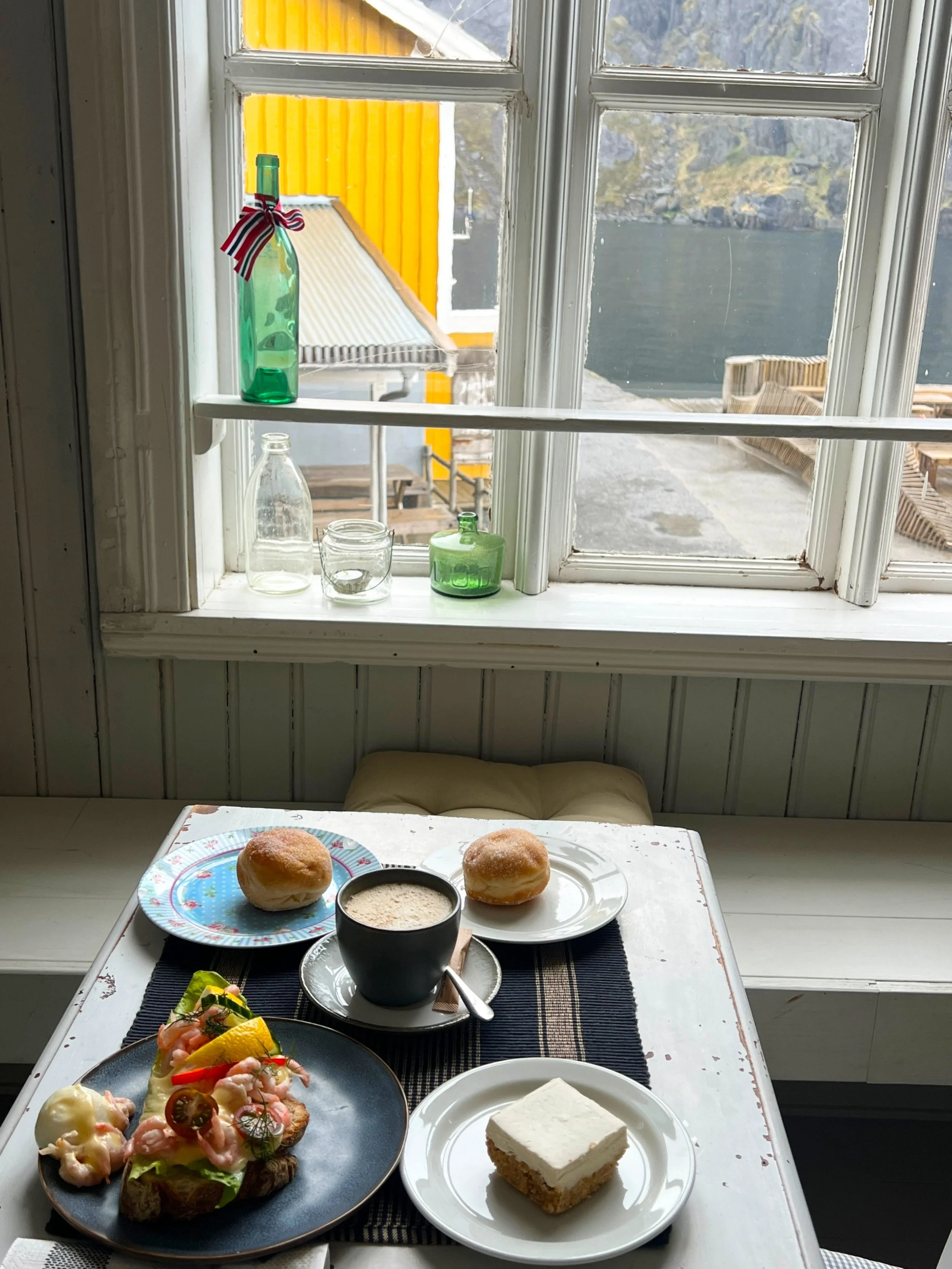

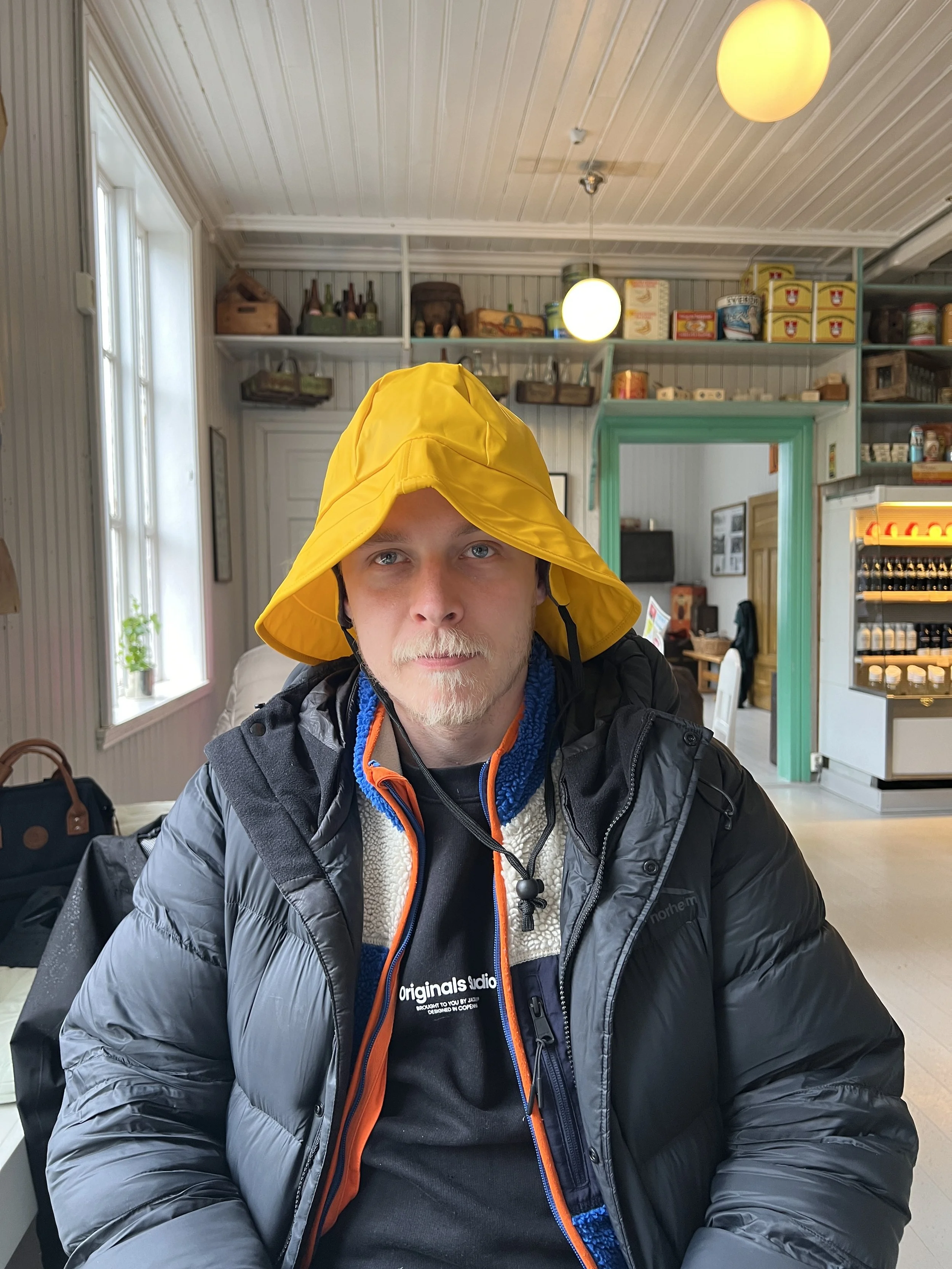
Nusfjord is one of my favourite villages in Lofoten, and I recommend you visit it if you are travelling here.
Hike to Kvalvika Beach
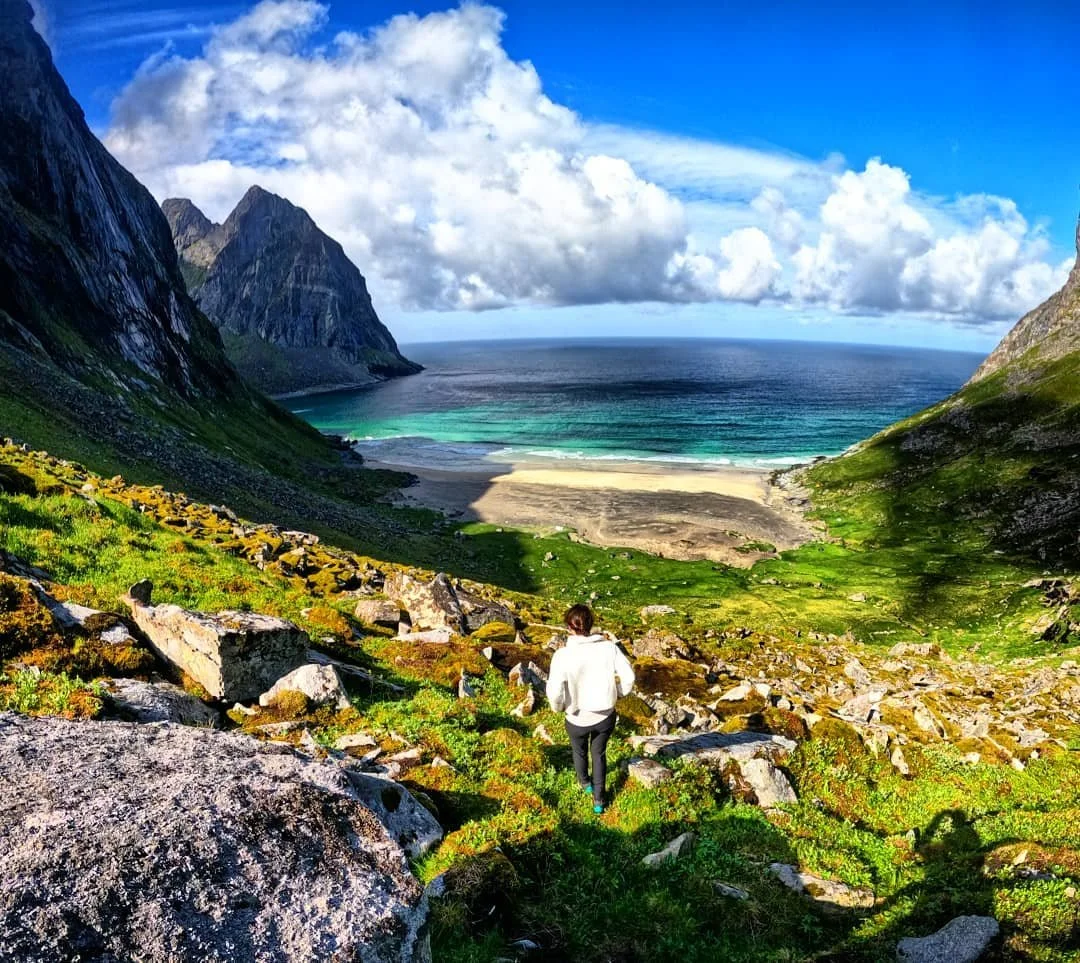
Located in a remote bay on the northwest coast of Moskenesøy, the beach at Kvalvika is possibly the most dramatic in the Lofoten Islands. Here, the mountains meet the sea, and the golden sand is flanked by precipitous sheer rock faces — the iconic Ryten. This peak rises 550 metres, almost straight up from the beach, and provides the most stunning views over Kvalvika.
To hike to Kvalvika beach, take the trail from the parking in Fredvang. This is a well-worn trail, but it has plenty of ups and downs, so it will take around one hour to cover the 3 kilometres. However, you will get rewarded by the view.
Surfing at Unstad Beach
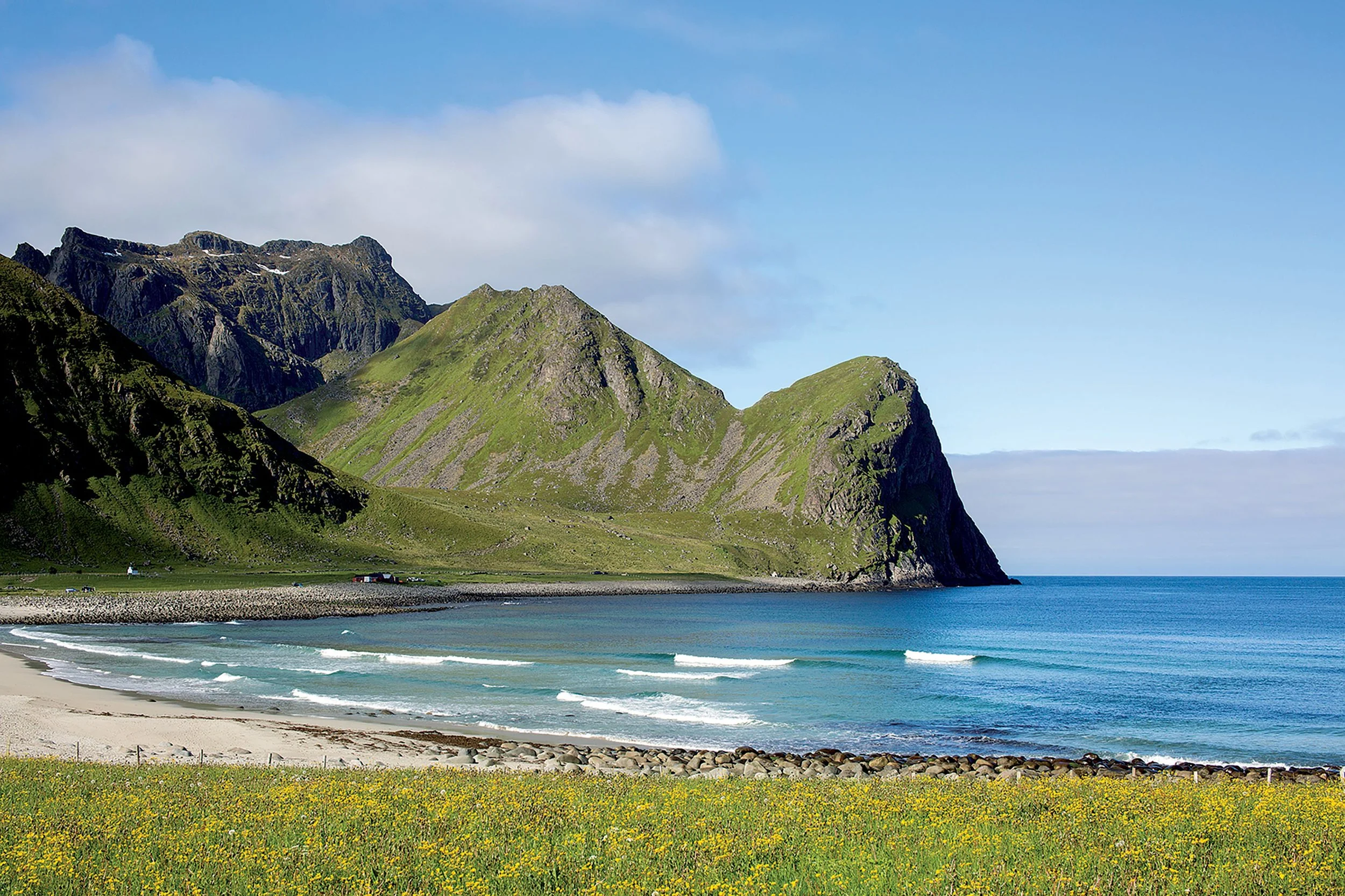
Although it may sound a little odd, Unstad is in fact the heart of the Norwegian surfing scene. Despite being well within the Arctic Circle, this beach attracts surfers from around the world. Admittedly, many come out of curiosity, but there can be good waves here, and the scenery is absolutely stunning. It is said that surfing at Unstad beach dates back to the 1960’s, when some globe-trotting Norwegians returned from Australia with a bright idea. Since they ventured out on their homemade surfboards, things have progressed, and these days there is even a surf school here.
It is little surprise that the water here never really warms up, rarely hitting 15 °C in the summer. However, in the winter, it doesn’t get as cold as you might imagine due to the presence of the warm Gulf Stream current.
3) Værøy
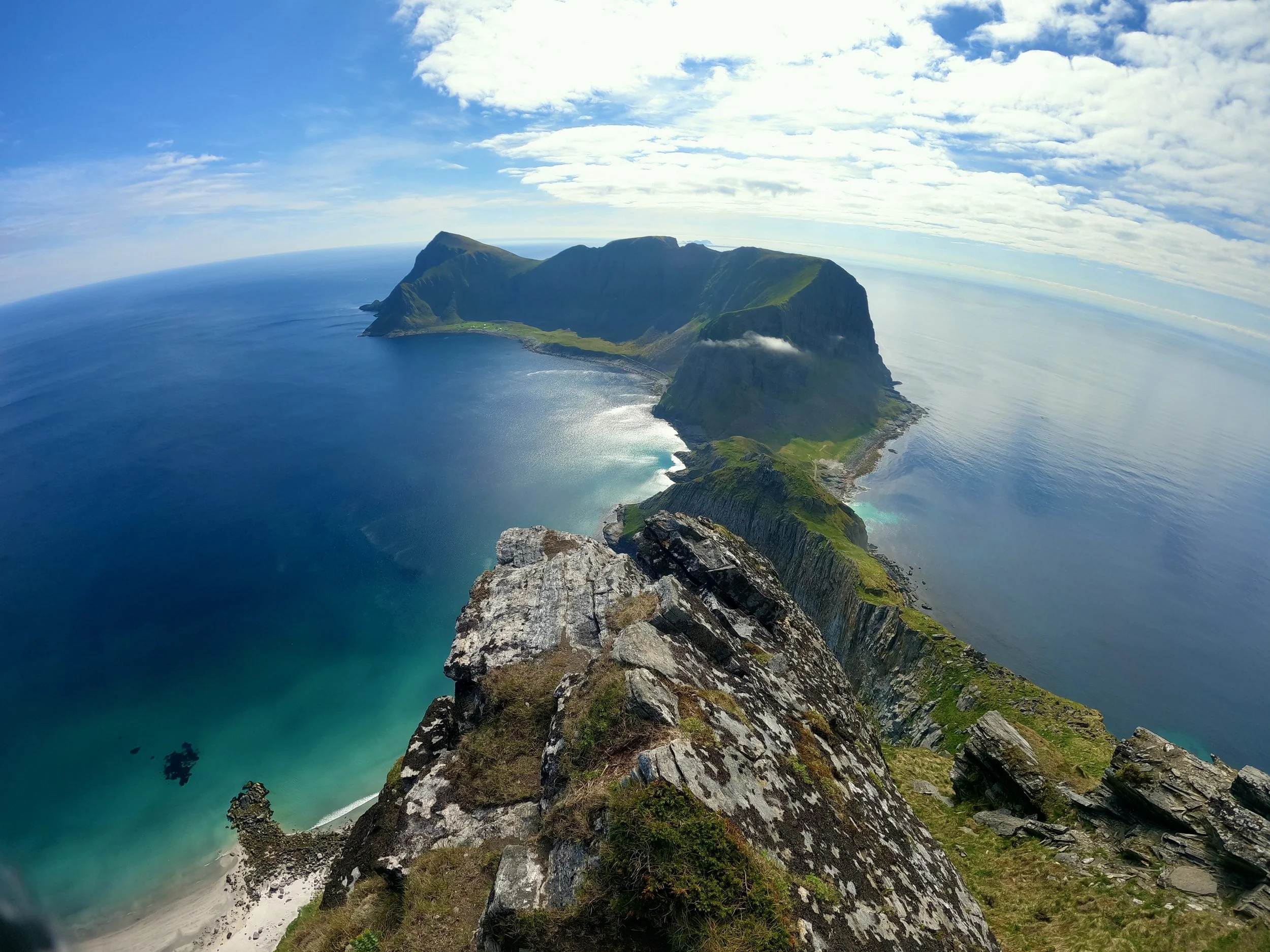
Where is Værøy & how to reach it?
Værøy is an island municipality in Nordland county, Norway, located at the end of the Lofoten archipelago. The Norwegian Sea lies to the northwest, and the Vestfjorden lies to the southeast.
By plane
Flights are going from Oslo to Narvik and Bodø. Once you reach one of the two cities, the best option is to rent a car from Narvik or take a ferry from Bodø to the Lofoten islands.
By ferry
There is a ferry available from Bodø to Værøy, and it takes about 5 hours. If you are already in Lofoten, you can take a ferry from Moskenes to Værøy, and it takes 1,5 hours.
When should you visit Værøy?
Due to its location exposed to the sea, in the winter, Værøy can be stormy and windy. Therefore, I recommend visiting the island during the summer, from May until the beginning of September.
Over the year, the temperature varies from 0°C to 14°C, and it's rarely below -3°C, due to the Gulf Stream phenomenon.
The hottest month of the year is August, with an average high of 14°C and a low of 10°C. Even during the Summer, expect quite windy and chill days.
Midnight Sun Season
Due to its extreme latitude — 67 ° N — Værøy experiences the midnight sun season, a period of time in which the sun is above the horizon for 1 and a half months. The precise start and end dates vary from year to year. It usually starts rising at 1:26 AM on May 28th, and it’s not set again until 12:53 AM on July 16th.
The shortest day of the summer is August 31st, with 15 hours of daylight.
Polar Night Season
In the winter, the sun is continuously below the horizon for 2 and a half weeks, setting at 12:08 PM on December 13th, and the sun does not rise again until 12:04 PM on December 30th. This phenomenon is called ‘Polar Nights’.
Aurora Borealis
It’s possible to see the northern lights from the end of August. But its intensity is not strong, since the night is very short. In October, everything changes — it's one of the best months to see the Aurora Borealis. November and December are NOT the best months to see the northern lights, due to the bad weather conditions — expect rainy days and many storms. From early February to mid-March is the best period to take some incredible northern lights pictures.
Must see in Værøy.
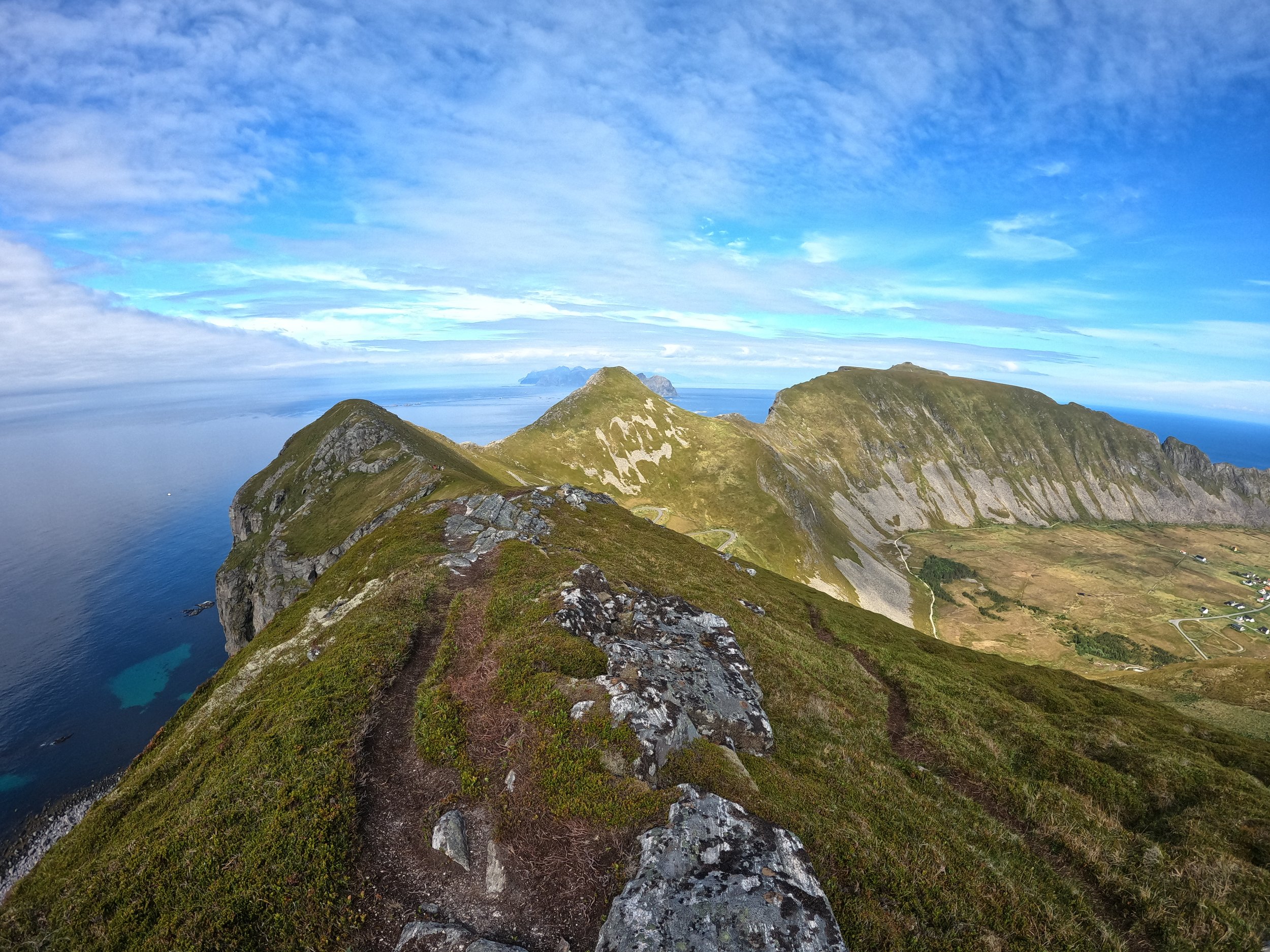
I visited this beautiful Island at the end of May, and the experience exceeded my expectations. I spent one day in Værøy, and I didn’t manage to see everything that the island has to offer. I suggest you stay for 2 entire days and camp for the night in Værøy. That was actually my original plan, but due to last-minute ferry changes, I had to cut one day out. I recommend checking in advance the ferry schedule, to be a bit more prepared than me!
I was very lucky with the weather; it was sunny the whole day, with mild temperatures and almost no wind, which can be quite rare here.
Måstadfjellet Viewpoint
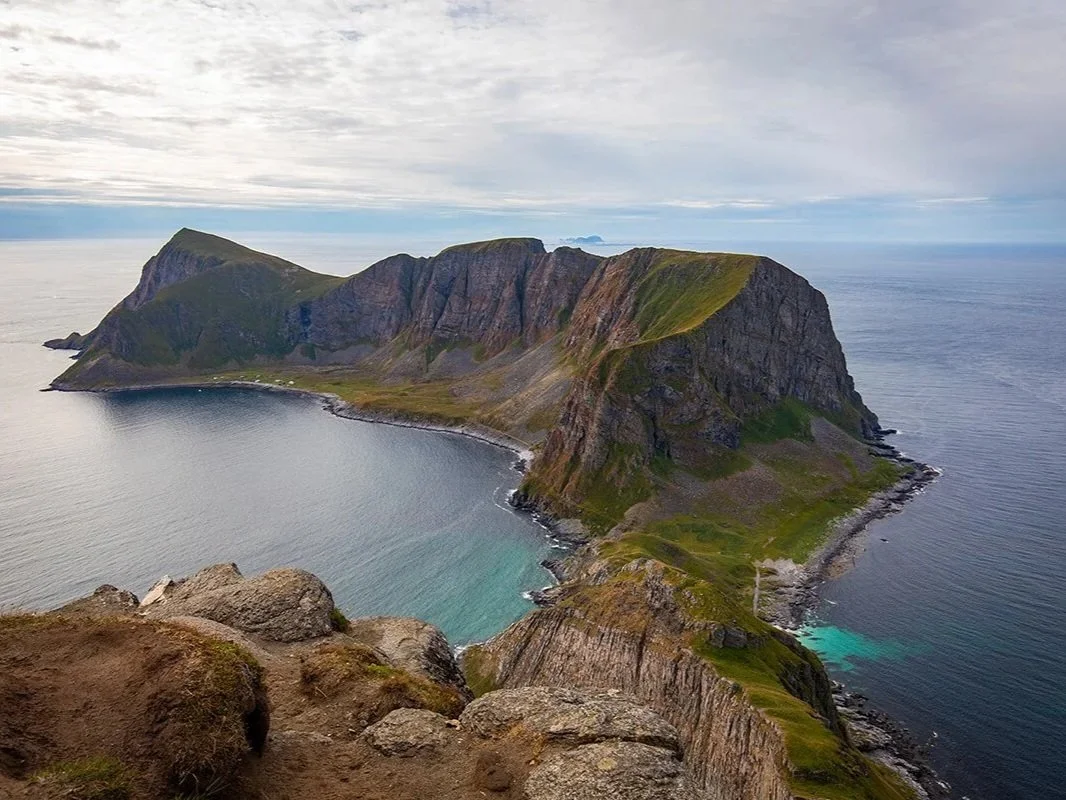
Måstadfjellet viewpoint is the most famous hiking spot on Værøy island, and it represents one of the most iconic viewpoints in the Lofoten Islands. The viewpoint looks over the Måstadfjellet cliffs, and there are 2 ways to reach it: the easy way, mostly on a paved road, called Heia; and a more demanding way called Håheia.
The Håheia trail takes 1,5 hours, and in my opinion it’s more rewarding compared to the other trail, thanks to its scenic views overlooking the Island, which from the top looks a lot like a crater (even though it is not a volcanic Island).
Once you reach the top, you will have a 360 ° view, from where you can spot the Lofoten Islands and admire some beautiful white sandy beaches.
Breivika Beach
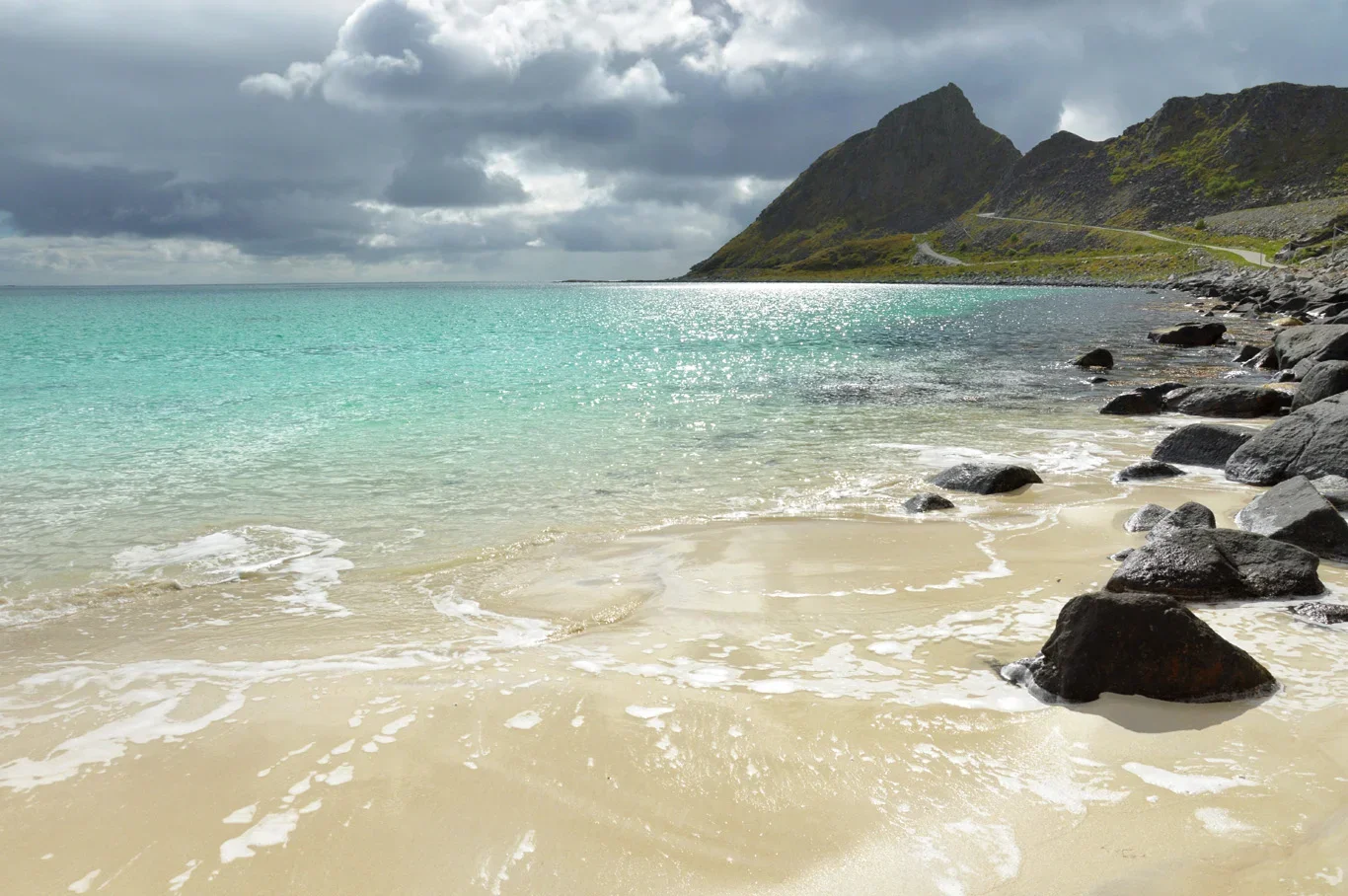
To reach Breivika beach, you will be passing by the fishing village of Sørland. From the village, you have to hike to the western side of the island, through the narrow mountain ridge. After spotting the fishermen's houses, you can see the spectacular view over the white sandy beach of Breivika. For a moment, you forget that you are in the Arctic; instead, you think you have arrived on a tropical island in the Caribbean, with crystal clear waters. No one associates the Polar Circle with such paradise beaches; If only the weather were a little bit warmer, but maybe this hidden gem would lose its charm and peculiarity.
Sørland Fishing Village
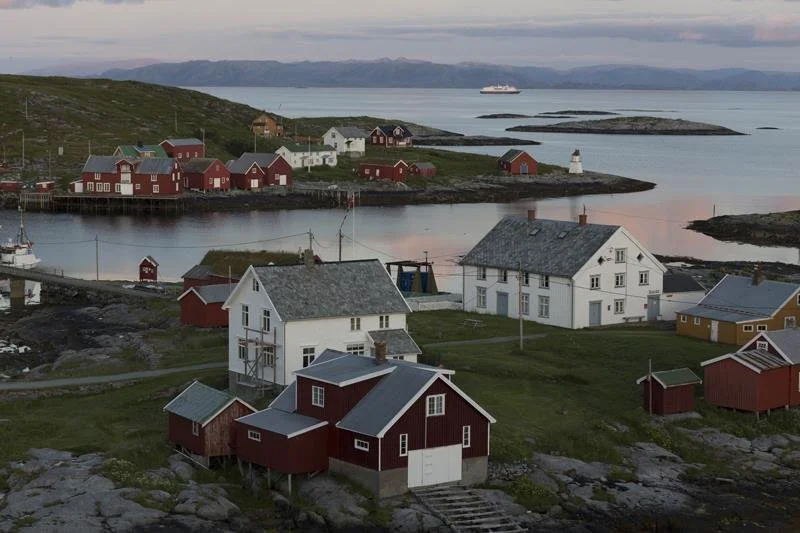
Wander along the fishing village of Sørland, and see how the local people live in such a remote place. Today, there are 550 inhabitants, and in the village you can find only a church, a small grocery shop, a pub, a lighthouse, and a fish factory. There used to be an airport that operated from 1986 until 1990, with a runway of just 800 meters. But the airport has been closed since the fatal ‘Widerøe flight 839’ accident, in which the heavy wind caused the structural failure of the engines. Today, there is just a helicopter and ferry service to reach this remote location in the Arctic.
4) Senja
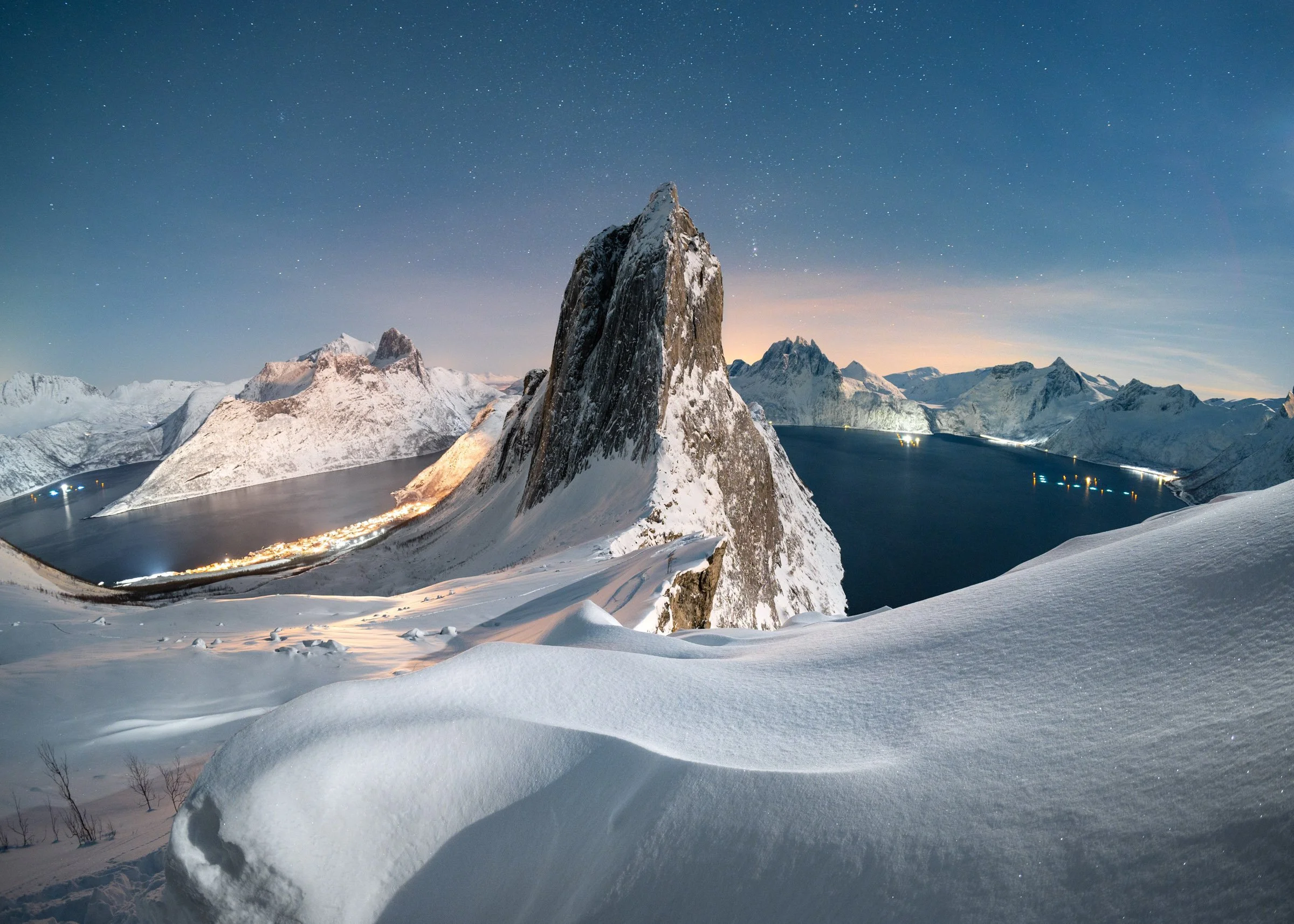
How to reach Senja?
Senja is the second-largest island in Norway (outside of the Svalbard archipelago). Is known for its dramatic fjords overlooking the sea.
The most convenient way to reach Senja is by plane from Oslo to Tromsø. From Tromsø, you can rent a car to Finnsnes. Senja’s coastal road is one of Norway’s 18 designated national scenic routes — roads specifically developed and maintained as attractions by the state.
Special seasons for photography
Senja is located above the Arctic Circle, at 69 ° N — therefore, it experiences unique seasons, perfect for nature photography. From the end of May until the end of July, you can experience the mystic Midnight Sun Season, where the sun stays above the horizon for almost 2 months. This phenomenon creates a magical purple-red light, perfect for taking stunning pictures.
If you want to spot some Northern Lights, you should come during the winter season. The best time for the Aurora Borealis is from mid-October until March. For nearly two months, Senja Island is plunged into the darkness of the Polar Night Season, from the end of November until mid-January. On clear days, for 2-3 hours, the sky changes into a deep blue colour, the so-called ‘blue hour’.
Climate in Senja
Due to its exposed location to the Norwegian Sea, Senja has a sub-arctic climate. That means that the sea water never freezes during the whole year, and the temperatures don't get too cold in the winter.
The coldest month is January with an average temperature of -2°C (28°F). The warmest month is August with an average temperature of 15°C (59°F). If you want to avoid rain, don't visit Senja in October, the rainiest month. May is the driest and most 'stable' month, with the least rainfall.
What to see?
Hike to Hesten Viewpoint
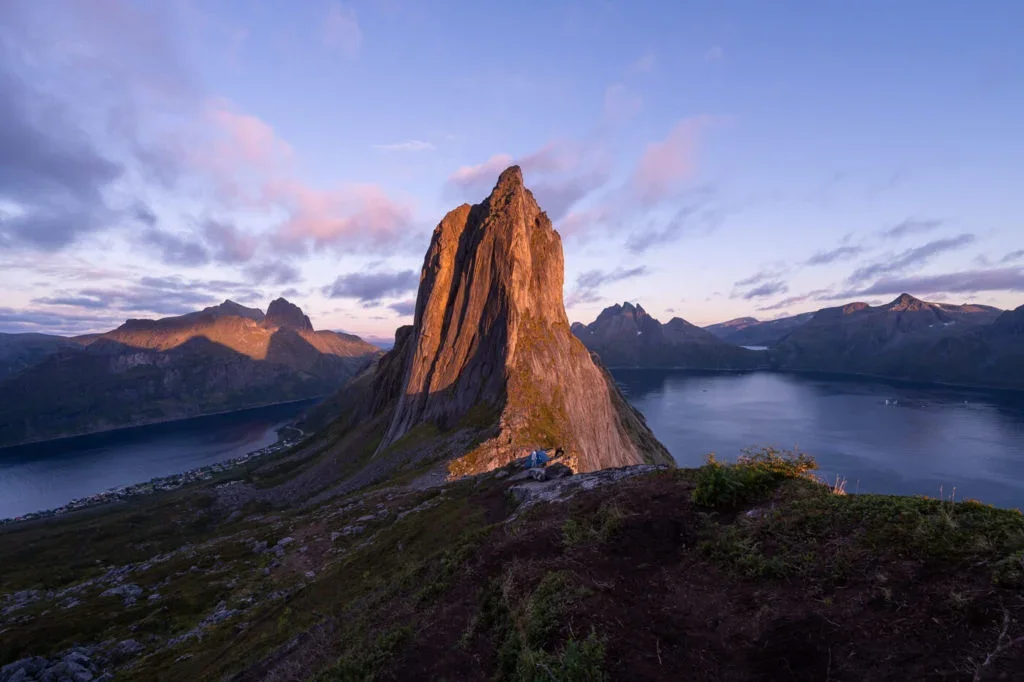
Hesten Viewpoint, located at 556 meters above sea level, has a sharp drop into the fjord below. From the top, you can admire the spectacular views over Segla and Mefjorden mountains. Regardless of the season, the trail is quite popular, and you can expect not to be the only one who plans to hike to the top.
The hike starts in the village of Fjordgård in northern Senja. To reach it, you have to travel along Road 862, part of the Norwegian Scenic Route, and take the turn towards Fjordgård near Mefjordbotn. There are not many parking spots available, so the best option is to park at the Segla's trailhead, above the school, where you can find a free parking lot. The hike is quite steep, 1.8 km, and it takes 2 hours.
The best time to go
I recommend visiting Senja during the summer season, from the end of May until mid-September. Some people like to visit Hesten Viewpoint during the winter, because it's less crowded. Just be aware that the trail is not as clear as in the summer. The best route is to head to the top of the alpine ski hill and aim for the low point on the ridge between Hesten and Stavelitippen. From this point on the ridge, there are fantastic views of Segla. Continuing to the peak can be dangerous in the winter, and it's not recommended. It can be very slippery along the trail, so it’s good to use crampons and not just hiking boots and poles.
Bergsbotn Viewpoint -Utsiktsplattform
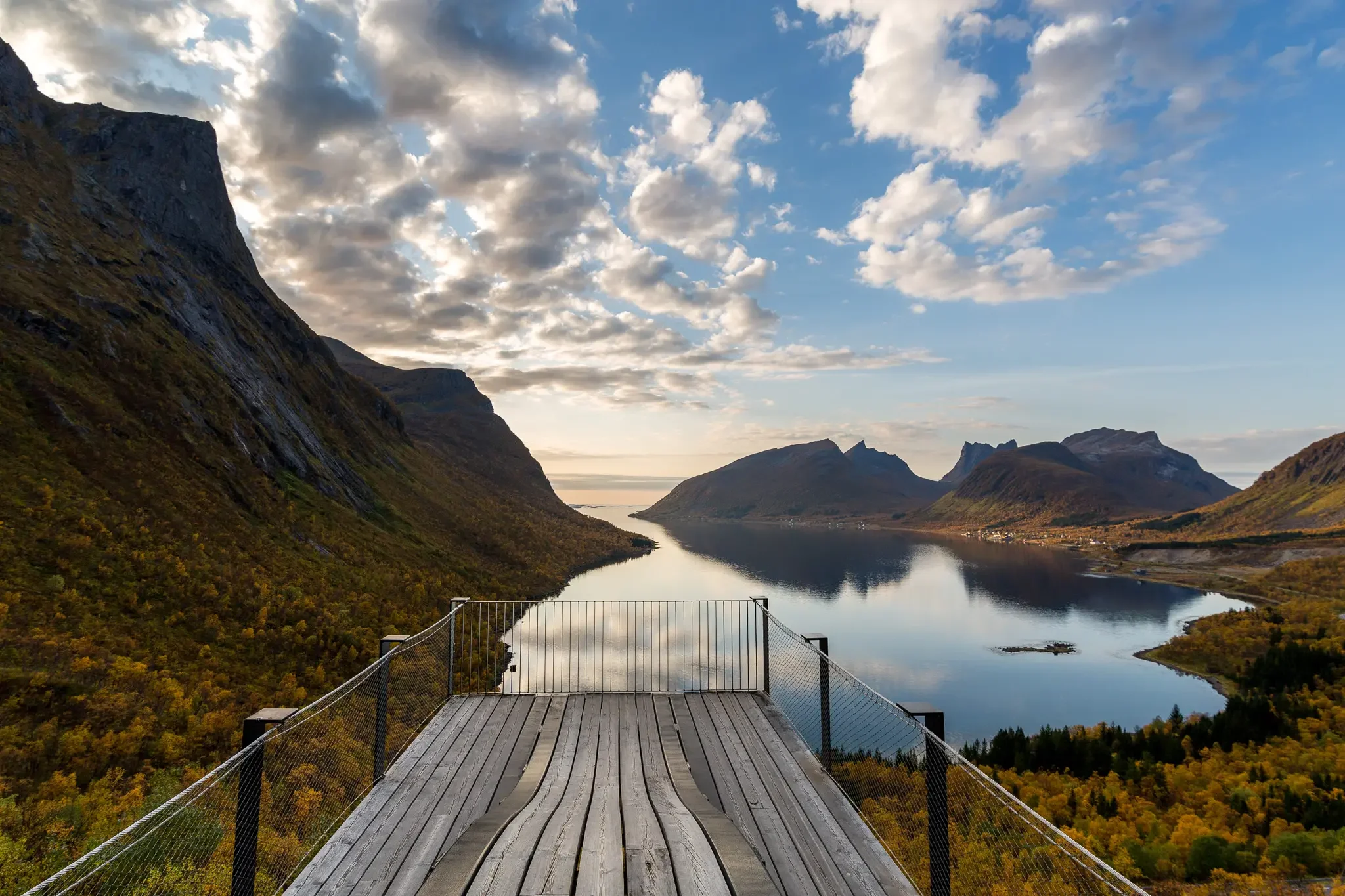
Bergsbotn is a 44-meter-long viewpoint platform, located on the northwestern edge of the Senja island. Surrounded by the Bergsbotten mountain range and the Bergsfjord. The panoramic view is definitely worth the drive, and if you want to dive deeper into the fishing culture, you can explore the small village of Bergsbotn, which has only 60 inhabitants and a fish factory.
5) Gjesvær
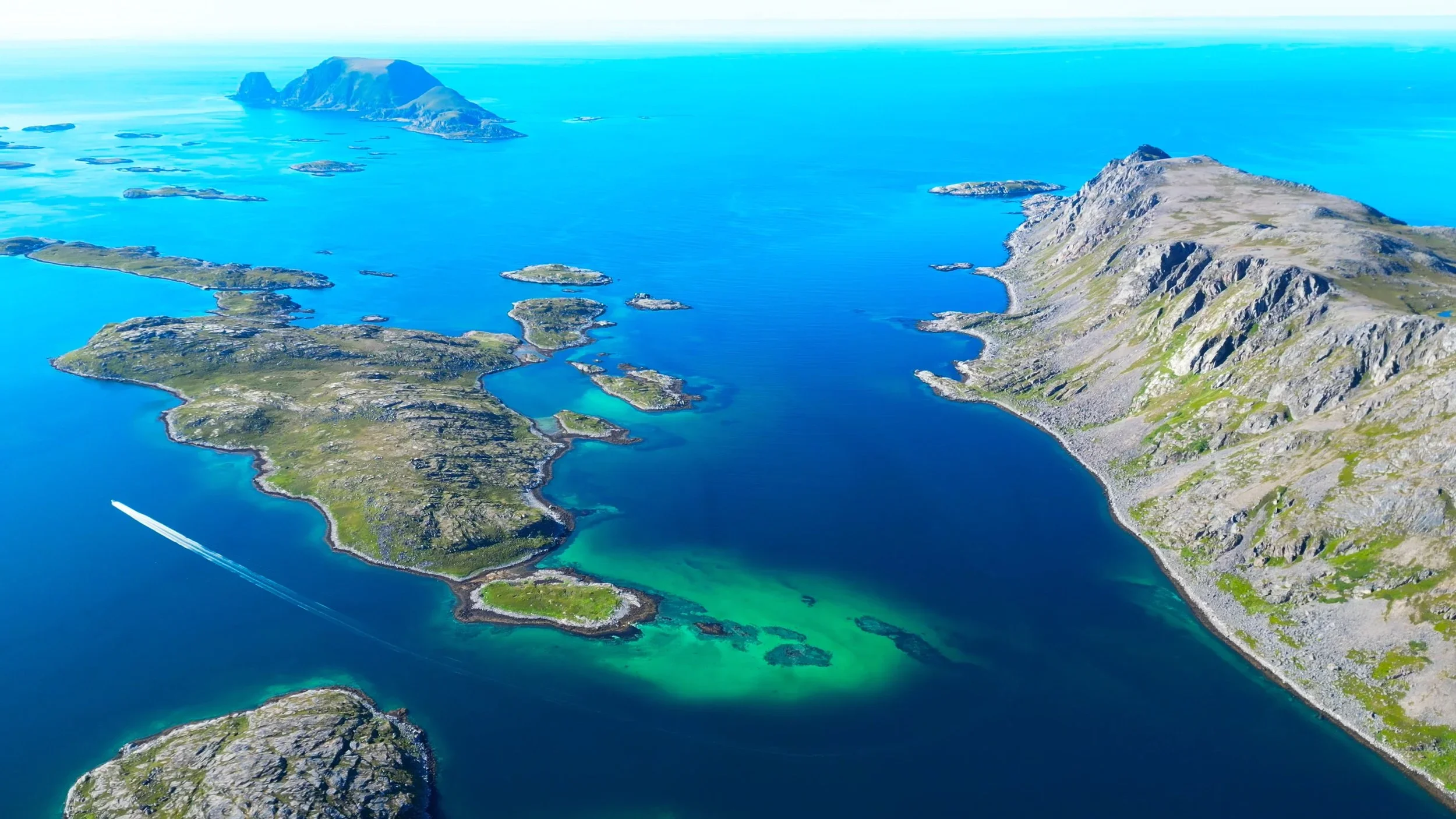
How to reach Gjesvær?
Gjesvær is a fishing village with 130 inhabitants, located on Magerøya, an Island in the Northernmost Region of continental Norway - called Finnmark. Gjesvær is also part of the North Cape municipality, the destination that attracts many tourists and cruise ships from all over the world, due to its location, 71 °N.
To reach Gjesvær, you have two options:
Take a flight from Oslo to Tromsø, and from Tromsø, you can rent a car and head towards Honningsvåg. The distance between the two cities is 532 km, so it takes 9-10 hours by car. After you reach Honningsvåg, you can stay overnight in the city, and visit the following days the fishing village of Gjesvær, located 36 km from Honningsvåg.
Take a flight from Oslo to Alta and from Alta, drive, or take the bus towards Honningsvåg. Honningsvåg is 200 km away from Alta, so it takes about 3 hours if you go by car. This option is more expensive, due to the expensive flights, but more convenient if you want to save time and drive fewer kilometres.
Best time to visit Gjesvaer
I recommend visiting Gjesvaer during the summer season, from mid-May until mid-September. If you want to go during the winter season, expect bad weather and many snowstorms. Often, the roads are closed in the winter due to the strong wind gusts and snow on the roads.
Why should you visit Gjesvær?
Gjesvær gets outshone by a more popular place - the North Cape; tourists go straight to see the globe that represents the Northernmost point of continental Europe, and they forget to venture into the beautiful surroundings of Magerøya's Island.
Gjesvær is considered a hidden gem in the Arctic, which makes this undiscovered place a paradise worth visiting. The fishing village is a very special place to me, and my favourite location on the Island of Magerøya. I used to live here for 6 months, and despite its isolated location, I never got bored. There are many hikes that you can do in the summer; nature is wild and untouched, with spectacular views overlooking the sea. Is the only fishing village on the Island with a small grocery shop, and even a café where the local community gets together.
Activities in Gjesvær
Paddleboarding and Kayaking
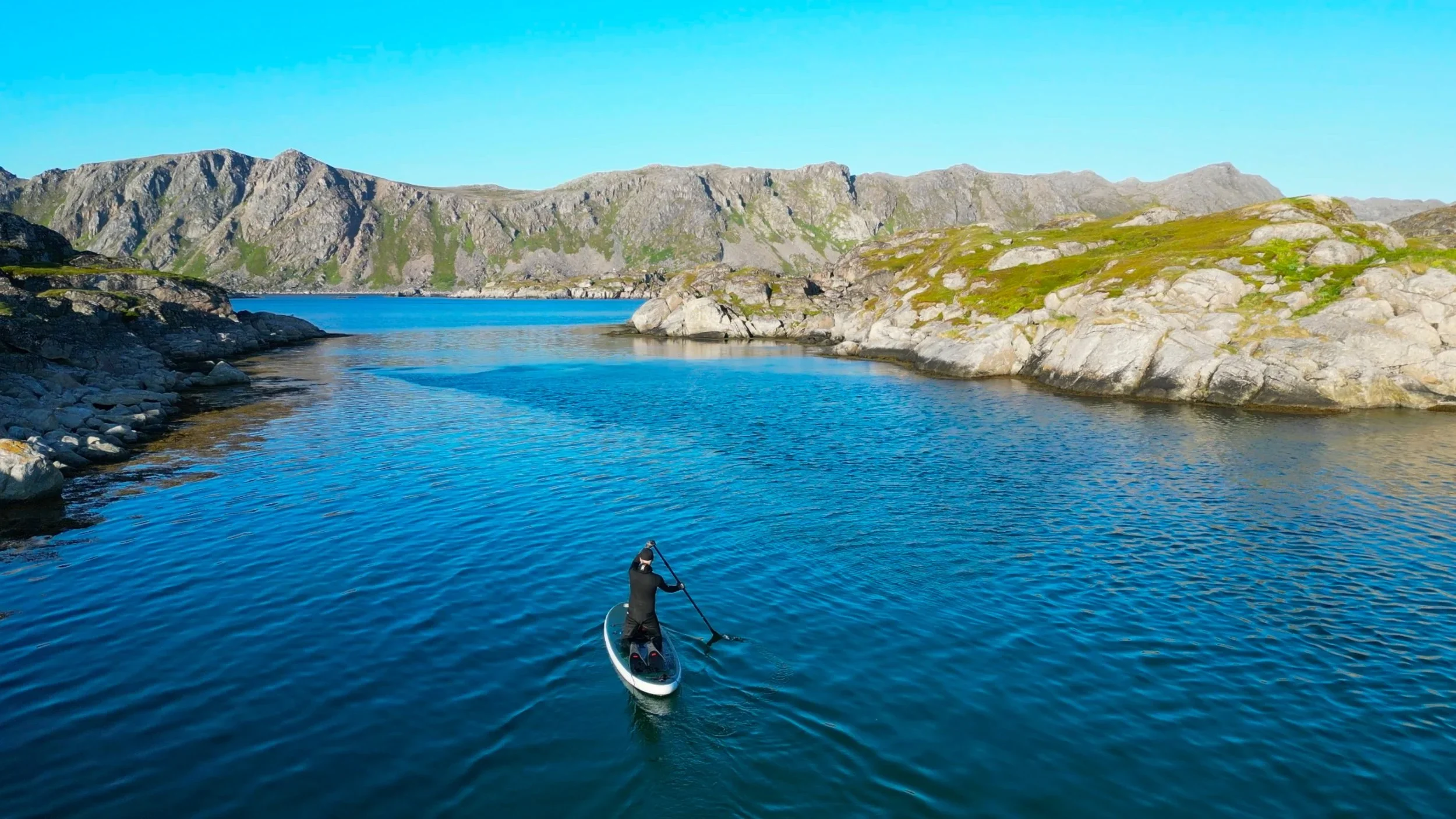
The fishing village is known for its beautiful Islands and crystal clear waters. While I was living in Gjesvær, I bought a paddleboard and explored the beautiful nature. A ‘must’ if you come here during the Summer. Just be careful not to fall into the water; it can be pretty cold, 3 °C in the winter, and 9 °C during the summer. Some people try to swim in the summer, my record is 15 seconds!
Bird Safari Tour
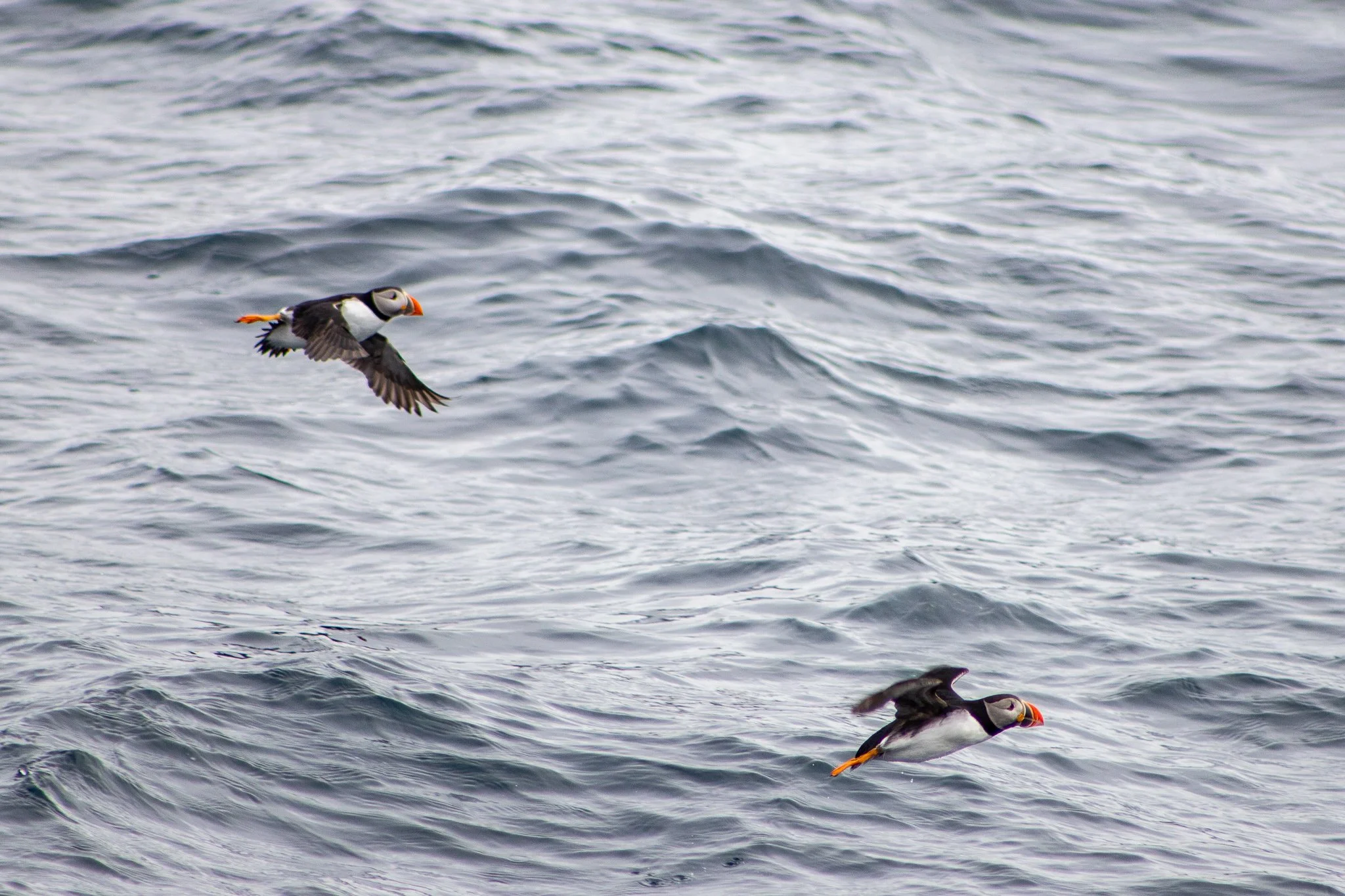
If you are looking for an unforgettable experience in contact with nature, you should do the Bird Safari Tour. The two-hour-long boat tour leaves from Gjesvær to Gjesværstappan — a Nature Reserve, known to be a bird paradise for nature lovers — located 15 km west of the North Cape cliff. From mid-April until the end of August, this place is the nesting ground for many species of birds: more than one million puffins are coming for nesting, and they are easily recognisable by their colourful beak and nesting holes in the grassy hills. You can also spot many eagles, while they are hunting for their prey; you will see mostly White-tailed eagles and some Golden eagles. You can also find Guillemots, Razorbills, Cormorants, Arctic Skuas, Fulmars, and Gannets, which are also part of the flourishing bird life in Gjesværstappan. To set foot on the islands is not allowed, but from the boat, you can observe one of Norway’s largest nesting paradises. Sometimes, it is also possible to see some seals and whales, like the Harbour Porpoises, that belong to the family of dolphins.
Hike to Lysøynæringen Viewpoint
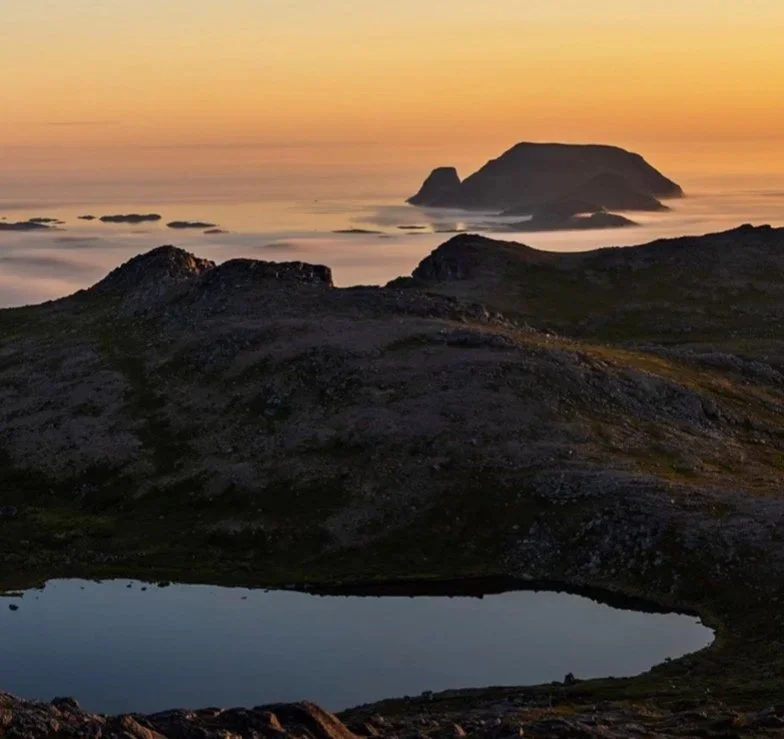
The trip starts 6 km before reaching the fishing village of Gjesvær. At the beginning of the trail, there is a small sign with a big red T that marks the starting point.
The distance is about 4.4 km, and it takes 1.5 hours to reach the viewpoint. Click here if you want to check the Norwegian hiking map. I like to call this hike, ‘‘the secret Lofoten of Magerøya’’, thanks to its dramatic landscape similar to the Lofoten Islands, just with no mass tourism. Upon arrival at the viewpoint, you can also find a visitor book hidden inside a mailbox, where you can sign up with your name and date, and leave your mark in Gjesvær.
Camp at Lilletuva Viewpoint with the midnight sun
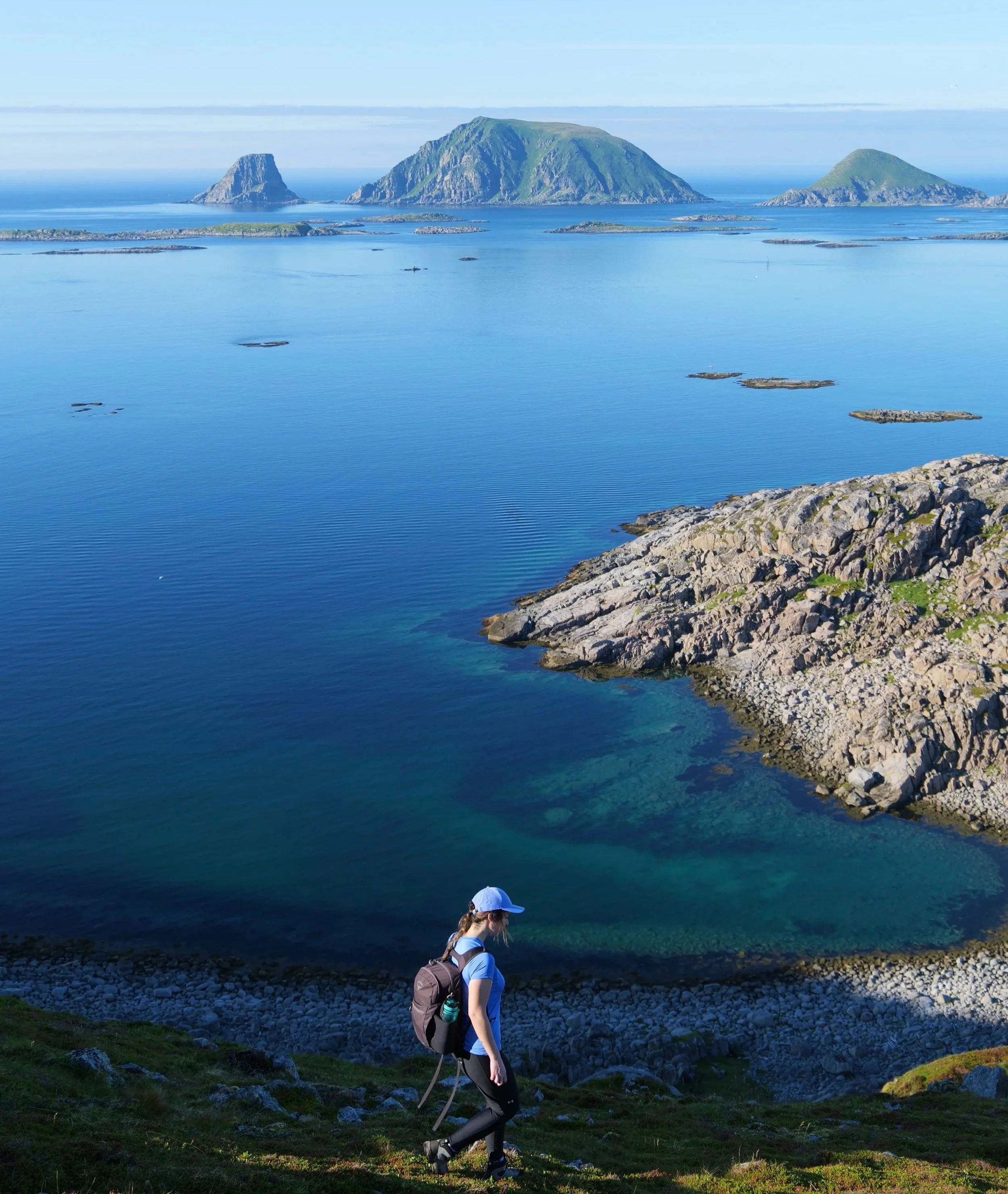
The Gjesvær area is the best place on the island to admire the midnight sun season, and what better way to do it than from your camping tent! To reach the viewpoint, the hike starts just before the village of Gjesvær. You will find the beginning of the trail marked, next to a red house, before the little bridge that connects to the village of Gjesvaer. The trail is marked with the red T symbol written on a stone and a clear sign for Lilletuva's viewpoint. The hike takes one hour (one way), and once you reach the viewpoint, you can enjoy the magnificent views of Måsøy, Hjelmesøy, and the Nature Reserve of Gjesværstappan.
Midnight sun season
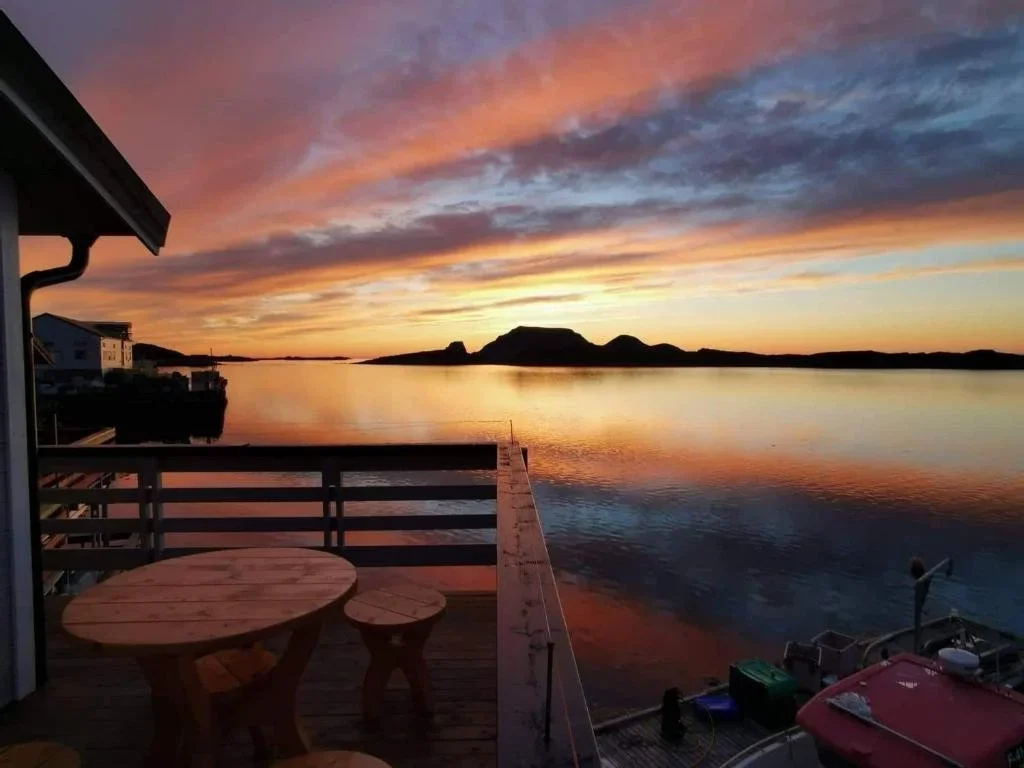
There is no secret that the population on Magerøya wakes up to life when the most breathtaking summer nights brighten up the island. In the North Cape municipality, the sun stays shining in the sky for over 1,800 hours without setting. Gjesvear is one of the best places on the island to see when this phenomenon occurs — the 14th of May (but it is always good to check every year the exact date, because it changes) — you can see how the sun touches the sea, then it changes idea, and it comes back high in the sky. If you are lucky enough to have a clear day, you will experience this unique phenomenon and see the bright light of the sun changing into purple-red. The midnight sun season ends on the 29th of July on the Island of Magerøya.
The golden rules for camping wild in Norway
Camping in some of the world’s most dramatic terrain is one of the best things about a trip to Norway. And the bonus — it keeps costs down in what is otherwise an expensive country to travel around. Also, there’s nothing like listening to the call of oystercatchers and crashing waves from the comfort of your sleeping bag. Or waking up with the sun, sticking your head out of your tent, and watching some reindeer walking by. Wild camping is allowed almost everywhere in Norway, and with a lake just a few steps away, you can freshen up with a dip in the morning – it gives an endorphin rush like no other.
A longstanding law called allemannsretten (loosely translated as ‘the right to roam’) allows everyone to camp in the wild, anywhere in open country, for free. It gives fantastic freedom; there are just some rules that you have to keep in mind:
your pitch needs to be 150 meters away from the nearest house
It is preferable not to camp for longer than 2 nights in the same spot, so that you don’t leave any marks on the ground
Just try not to leave any trace of your stay, have common sense, and respect for nature.
Spot the Northern Lights
During the winter period of the Polar Nights, you can experience natural fireworks in the sky at Magerøya, due to the long periods of darkness, from the 20th of November until the 22nd of January.
You can start to spot this phenomenon already at the beginning of September, but the best season is from mid-October until the end of March. Even though the best Northern Lights I saw were in September and at the beginning of April.
In the winter, from November until January, the Island experiences many snowstorms, which is not ideal for seeing the Northern Lights. If you are lucky enough, the lights will dance above your head in a mix of colours and take you on a magical adventure. Northern lights can last from 20 minutes to one hour, and we usually see them from 8 PM until 12 AM.
Reindeer
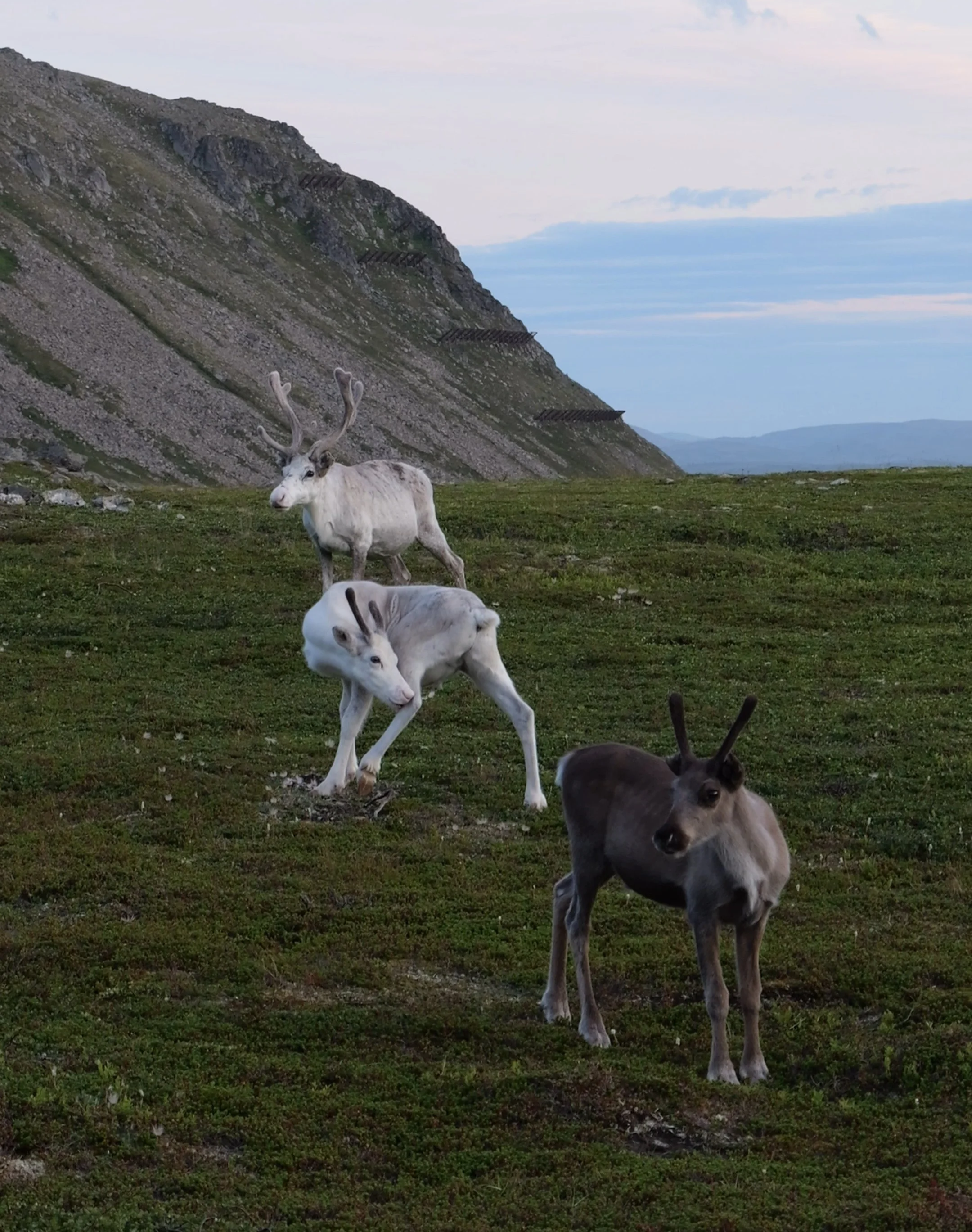
Another reason to come to Gjesvær during the summer is for the reindeer. On the Island of Magerøya, there are 6000 domesticated reindeer by the Sami people (the local indigenous population). They arrive on Magerøya at the end of April, transported with a ferry by the Sami, and after the summer — in October — they have enough fat and energy, and they can swim in the sea for 2 km, back on the mainland of Norway, where they spend the winter season. In the summer, they eat moss and lichen, and they have to move to the mainland for the winter period, due to the stormy weather that we have on the island, which is too extreme even for the reindeer.
Don’t be surprised if you spot some reindeer walking inside the tunnel, they usually hide to cool from the ‘heat’ of the summer months.
In Norway, there are 70.000 wild reindeer, and you can find them on the Archipelago of Svalbard and in Hardangervidda — the biggest National Park of Norway, between Oslo and Bergen.
Discover more about the Sami culture
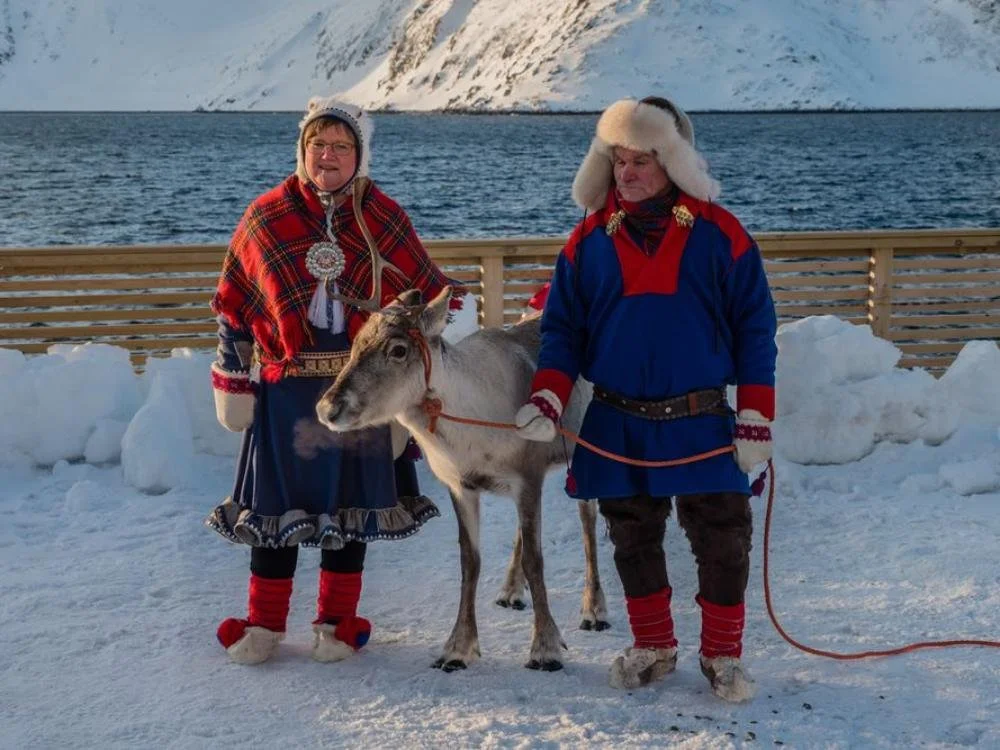
The Sami are the indigenous population of the North. Today, Sami are living in Norway, Sweden, Finland, and the Kola Peninsula of Russia. There are also people in North America (Canada-Alaska), who share the Sami culture and heritage from the arctic and sub-arctic regions of Scandinavia. In Norway, there are approximately 50.000 Sami, and we have 6 Sami families living on the Island of Magerøya. Some of them still dress in the traditional clothes of the Sami culture, and they speak the Sami language at home, which is very different from Norwegian. In fact, the Sami language belongs to the Uralic languages, like Finnish, Hungarian, and Estonian.
It is very important not to call the Sami people — Lapps, because it was used as an offensive word in the past, meaning poverty.
The Sami on this Island own a souvenir shop, and some live with the reindeer herding tradition. In Norway, just Sami are allowed to have reindeer, unlike in Finland, where anyone can breed them.
If you are ever gonna meet the Sami people on the island, try to discover more about their culture. The only thing that you should never ask them is how many reindeer they have, because it is private information, like asking ‘‘how much money do you have in your bank account?’’ — It can be perceived as disrespectful.
Local food
The fishing industry is the main industry on the Island. In this area of Norway, we can find cod, king crab, halibut, pollock, and salmon. Expect a lot of fish in the Norwegian diet. If you are travelling in Northern Norway, I recommend trying:

Reindeer Filet
Norwegians like their reindeer cooked into a hearty stew called finnbiff, or a reindeer roast that is topped with thick gravy and served with lingonberry jam.
Expect the lean meat to have a rich, gamey flavour.
King Crab
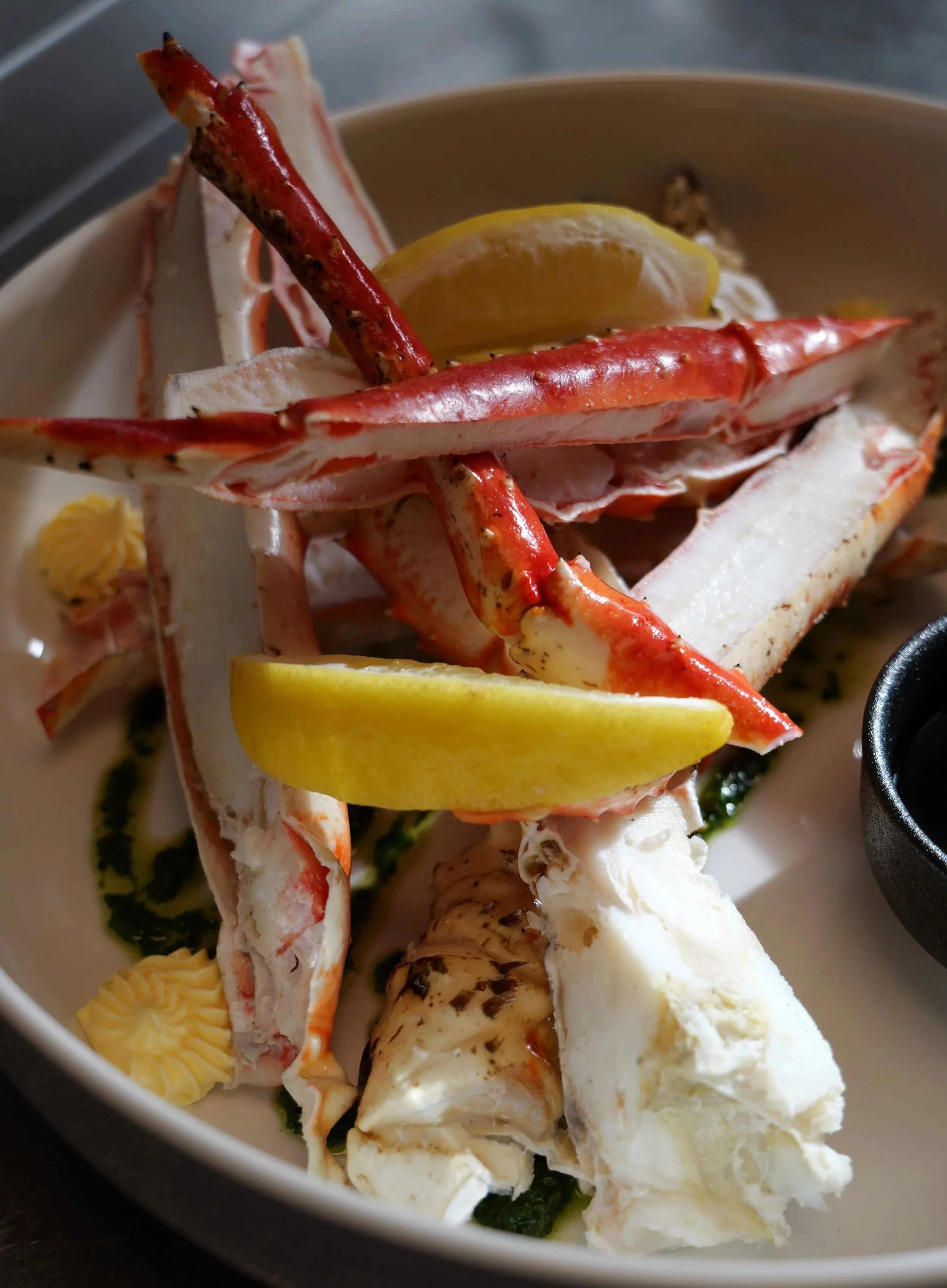
King Crab is a delicacy in Northern Norway.
You don’t have to feel bad when you eat king crabs, because they have no predators; there are too many King Crabs living in the Barents Sea. They are originally from Kamchatka, Russia, and they arrived in Norway at the end of the ’80s. In Norway, they have been fishing commercially for King Crabs since 2001, and today, 1 kg is sold for €50 ($54).
The King Crab gets cooked in the boiling water that they take from the sea. There is no need to add any seasoning, because it’s naturally rich in flavour. It gets served with the typical white Norwegian bread and mayonnaise. This recipe is so simple, but delicious at the same time, that you are going to be surprised by the rich flavours.

Fried Cod
Cod fishing on Magerøya’s Island is bigger than the salmon industry.
A must-try is the fried cod served with mashed potatoes and fried vegetables.
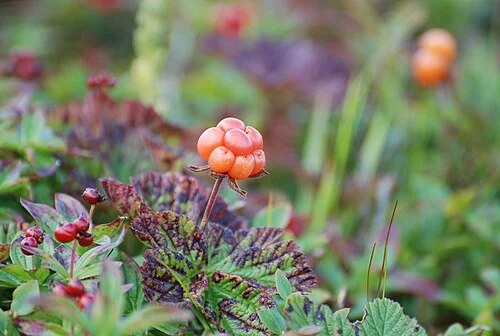
Cloudberries
Cloudberries are the typical fruits growing in the Arctic Regions. They are very rich in vitamins and antioxidants.
Cloudberries grow on the island during the summer season, and we collect them from August until the beginning of September.
They are often used in desserts — it’s very common for locals to prepare the cloudberry sauce, which you can add, for example, to the ice cream, or with a parfait.
You should definitely try the Norwegian waffles, with brown cheese and cloudberry jam.
Stockfish
Stockfish is unsalted fish, dried by cold air and wind, on wooden racks on the foreshore. These wooden racks are called “Hjell” in Norwegian. The drying of the food is the world’s oldest known preservation method. It’s cheap and effective, and dried fish can be stored for several years. The stockfish racks can be found in many different locations across the island; there are also some in Gjesvær.
Thank you for reading this post! You can find more about NORWAY in the Travel section above.